Manitoba teenagers honour war victims during trip to Europe
The Kinew government announced in the spring that it would start paying for local students to travel to historic and commemorative sites of world war battlefields.
Jamella Hernandez was so overcome with emotion upon learning this summer that she’d been nominated for an all-expenses-paid trip to visit Anne Frank House, among other historical sites in Europe, that she started bawling.
Three days into the 10-day journey, the eleventh grader said it was proving emotional for numerous reasons — one of which remains gratitude.
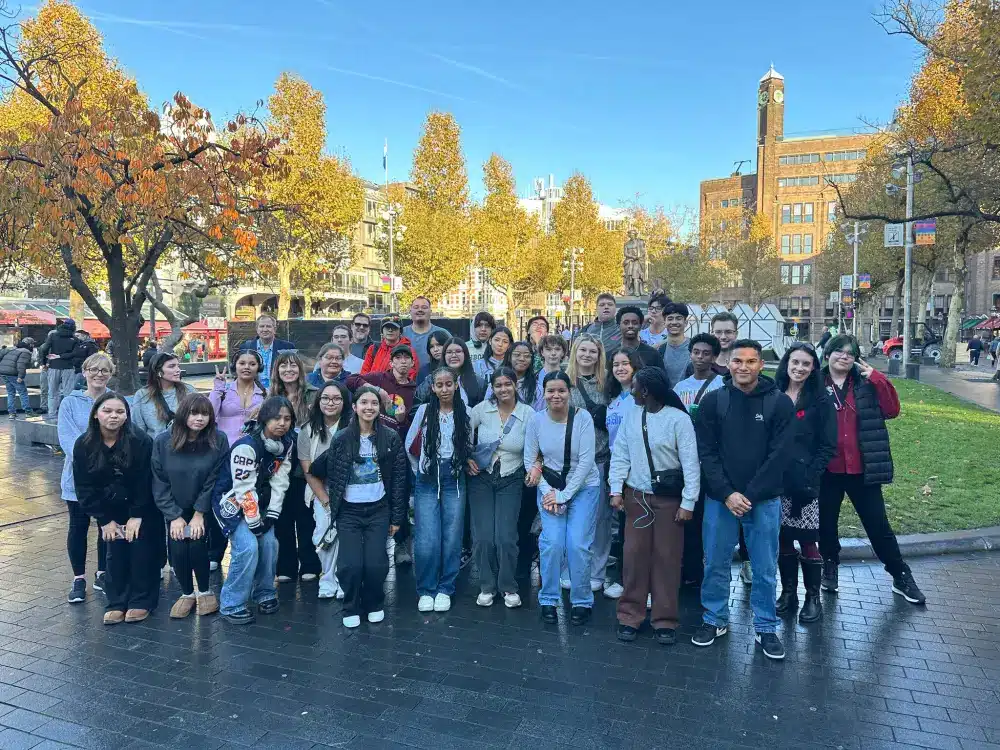
The Sisler High School student is among the Manitoba teenagers who are honouring veterans and victims of the world wars overseas as part of a new provincial program.
During a phone interview from Amsterdam on Saturday, Jamella reflected on how moving it was to hear firsthand the creaks in the floors of the Frank family’s hideout during the Second World War.
Local, independent, in-depth.
Our Prairie stories.
“Seeing the place with my own eyes gave me a whole new perspective on the events connected to Anne’s life,” the 16-year-old said, adding that the secret annex was the most highly anticipated stop on her first visit to Europe.
A group of roughly 30 students and teacher-supervisors are following an EF Educational Tours itinerary with numerous museums, cemeteries and other memorials.
They left on the eve of Indigenous Veterans Day, and will mark the midway point on Remembrance Day.

The Kinew government announced in the spring that it would start paying for local students to travel to historic and commemorative sites of world war battlefields.
The initiative was inspired by the premier’s visit to Normandy, France in June 2024 to mark the 80th anniversary of D-Day.
More than a year after marking that sombre milestone, Premier Wab Kinew recalled a “powerful” moment during which he witnessed a group of First Nations youth gather around a gravestone bearing a familiar surname — Beardy.
Kinew took note of the students placing a flag from their home community — Pimicikamak Cree Nation, also known as Cross Lake — by this particular burial at the Bény-sur-Mer Canadian War Cemetery.

“More kids in our province should have that same experience so we can keep this memory alive,” he said in an interview last week.
Gunner Rose Beardy (1918-1942) was killed in battle about two years after he, then a 24-year-old, enlisted in the military. He registered in Winnipeg but his parents, Abraham and Madeline Beardy, were from Pimicikamak.
Beardy is buried in a cemetery alongside 2,047 other Canadian soldiers, according to a national war memorial database.
“It struck me, with everything going on in the world today, how much we live in the wake of the world wars and the peace that came after it,” Kinew said.
The premier said his hope is that students will become more connected to Canadian history, as well as “the ultimate sacrifice” that many paid for their freedom, through this program.
Three school divisions —Winnipeg, Brandon and Frontier, located in northern Manitoba — were invited to participate in the inaugural trip this month.
Sisler teacher Jamie Leduc equipped a trio of students from Winnipeg, one of whom is Jamella, with digital drawing pads so they can process the “heavy, heavy content” they are absorbing by making art.
Leduc said on Day No. 3 that he was already overwhelmed by the itinerary, including a tour of a deportation centre in Amsterdam.
The group learned there were, at times, 2,000 people forced to wait inside the theatre-turned-Holocaust memorial — it was known for hosting Jewish playwrights and performers before the 1930s — to be shipped off to concentration camps.

The head of Sisler’s CREATE program, in which students study animation, film and other digital artforms, said he’s been urging students to journal.
Elizabeth Marcinowski, 15, did some pre-journalling ahead of time to prepare as best as possible.
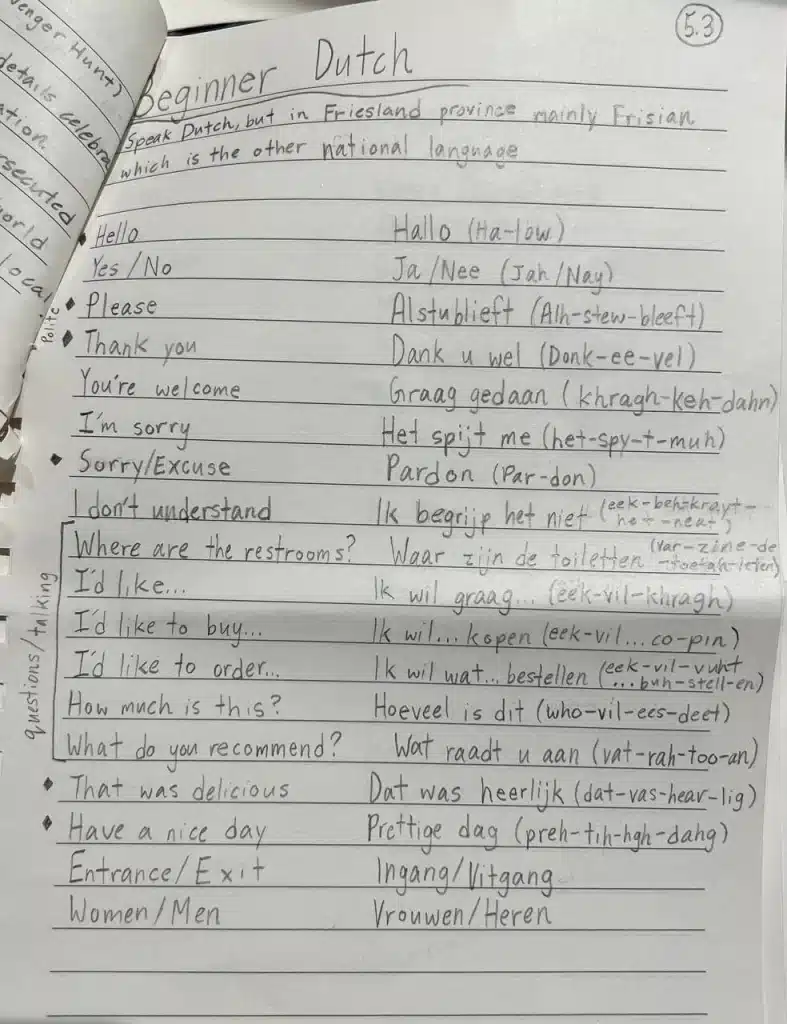
The high schooler said she wanted to learn in advance about the historical sites, as well as how to say basic phrases in Dutch and French, so she could be fully immersed upon arrival.
The numerous personal items and photographs of children who were killed during the Second World War have already left a lasting impression on the Grade 11 student.
For someone who regularly journals, it was particularly powerful to see excerpts of Anne Frank’s diary, she said.
Jamella bought a build-it-yourself replica of “Anne Frank Huis,” a souvenir she plans to share, along with her newfound knowledge, by constructing it in collaboration with her cousins in Winnipeg.
Their trip includes stops in Amsterdam, Paris and both the Vimy and Normandy regions.
They visited the Essen Farm Cemetery, Flanders Fields Museum and attended a “Last Post Ceremony” at the Menin Gate, a nightly performance that takes place at 8 p.m. local time to salute fallen soldiers, on Monday.
This story was originally published in The Free Press. It is republished under a Creative Commons license as part of the Local Journalism Initiative.
Our Prairie stories matter too.
The Flatlander takes a closer look at the stories that unite us, and make us unique, in Saskatchewan and Manitoba.
Will you help us tell our stories?
Author