Looking back on the first 10 years of the Canadian Museum for Human Rights
As the museum embarks on its second decade — having marked its 10th anniversary in September — it remains committed to expanding its reach and fostering meaningful conversations.
Perhaps like many folks, I first visited the Canadian Museum for Human Rights when it opened in 2014. Once in a while, I returned when out-of-town guests wanted to see it, guiding them through the striking architecture and powerful exhibits. But recently, I have made a point of visiting the museum more often. What I have discovered is that the more I go, the more I appreciate that this isn’t just a place to visit once or twice — it’s a place to return to, to learn from, to reflect on, and to challenge my understanding of human rights.
Each visit is a new experience. Whether it’s an exhibit I missed the first time or a new addition to the museum’s evolving programming, the CMHR continues to deepen my awareness of human rights issues both globally and here in Canada.
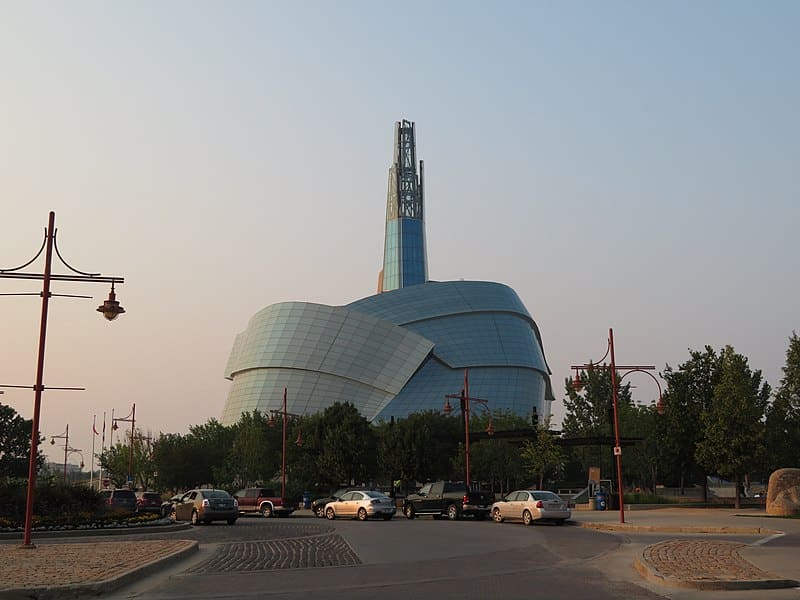
Since its opening, the museum has welcomed over 2.25 million visitors, including hundreds of thousands of children, which reflects its significant role in educating the public about human rights and fostering dialogue on these critical issues. As the museum embarks on its second decade — having marked its 10th anniversary in September — it remains committed to expanding its reach and fostering meaningful conversations.
Early critics accused the CMHR of selectively telling only certain human rights stories. Others argued it wasn’t adequately addressing Canada’s history with Indigenous Peoples, particularly in the context of residential schools and colonialism. Additionally, the museum faced claims of systemic racism and a toxic workplace culture, which prompted an independent review and a change in leadership.
Local, independent, in-depth.
Our Prairie stories.
Through these challenges, the museum has evolved, making significant efforts to address issues of inclusivity, both within its walls and in its exhibits, ensuring that underrepresented stories are brought to the forefront. One example is its new exhibit, Love in a Dangerous Time: Canada’s LGBT Purge, which opened on Jan. 31. This exhibit examines how, between the 1950s and 1990s, the Canadian government systematically investigated, harassed, and dismissed 2SLGBTQI+ individuals within the Canadian Armed Forces, RCMP and federal public service — and explores the psychological toll and societal consequences of the policy.
Leading the museum through these ongoing conversations is Isha Khan, the CMHR’s CEO since 2020. A human rights lawyer and advocate, Khan has worked to ensure the museum is not only a place of learning but also one of action and inclusion. In this Q&A, she reflects on the museum’s role, the challenges of leading a human rights institution and why these conversations matter now more than ever.
Q: Congratulations on the 10-year anniversary of the museum. What do you think the CMHR has accomplished in its first decade and what do you hope for in the next 10 years?
A: The first 10 years have been a time of learning and growth. The museum remains an architectural marvel, inspiring awe as a space for human rights that celebrates and reflects on them to inspire change. Over these years, we’ve learned what it takes to maintain that inspiration and remain relevant. It’s not just about doing the work; it’s about building relationships with others, being open to learning, and reflecting on those lessons.
We now see ourselves more than ever as a place for storytelling. We steward stories, taking care of them so we can share them with others. Our collection is not like other museums; it’s not about collecting artifacts in the traditional sense. Rather, we use artifacts as part of our storytelling approach. This has been a unique aspect of our journey, and we continue to grapple with how to do museum work differently, with relationships at the core of everything we do.
Q: I know that you’ve developed a new strategic plan. Tell me a little about that.
A: We’ve got years of operations now, and we understand how people engage in our spaces and what it means to be a national museum, particularly in Winnipeg. What we came up with is a framework called “Our Path Forward.” It’s a strategic framework that crystallizes what we do and articulates it clearly.
So, what do we do? We share stories that inspire action, we create transformative experiences, and we model and promote human rights. We see this every day, whether it’s students, people attending events and panel talks, or visitors going through an exhibition. When we look at these three pieces together, relationships are at the centre of all of it.
This framework has helped us understand who we are as a national museum in Winnipeg, at the meeting of the Forks, on these sacred Indigenous lands. It really sets us up to do the work we want to do in the next decade.
Q: In 2020, the museum faced a major crisis when its leadership faced allegations of racism, discrimination, homophobia, and sexual harassment and assault. The situation led to the resignation of the past CEO and your hiring. At the time, you made a pledge to address the accusations. How is that going?
A: When people ask me how it’s going, I say we’re on a good path. Addressing systemic issues, particularly discrimination, racism, and homophobia, is work that needs to happen every day. It must become a practice in institutions and large organizations.
How are we today? We’ve ushered in significant structural changes, creating spaces where staff can communicate, raise issues, and be heard. We talk about relationships and stewarding stories. What does it mean for a museum to share stories of injustice from communities or individuals?
I think what we’ve tried to do is build accountability so we’re accountable to the public we serve. But also, we had to really work on being accountable to each other.
As a museum for human rights, our goal, like any institution, is to ensure that people work with respect and dignity. With the microscope on us, we chose to embrace it, using the opportunity to be transparent, share what we were learning, and serve as an example for others. We know there’s racism and discrimination in every organization, but we’re committed to being open about what we’re going through and what’s working — and what isn’t. There’s still a lot of work to do, but we acknowledge that it will always be a long game.
Q: I’m a 64-year-old white guy, and I know there’s a lot of education going on to help people like me understand human rights. I grew up in a certain way, and sometimes I don’t even know what some of these terms mean. Can you help me understand what the term ‘human rights’ really means and what it means to truly value the inherent dignity of others?
A: I think it’s a fair question, and I appreciate you asking it because we talk a lot about how we’re going to promote a better understanding of human rights, which is our mandate.
We have to meet people where they’re at. We’re all on a journey when it comes to understanding human rights.
The best way I can describe it is: human rights are based on the idea that all human beings are born free and equal in dignity and rights. It means that every person, regardless of who they are, is born with inherent rights. The world, unfortunately, doesn’t always reflect that reality. Many of us face discrimination because of factors like gender, age, sexual orientation, ethnicity, or finances. Not everyone is seen as equally deserving of respect and dignity.
When we talk about human rights, it comes down to recognizing that everyone has the same inherent worth. For example, despite any differences, you and I were born with the same rights. Unfortunately, society doesn’t always grant us the same privileges.
In today’s polarized world, people argue over human rights, often from opposite sides, making it harder to have meaningful conversations. However, the core principle of human rights is simple: it’s about respecting each other. In the small moments of daily life, we should treat each person with the same respect, regardless of where they come from or what they believe. That’s what human rights is all about.
Q: Do you have a favourite exhibit in the museum? There are so many, so it’s like asking for a favourite song, but if you had to choose one, what would it be?
A: It’s hard to pick just one because there are so many impactful exhibits, but I particularly like the Canadian Journeys Gallery. That space really brings together key moments in Canada’s history and the lessons we need to learn from them. It addresses issues like Chinese head taxes, Japanese internment, the REDress Project and Indian Residential Schools — just to name a few.
What I find powerful about this gallery is that, even after you see the terrible things we’ve done to each other in this country, you also witness acknowledgment, apology, redress, reclamation, and reconciliation. It’s a space that leaves you with hope. We’re a national museum, and we have the opportunity to tell the stories of our past, learn from them, and move forward with the hope that we can do better.
Q: Is there a hidden gem in the museum that people should visit more?
A: I have to mention the Witness Blanket. It’s a stunning piece of art created by master carver Carey Newman, a Haida artist from the West Coast. The blanket is made up of around 800 pieces collected from sites of Indian residential schools, government buildings, and other significant places. It’s a powerful piece of storytelling and a beautiful representation of truth. I always call it “a beautiful piece of truth.”
What makes it so special is that every time you spend time with it, you learn something new. Whether it’s a doorknob or a skate, each piece has its own story. There’s a great digital companion site at witnessblanket.ca where you can learn more about the stories behind the pieces. People often stand in front of it for a long time, lost in thought, and that’s exactly what this museum is for — to make people think, reflect, and learn.
Q: There’s been a perceived schism between the museum and the Indigenous community in Manitoba, with early issues that you’ve worked hard to address. You’ve made it a priority to reconcile, making changes in wording and practices. How is the museum’s relationship with the Indigenous community today compared to four and a half years ago?
A: I would say it will always be a journey. We’ve spent a lot of time trying to be good relatives, trying to restore what it means to be in a treaty relationship. That takes work, effort, and time, and we’ve been really fortunate to have the grace of people who’ve given us space to learn.
We’ve introduced ceremony in the museum and have been involved in important actions, like supporting the letter for the landfill search, which was important to the community. Indigenous communities across Canada are vast and broad, and so it’s never just one community we’re talking about — it’s about many.
When we measure success, it’s in the strength of the relationships we’ve built. We’ve done good work with many Indigenous communities, but there’s still much work to do. When I entered the museum in 2020, our team already recognized that we had work ahead of us. Making it a priority was crucial.
As a Museum of Canada, we also need to acknowledge that we are a colonial institution — a crown corporation. So what does it look like to change how we do things? Bringing in Indigenous knowledge takes time, but it starts with us opening our minds to think differently and creating space for others.
Q: Your term is up soon. Are you planning to continue here after it ends?
A: Yes, I was appointed for a five-year term, so it ends in August 2025. There’s still work to be done, but I haven’t made any decisions yet, and I don’t have any concrete information to share at the moment.
What I can say is that we’re on a good path forward, and part of my job has been to ensure that, whether I stay or go, or whether any of us are here or not, this place retains the memory of where we’ve been and where we want to go. That requires systems change, not just changes in people. And that’s why it takes longer.
Our Prairie stories matter too.
The Flatlander takes a closer look at the stories that unite us, and make us unique, in Saskatchewan and Manitoba.
Will you help us tell our stories?
Author