Gene editing crops: taking years off plant breeding
Gene editing is an increasingly common tool for scientists, partly because the Canadian Food Inspection Agency (CFIA) announced that gene-edited seeds in Canada would be regulated the same as conventionally bred seeds this past spring.
What if farmers could significantly slow climate change by simply continuing to do what they already do, just with better seeds?
That’s the question scientists at the Global Institute for Food Security (GIFS) in Saskatoon are in the early stages of exploring.
Led by senior scientist Dr. Raju Datla, the team is investigating how the protein structure within a plant’s DNA can increase its water- and nutrient-use efficiency, drought tolerance and carbon sequestration.
The team can carry out this research in an affordable, efficient, and timely way by using gene editing technology, which allows scientists to alter an organism’s DNA easily and precisely.
Gene editing is an increasingly common tool for scientists, partly because the Canadian Food Inspection Agency (CFIA) announced that gene-edited seeds in Canada would be regulated the same as conventionally bred seeds this past spring. (The United States, Japan, and Brazil also have similar regulations.)
Local, independent, in-depth.
Our Prairie stories.
This is a positive development for Canadian plant breeding programs, as gene editing technology can take years off the typical eight-to-10-year seed breeding cycle. (Seed breeding forms new plant varieties through controlled cross-pollination to achieve specific desired traits).
Gene editing also has the potential to increase disease resistance in crop varieties bred for the Canadian prairies – as researchers at GIFS and other Canadian institutions are in the process of proving.
The benefits of this announcement will also stretch beyond the research world, said Dr. Nancy Trout, Chief Scientific Officer at GIFS.
“We’re pretty pleased that they [the CFIA] took a very science-based, rigorous approach in this. Anytime you have regulations that start to stray from being science-based, it’s not good for the consumer, the environment, the farmer.”
But while the CFIA announcement may be considered a win for the Canadian ag research community, other stakeholder groups believe it might be too early to celebrate.
Gene editing – why all the hype now?
Scientists have been using gene editing technologies for decades, but in 2012, scientists launched one specific version of a gene editing tool that would make headlines worldwide.
CRISPR-Cas9, co-invented by scientists Jennifer Doudna and Emmanuelle Charpentier, allows scientists to edit DNA more effectively, easily and cost-efficiently than ever. (CRISPR stands for “Clustered Regularly Interspaced Short Palindromic Repeats,” and “Cas9” refers to the protein used in the process.)
This was a significant breakthrough in the science world. Doudna and Charpentier won the Nobel Prize in Chemistry in 2020 (amongst many other awards).
Soon, the technology was adopted by scientists who used CRISPR to create a therapy to successfully treat sickle cell disease, a disorder that affects an estimated 20 million people globally.
When it comes to plant breeding, gene editing technology offers some marked differences over previous technologies.
Unlike genetic engineering, gene editing does not put foreign materials, such as genes or DNA from other organisms, into the plant; scientists work with what’s already there or make changes that could occur independently.
These developments, and the CFIA announcement earlier this year, have put CRISPR, and gene editing more broadly at the forefront of people’s minds.
How are gene-edited seeds currently regulated in Canada?
As per the CFIA’s announcement this past spring, gene-edited seeds currently fall under the same regulations as conventionally produced seeds in Canada.
This means they must adhere to the strict regulatory process that governs all seed produced in Canada but likely won’t trigger the additional regulatory reviews required when a novel trait has been introduced into a new crop variety.
The current regulations around gene editing are a signal to plant breeders that gene editing technology is now considered to be a more standard breeding tool, said Dr. Aaron Beattie, a barley and oat breeder at the University of Saskatchewan Crop Development Centre (CDC).
“Even if you’re using what we would consider traditional tools, say mutagenesis, if you changed the plant in a significant way, that could still produce a regulatory review,” he says. (Mutagenesis is a technique by which DNA variations are deliberately engineered to produce mutant genes, proteins, or strains of organisms).
“But the CFIA and Health Canada would consider most products being produced from traditional plant breeding activities to be safe, and they now consider CRISPR to be one more traditional plant breeding tool.”
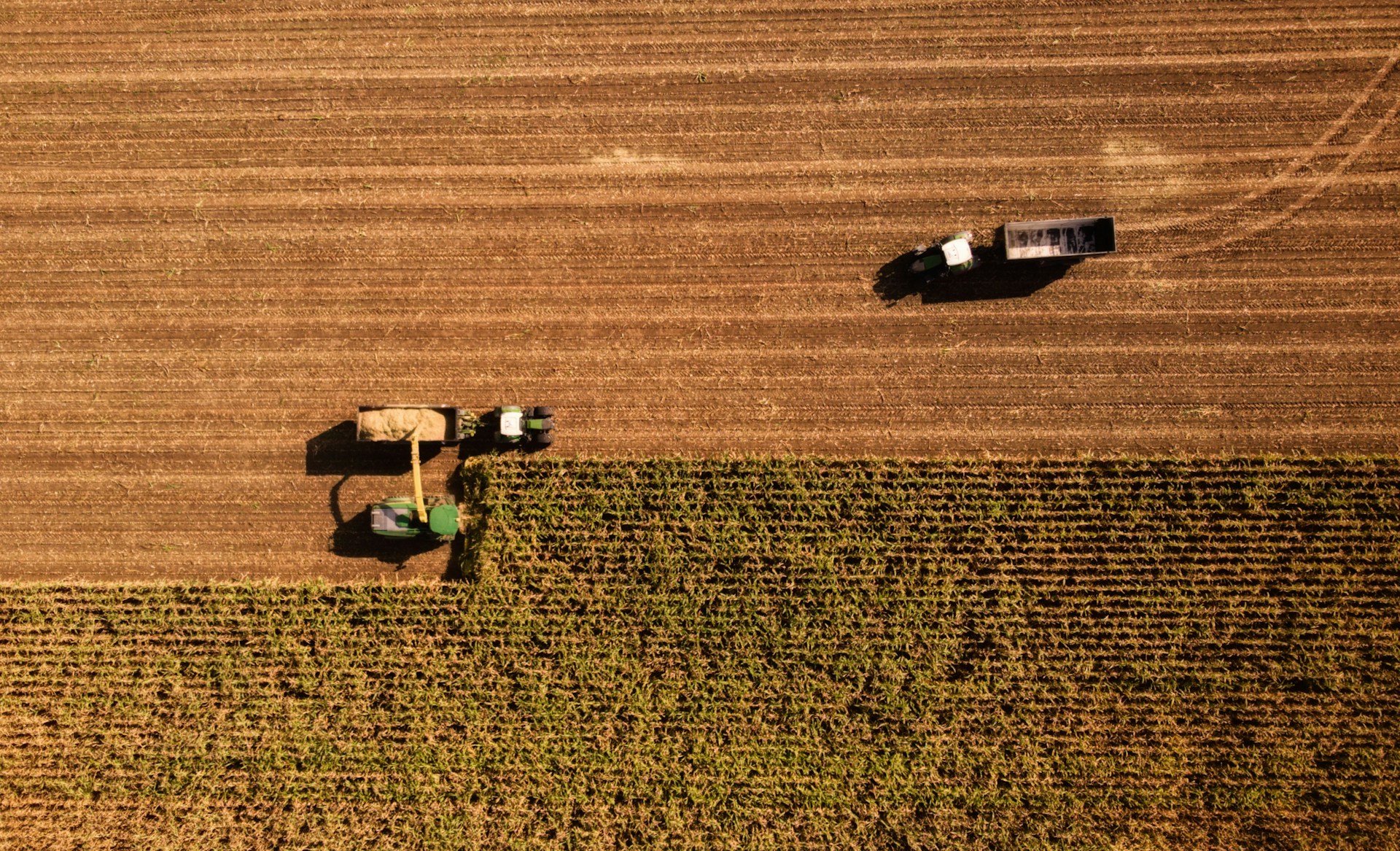
Canada’s approach to seed regulation is based on a 1996 Health Canada decision to regulate based on the final product rather than the process used to develop it. It is the same in the United States and Brazil.
Ian Affleck gives a building analogy to explain this concept: “It doesn’t matter if you use a drill or hammer. The question is, did you meet the building code?”
This move is applauded by many within the Canadian biotechnology sector, says Affleck, Vice-President of Plant Biotechnology for CropLife Canada (a member-based organization representing the Canadian pest control and plant breeding sector).
“Canada had great foresight in seeing that a product-based approach was more scientific than a process-based approach, which we see in other countries,” he says.
Trout says that Canada’s product-based system allows for the continued innovation required to produce affordable and healthy food and crops that are well-adapted to meet current growing conditions and challenges.
“Canada has one of the strongest regulatory systems around the world. I think the consumer can take a lot of confidence in that. We’ve always had a very proud system of following the science.”
The case for caution
But, of course, not everyone is as excited.
Since CRISPR-cas9 rocked the scientific world more than a decade ago, there has been much concern globally around ensuring the technology is properly regulated, safely, and ethically used.
Perhaps the most controversial potential use of technology comes with its ability to edit the human genome. Already, one scientist in China was sentenced to prison for genetically editing the genomes of twin baby girls (allegedly to make them resistant to HIV infection).
Closer to home, concerns have been voiced by the Canadian organic food production community around transparency. For food to be considered organic in Canada, it can’t be genetically engineered or gene-edited.
Current regulations don’t require public disclosure of the gene editing processes, so consumers won’t know which foods use gene-edited ingredients.
Because of this, the Canada Organic Trade Association called on Health Canada to reverse its decision on gene editing in late September.
Other small stakeholder groups have questioned the longer-term safety of the gene editing process in plant development.
These types of concerns can make the technology less appealing to plant breeders, says Beattie.
“That’s always been our hesitation for using this technology because there really needs to be some fairly wide industry (and consumer) approval before we go forward with commercialization,” he says.
Even though gene editing is such a great tool for basic research, allowing researchers to understand the function of genes better, it’s still too early to say how widely it will be adopted into the CDC breeding program for this reason, Beattie says.
“Some of the language around gene editing is similar to the conversation around labelling on food products, where there’s this idea that genetically modified organisms should be labelled.”
He says he has already fielded questions from the oat industry about whether breeders would disclose the use of gene editing in new varieties.
“They would need to know that because their customers will be asking those questions.”
Retired plant breeder Dr. Bryan Harvey agrees that industry acceptance will be critical.
“They’re [the malting industry] going to have to be really convinced there is a general acceptance of this technology before they’ll touch anything that’s been developed,” says Harvey, who was a breeder at the CDC for four decades, where he developed some of the most well-known Canadian malting barley varieties.
“We’ve been able to dramatically transform barley for decades, but there are no genetically modified barley varieties out there in commerce. Unfortunately, the same thing can happen here, which is too bad because this is a very powerful tool.”
There’s also another risk involved with gene editing technology in Harvey’s mind, which is overhyping its potential.
While the technology could be very effective towards specific breeding objectives – like increasing disease resistance in new varieties – it can’t do everything, he says.
“It’s very good for simply inherited traits. For very complex characteristics, such as yield, it isn’t.
Cautiously optimistic
Despite these concerns, there’s a strong consensus that this technology will have a significant, positive impact on Canadian food production, and work is being done to ensure this can happen.
In an effort to improve transparency around the use of the technology, Seeds Canada – a member-based organization representing the Canadian seed sector – now publishes a public seed database designed in part to bring transparency to plant breeding processes in Canada.
Experts say these efforts to increase transparency are essential, as is demonstrating the benefits of the technology to consumers.
For example, at a time when the cost of food has become a top concern for more than half of Canadians, consumers should be made aware of how advances in plant breeding technology drive food affordability and security, says Dr. Stuart Smythe, a Professor in the Department of Agricultural and Resource Economics at the University of Saskatchewan.
“I think that’s a big part of what’s missing in our communications is that we’re not linking them to how these technologies help keep food price increases at a minimum,” he says. “As an industry, we need to do better about positioning that value contribution of innovation.”
However, many believe public acceptance will come naturally as Canadians increasingly see the benefits of new plant breeding technology for farmers, consumers and the environment.
“The first generation of GMOs was mostly focused on on-farm benefits. The consumer is removed from that – it doesn’t speak directly to them,” Affleck says.
But gene editing technology is already yielding products that offer tangible benefits directly to consumers, such as high-fibre wheat and non-browning lettuce, which will hopefully encourage more consumer interest in the product rather than the process, he says.
“We sometimes get so focused on the technology, on the tool, and the tool becomes the star of the show. But it doesn’t matter what tools you’re using; it’s important that we keep breeding new varieties that are more efficient, that can help us deal with the impacts of climate change, and help us be more sustainable on our farms.”
Our Prairie stories matter too.
The Flatlander takes a closer look at the stories that unite us, and make us unique, in Saskatchewan and Manitoba.
Will you help us tell our stories?
Author