A Saskatchewan tree farm still growing after almost 90 years in business
Lakeshore Tree Farms southwest of Saskatoon, which was started in 1936, during the Great Depression, is still going strong.
Although Vic Krahn is a co-owner of Lakeshore Tree Farms, a 250-acre tree nursery operation southwest of Saskatoon, he initially wanted nothing to do with growing trees.
“I wanted to be a park ranger,” he said.
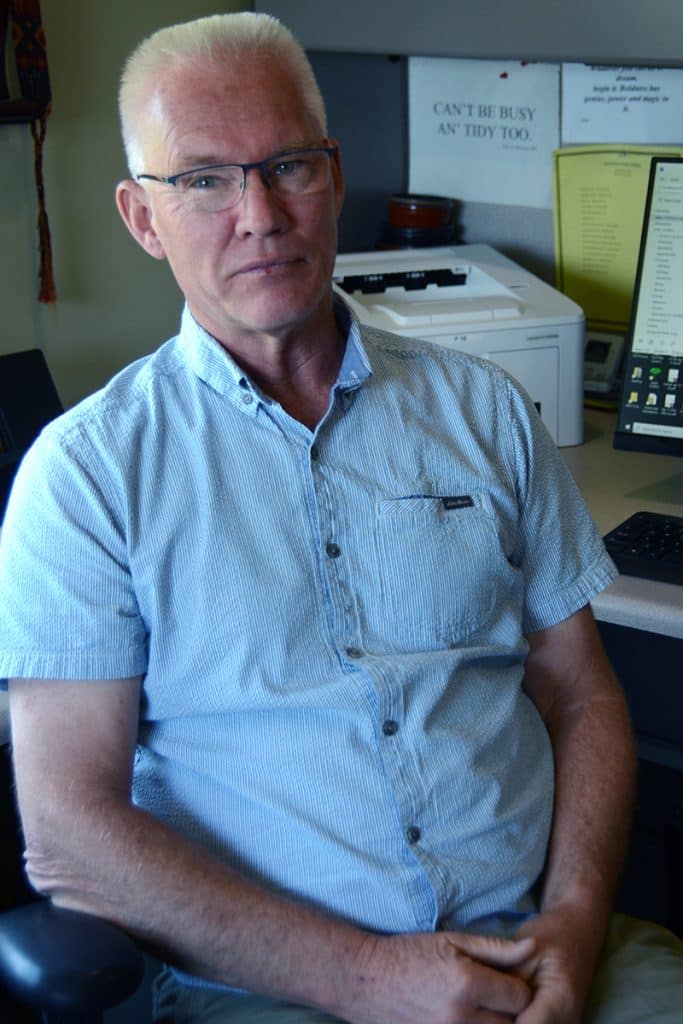
His family’s tree farm was started in 1936, during the Great Depression, by Vic’s grandfather J.M. Dyck.
He planted fruit trees at Wilson Lake, about 13 km west of Straun, Sask.
Local, independent, in-depth.
Our Prairie stories.
Word of the orchard’s exceptional varieties began to spread, prompting Dyck to expand his efforts.
By 1937, he had propagated 1,000 trees, marking a significant milestone for the fledgling business.
At first, the tree nursery operated as a strictly mail-order business.

The company’s first price list, a modest four-page pamphlet, offered a selection of fruit tree varieties, including the Heyers #12 apple, Dolgo crabapple, Dandy and Pembina plums, and Opata Cherry Plum—all of which continue to be sold to this day.
Back then, prices were low by today’s standards: one-year-old trees were priced at 25 cents, two-year-olds at 55 cents, and three-year-olds at 65 cents.
The business quickly flourished, and within five years, Lakeshore was shipping fruit trees across Canada.
Early on, the nursery was kept tidy with a horse-drawn, adjustable, one-row cultivator, while weeds between the rows were kept at bay by hand with a push-hoe.
By 1941, the operation had outgrown its humble beginnings, prompting the purchase of a new half-ton truck, a used walking tractor, and an additional cultivator to streamline the work.
Navigating Challenges: The Early Years in Saskatoon
In 1953, after Dyck passed away, his son George, along with his wife Antonia, affectionately known as Tony, decided to relocate to Saskatoon, where they purchased Weaver’s Nursery on 11th Street West.
The move to Saskatoon brought its own set of challenges.
The soil, classified as a light sandy loam, proved difficult to manage.
Unlike the rich, heavy clay soil they had worked with near Struan, this new soil dried out quickly, and the prairies were enduring a persistent drought.
These conditions took a toll on the nursery’s early plantings, and many of the newly established trees died under the harsh climate.
Despite these setbacks, George’s perseverance paid off.
He forged strong relationships within the horticultural community, gaining a reputation for his expertise and dedication.
He became the first president of both the Saskatchewan Nurserymen’s Association and the Prairie Association of Nurserymen.
Through these networks, George played a pivotal role in introducing several new plant varieties, including the Edith Smith apple, Thiessen and Honeywood Saskatoons, Thunderchild flowering crab, Green Giant poplar, and the Sutherland Golden elder.

A new generation and expanding horizons
Vic’s brothers would go on to grow trees and shrubs with their father, selling wholesale to other nurseries.
Customers would look at catalogues and place orders, with staff filling them.
In 1974, a new chapter began for Lakeshore Nursery when George passed the reins to his sons, who bought the business from him.
At that time, the nursery covered about 80 acres of trees and shrubs, with a retail outlet selling bare-root plant material stored in a cold storage root cellar.
The business, though established, was still in its early stages of growth under the new leadership.
Vic would join his brothers as a co-owner since the park ranger thing never worked out.
By 1980, Lakeshore purchased another 160 acres of land on the shore of Moon Lake, located 16 km south of their original site on 11th Street West.
The new location, with its better conditions, allowed the land to be levelled, facilitating the use of flood irrigation. This vital improvement helped sustain the nursery’s expanding operation.
A growing family
For roughly 10 years, Vic continued to work with his brothers, running the tree nursery.
His wife, Lee, now another co-owner of Lakeshore Tree Farms, worked as a bookkeeper, tallying daily sales ledgers and managing general bookkeeping details for the business.

Lee and Vic met as teenagers at Rosthern Junior College, a private school 65 km northeast of Saskatoon.
Their families shared a similar history. Lee’s grandparents left what is now the Ukraine to come to Canada, as did Vic’s family since Rosthern had become a common destination for Mennonites fleeing an oppressive Russia.
Vic and Lee married in 1975 and had two children, Pam and Aaron.
In those early days, Vic and his family landscaped commercially and residentially in addition to moving trees.
“We did whatever would put food on our table,” said Vic. “The 1980s were brutal.”
Cultivating Saskatoon bushes
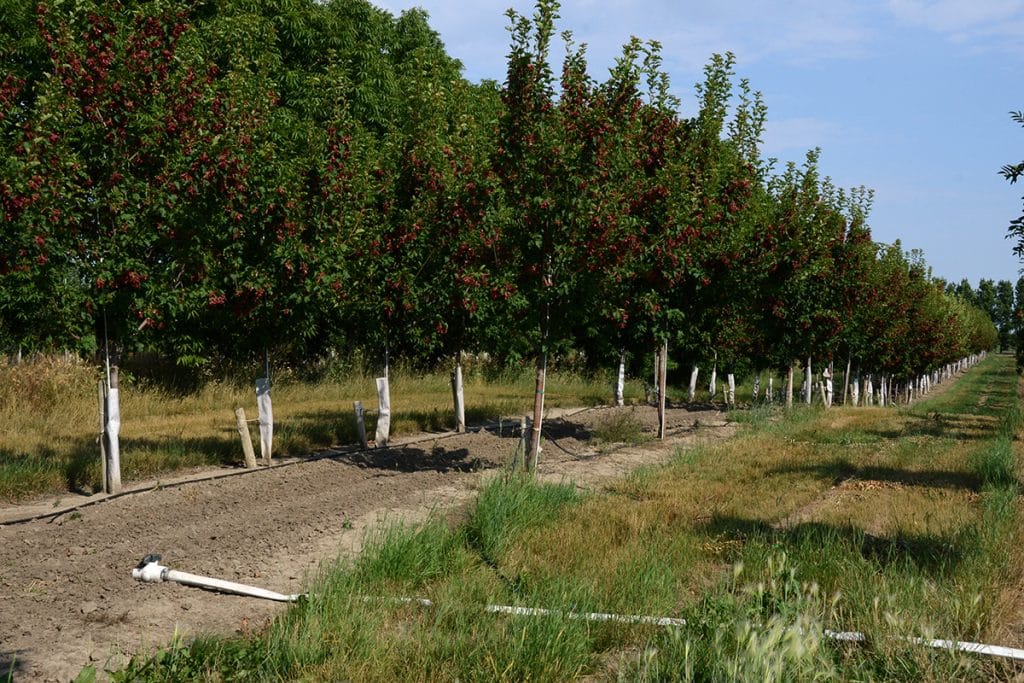
Partway through that decade, a client from Winnipeg asked the Krahns to grow seedlings.
“(My) brothers didn’t want to,” says Vic. “So Lee and I did it. At the same time, we learned how to grow Saskatoon berry cultivars (shrub seedlings) as the u-pick market was just starting. This became the basis of the seedling operation.”
Before the 1980s, Saskatoons were usually harvested in the wild. There were no commercial Saskatoon orchards or Saskatoon shrub seedlings available for purchase like there are now.
Over the years, Lakeshore introduced Saskatoon seedlings to Finland, the Czech Republic, Sweden, Germany and the Netherlands.
Becoming a community leader like his father
Around the same time Vic was learning how to grow Saskatoons, he became the president of the Saskatchewan chapter of the Canadian Nursery and Landscape Association.
Later, he was the Canadian representative of the Association of International Horticultural Producers (AIHP).
This led to Vic’s appointment as the chair of the Novelty Protection Committee in 2006, which focused mainly on plant breeders’ rights and legislation.
From there, Vic became president of AIHP.
Vic recalls making notes on a napkin at a meeting of the AIHP, where he developed the idea that Canadian nursery growers needed a platform for exchanging ideas and learning about best practices.
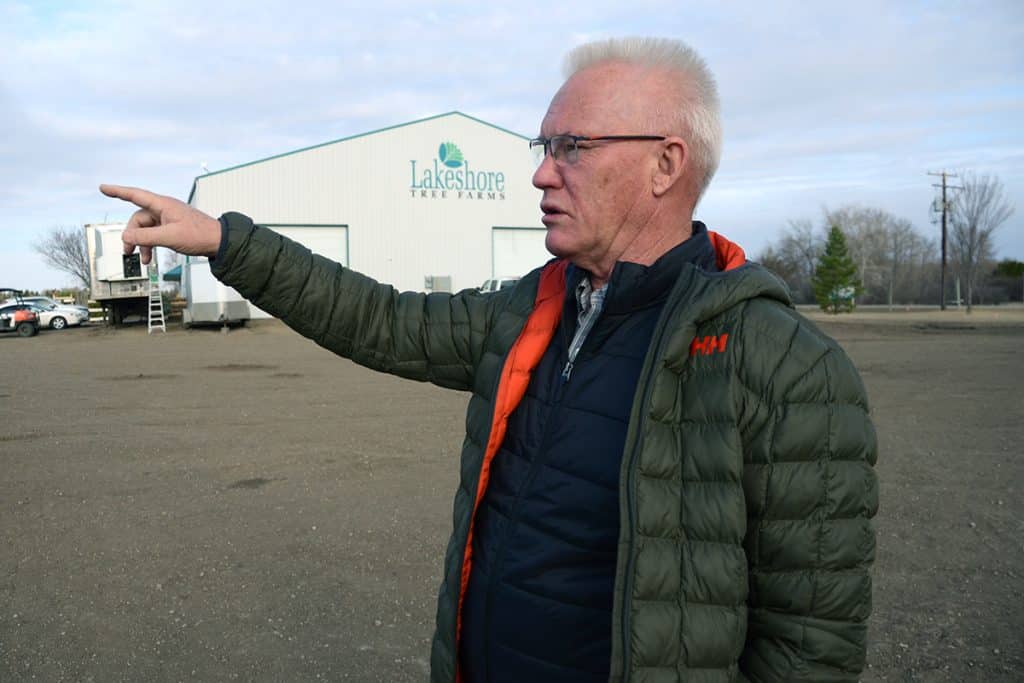
“Vic is a passionate supporter of the global ornamental horticulture and landscape industry to which he devoted his time and efforts during his presidency (2012-2015). He had a clear vision to make AIPH a great organization,” Tim Briercliffe, Secretary General of the International Association of Horticultural Producers, based in the United Kingdom, wrote in an email. “He was, and still is, well loved by AIPH members from around the world.”
“I was humbled that I could contribute at that level,” said Vic, who never lost his focus on the needs of growers. “If we don’t serve our growers, we don’t need to exist.”
Vic is quick to point out that without his brothers’ support, he couldn’t have taken on the professional association work the way he did.
“Working with my brothers was great,” said Vic. “They allowed me to travel as I needed to continue the volunteer work which I loved.”
Opening a greenhouse retail location—the Lakeshore Garden Centre
In 1988, as Vic’s and Lee’s children grew older, Lee was ready to take on an additional challenge, so she proposed running a greenhouse retail operation.
The partners agreed, and they opened one at the College Park Mall on the east side of Saskatoon.
In the early days of this operation, Lee would pick up inventory at their nursery operation on 11th Street, load it into a trailer and deliver it to the College Park Mall retail location. But as the business grew, the clientele expanded.
In 1999, the Krahns purchased an acreage, where they built what became Lakeshore Garden Centre, which had its grand opening the following year.
“It was the right time and the right place. There was nothing at that end of the city,” said Lee, who is the oldest of five children from a hardworking farm family in Alberta. “That we made the right forecast was pleasing, and to know that that strategy worked out.”

The biggest challenge for the garden centre was maintaining key staff in a seasonal operation.
One long-term staff member who worked there for over 23 years was Lynette Usselman, who looks back on the experience of working with Lee with fond memories.
“It was like a second family,” said Usselman. “It was fun, educational. I miss it.”
Farm water source jeopardized
Further expansion for Lakeshore Tree Farms came in 2005 when it acquired an additional 90 acres of adjacent land.
In 2015, Vic and Lee’s son Aaron, who grew up to become a co-owner of the business with his parents, discovered a deteriorating water pipe, which threatened not being able to access the farm’s water source from Moon Lake. Because of this, an expensive new pump station and sand filtration system needed to be installed at a time when Lakeshore was already upgrading to a costly drip irrigation system, which would improve overall efficiencies at the tree farm.
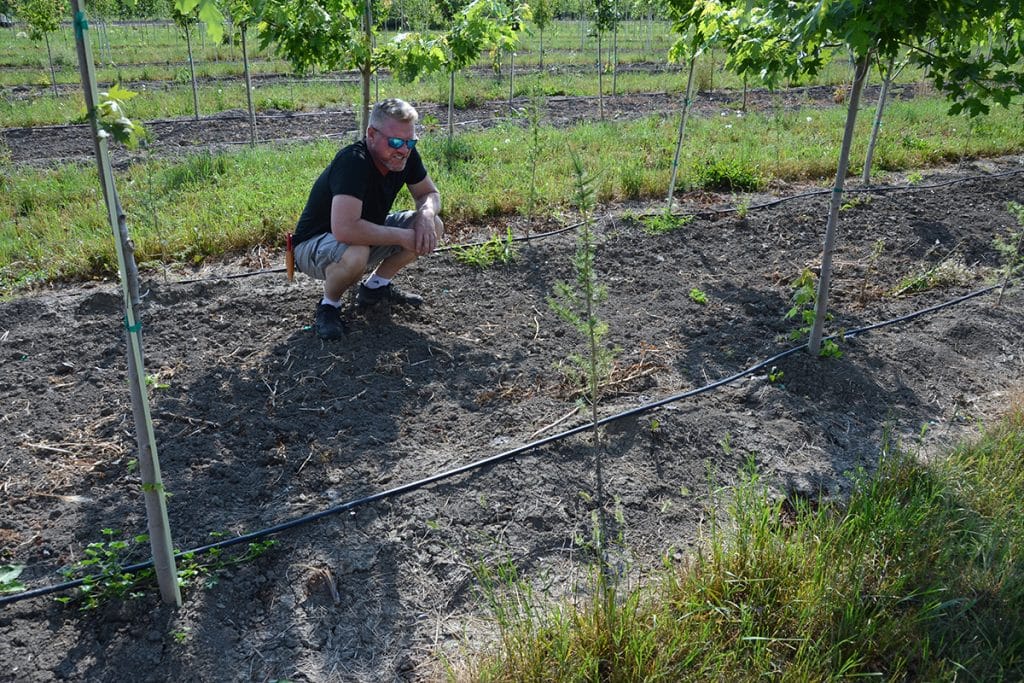
Despite the challenges over the years, Vic is proud the business continued to grow without it becoming a problem for the family.
“We started having family meetings which were really good, painful sometimes,” said Vic. “We talked about what was necessary.”
Saying goodbye to the greenhouse
In December 2023, after operating the Lakeshore Garden Centre for 24 years, the Krahns sold it to the Saskatoon Landscape and Garden Centre.
“It was difficult at first,” said Lee. “I pretty much retired, but I’m involved (with Lakeshore Tree Farms) whenever necessary.”
Usually, she helps with packaging online orders.
Aaron primarily manages the operations now, but Vic stays active in the day-to-day business, focusing on propagation.

“It always amazes me that we can collect a seed or take a cutting and that it actually grows. Working with living things, you start seeing not what’s right but what’s wrong. It’s an art,” said Vic. “It ratifies your soul as someone who is worthy of walking the journey. The nursery industry is good at that.”
“That (enthusiasm) will never leave him,” said Lee of her husband of 49 years. “With farmers that never leaves them.”
Our Prairie stories matter too.
The Flatlander takes a closer look at the stories that unite us, and make us unique, in Saskatchewan and Manitoba.
Will you help us tell our stories?
Author