
An educational holiday in Saskatoon – a museum mecca
Where do you take a 15-year-old who has never left Manitoba before? Saskatoon, of course, also known as Paris on the Prairies. The city has a rich museum and restaurant culture.
It’s a warm and glorious morning in early August as we cross the Manitoba/Saskatchewan border, heading west on the Trans-Canada Highway. The blue sky is dotted with white clouds, and the golden fields of wheat and barley stretch as far as the eye can see. The scenery is magnificent, and as I look over to see how my 15-year-old traveling companion is enjoying the view, I see he is transfixed — by his phone.
I poke his arm and advise him that people from all over the world come to the prairies to see these uncluttered, wide-open spaces. He gives me that “you’re-a-crazy-adult” look and suggests Saskatchewan is just like Manitoba. Kind of, I say. But in a good way. Perhaps to humour me, he spends a little time looking out the window and even snaps a few photos with his phone. I take that as a win.
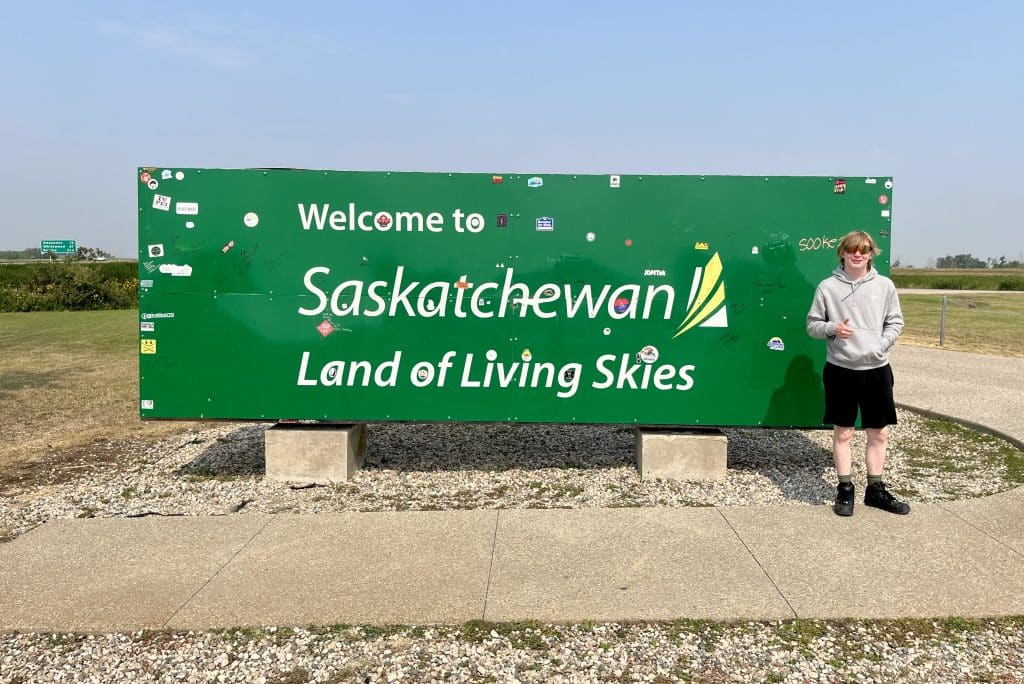
I shouldn’t be surprised by his perception of the landscape. I have driven west from Winnipeg many times over the years, and it has taken me most of my life to appreciate the majesty of the flatlands and its subtle differences.
The boy is my partner’s eldest son, and our destination is Saskatoon. It’s the first time he has been out of his home province, and we are embarking on an adventure I pitched to him with a Summer School Road Trip/Field Trip theme.
Local, independent, in-depth.
Our Prairie stories.
Saskatoon is a museum mecca: Paris on the Prairies. It has a cultural and artistic richness, with abundant educational opportunities. The teenager might have preferred Disneyland or the actual Paris in France, but visiting our neighbouring province seems like an ideal starter trip.
Our four-day trip included visits to the Ukrainian Museum of Canada, the Saskatchewan Railway Museum, the Remai Modern art gallery, and the Wanuskewin Heritage Park. We also discovered a frighteningly good pizza joint, the best bison burger in town, and plenty of fries.
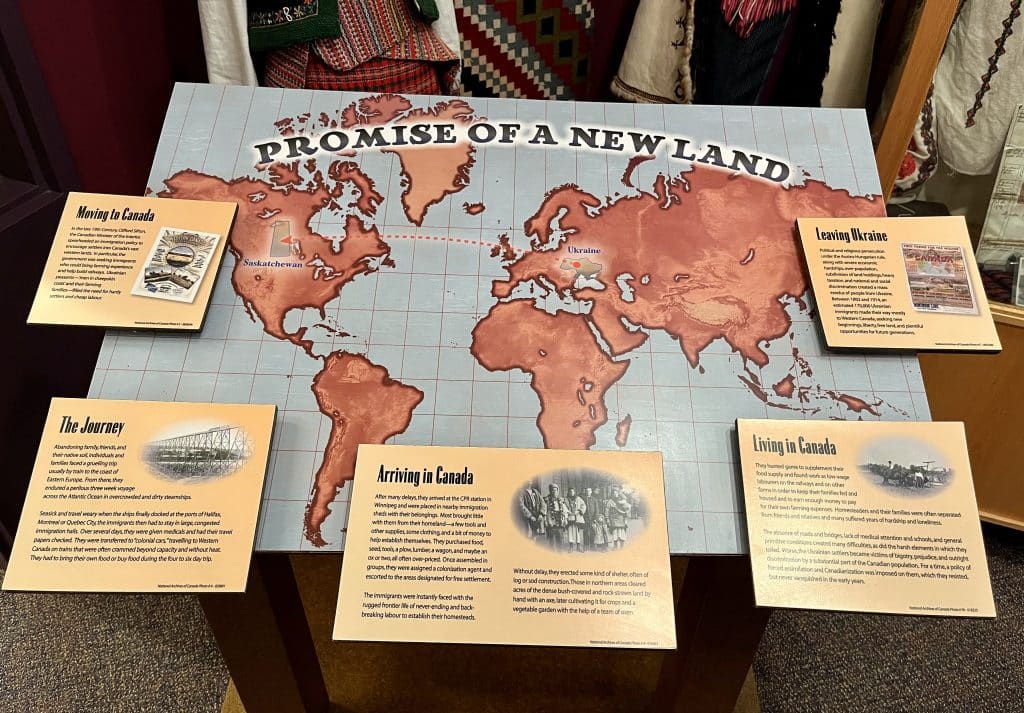
First period: When advised we were going to spend a morning at the Ukrainian Museum of Canada, learning more about the history of the country, the migration of its people to Canada, and the current situation in Eastern Europe, young Andrew inquired: “Is that war in Ukraine still going on?” Apparently, world news is not included in your typical teenager’s TikTok scroll.
A new administrative regime at the museum is determined to change that.
Hired in April of 2022, just a couple of months after Russia invaded Ukraine, executive director Jen Budney is passionate about modernizing the museum and broadening its reach while also remaining true to the founders’ original goals.
North America’s first Ukrainian museum was established in Saskatoon by Ukrainian Canadian women in 1936 to promote Ukrainian arts, culture, and heritage, and it currently houses a diverse collection of artifacts, artworks, and historical items.
“They knew that preserving and promoting Ukrainian culture and heritage would be very important for their children and grandchildren but also to let the world know that Ukrainian culture was something worthy of acknowledgment and celebration,” Budney explains. “It’s directly related to today’s circumstances.”
A fourth-generation Ukrainian Canadian whose great-grandparents settled on the Canadian prairies, Budney was born in Saskatoon, grew up in Australia, and has traveled, worked, and lived around the world. She holds a Master’s degree in Anthropology and a PhD in Public Policy, for which her research focused on public value created by small museums.
Two key hires are assisting with her mission “to make everyone a little more Ukrainian”: education head Karen Pidskalny and communications manager Lindsey Rewuski.
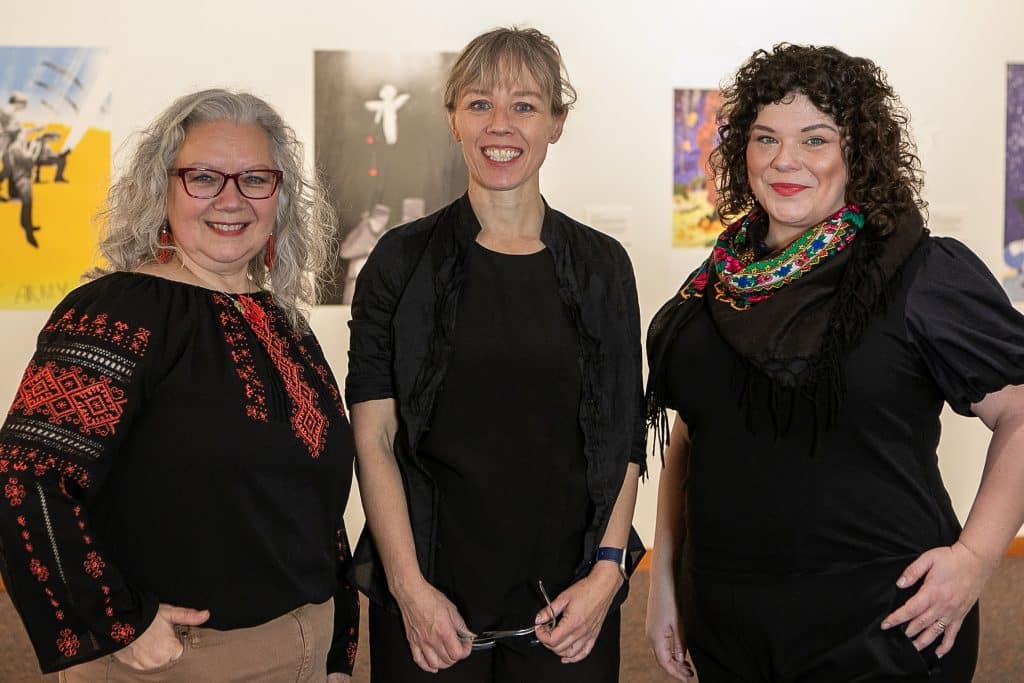
Pidskalny, a second-generation Ukrainian Canadian, has been a tireless worker in Saskatoon’s Ukrainian community and is developing educational programming at the museum for schools and seniors. Rewuski’s family came to Saskatchewan in the early 1900s. She is tasked with improving the museum’s social media presence and re-designing its website.
“We’re not just trying to connect with people in the Ukrainian community, but everyone,” Rewuski says. “Not just people with Ukrainian roots, but people who know people with Ukrainian roots. You’ve all had pierogies, right?
“It’s important for people to be able to keep the war top of mind. To stay interested in what’s going on in the world. To understand the context of what’s happening and how it impacts Ukrainians. How easy it is to lose a sense of culture, belonging, and who you are — and how important it is to support that.”
Second period: A proposed UNESCO World Heritage Site, Wanuskewin Heritage Park, is an active archaeological site that interprets over 6,400 years of Northern Plains Indigenous culture. Roughly translated, the word Wanuskewin means “seeking peace of mind” in Plains Cree. And there is definitely a serene and spiritual atmosphere to the surroundings.
Andrew and I spent a fair bit of time in the newly expanded Interpretive Centre, home to beautifully curated interactive exhibits, art galleries, videos, and presentation spaces, before heading outdoors to explore a set of trails that lead you through the landscape with thousands of years of history.
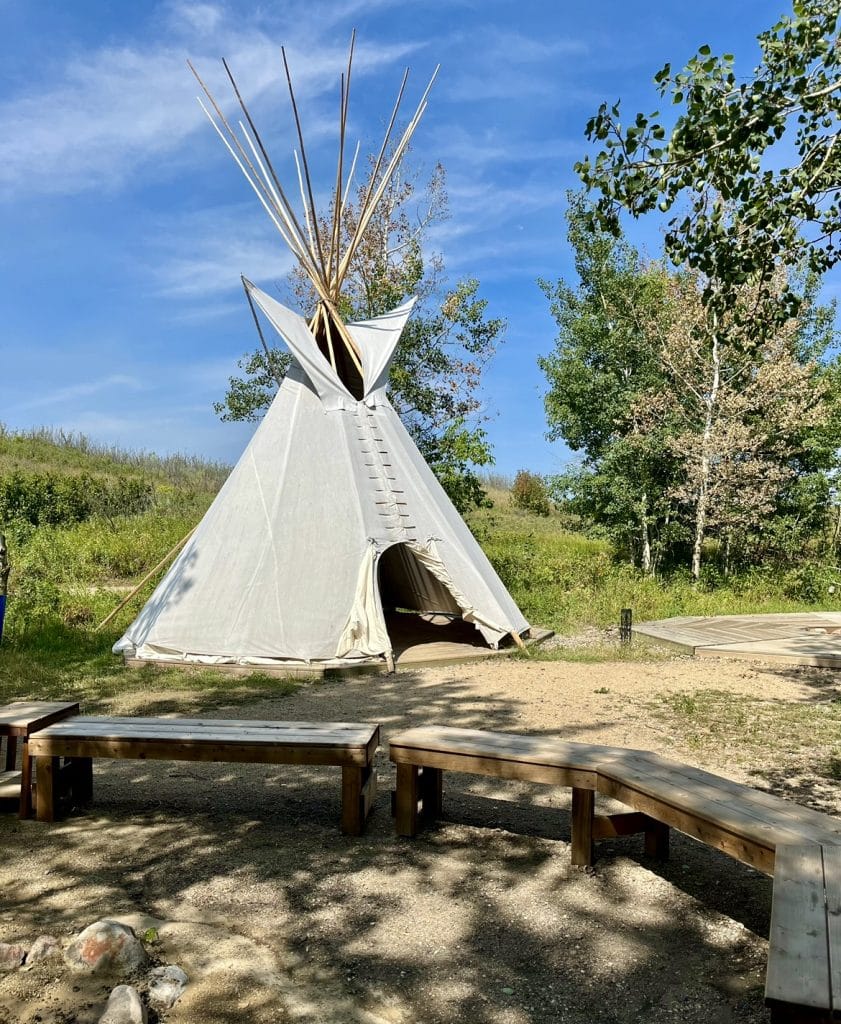
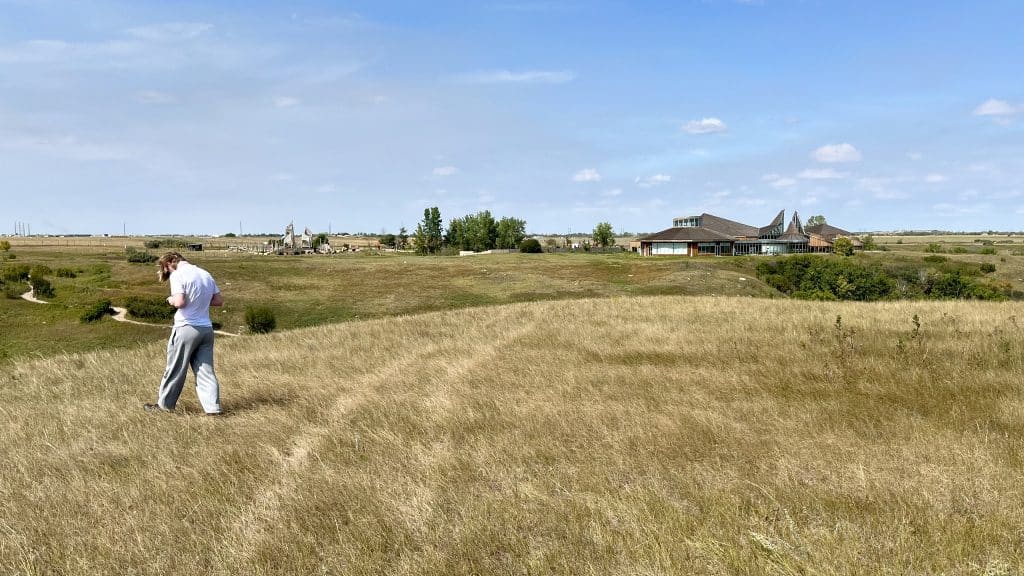

We walked the Path of the People and Trail of the Bison routes that provide magnificent river and valley views and took us to numerous points of interest, including a medicine wheel, tipi rings, and several buffalo rubbing stones.
In 2019, a vital piece of Indigenous history was reintroduced to the park when a herd of Plains bison was established. The animals, which once numbered in the millions, are culturally significant but also instrumental in helping to restore native grasses.
A viewing platform provides visitors with a close-up look at the herd.
Lunch break: The lad sampled several bison burgers in Saskatoon — no, none of them came from the herd — and his top grade went to the on-site restaurant at Wanuskewin. The fries also got a thumbs-up—another win.
Serving traditional Indigenous cuisine with a contemporary twist, the restaurant offers dishes like bison stew, goose soup, grilled elk, and various poutines. I enjoyed a delicious Three Sisters chilli — corn, squash, beans, lentils, and vegetables in a tomato base — with a side of band bannock.

Third period: Housed in a spectacular avant-garde building at Saskatoon’s River Landing, a downtown redevelopment district along the South Saskatchewan River, Remai Modern is an innovative and dynamic art museum with a diverse range of works from local, national, and international artists.
Opened in 2017, the gallery holds more than 8,000 artworks in trust, including the world’s most comprehensive collection of Pablo Picasso linocuts.
On display until the end of the year is a breathtaking exhibition by Canadian photographer Meryl McMaster, whose large-scale works reflect her mixed Plains Cree/Métis, Dutch, and British ancestry, in particular those of her Plains Cree female forebears from the Red Pheasant Cree Nation in present-day Saskatchewan.
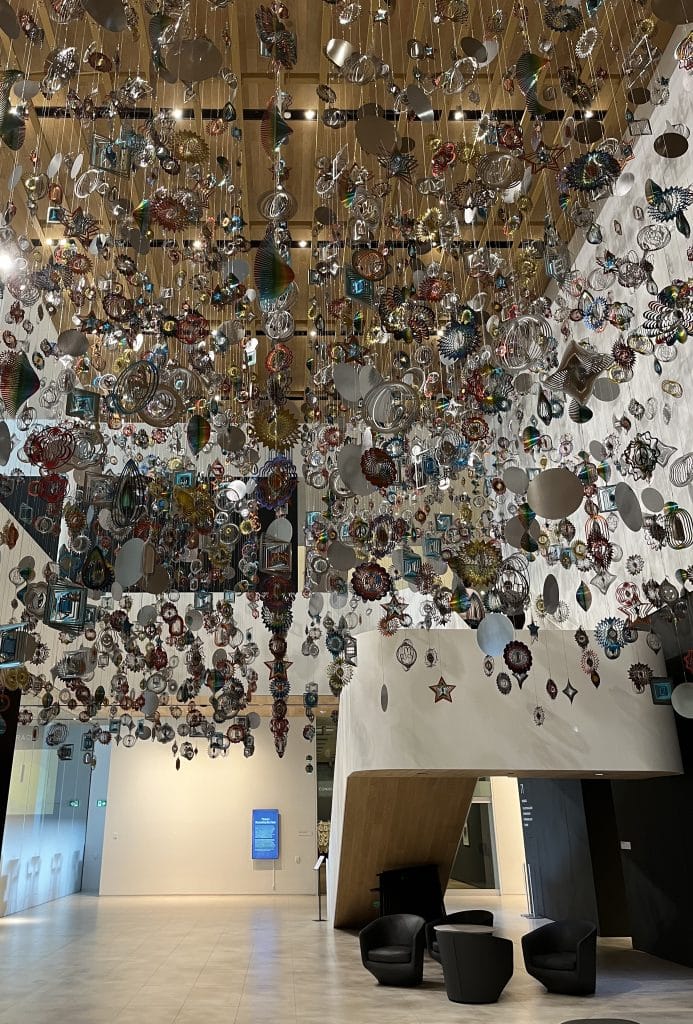
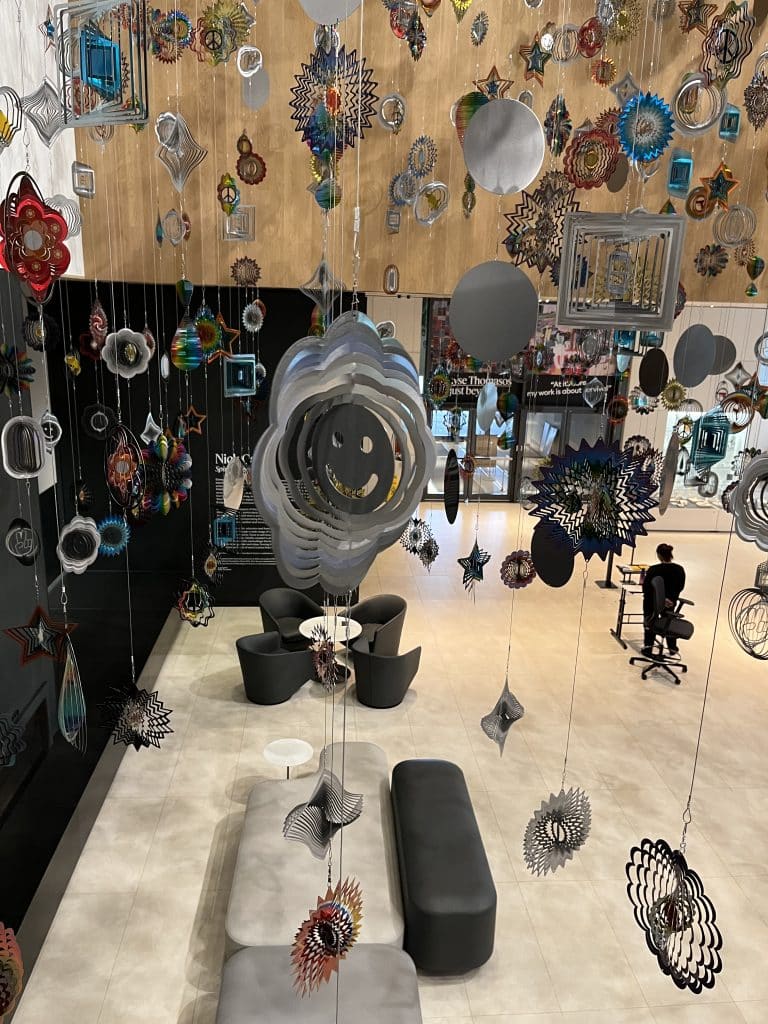
What most captured young Andrew’s attention — another win, folks — was the incredible Spinner Forest by Chicago artist Nick Cave. Installed in the fall of 2022, thousands of wind spinners cascade from the ceiling in the museum’s atrium, creating a lasting impression. Within each spinning mobile are shapes that comment on gun violence, specifically in Cave’s home city.
Fourth period: Located 15 kilometres southwest of Saskatoon, the Saskatchewan Railway Museum boasts an impressive array of vintage railway buildings along with fine examples of locomotives and streetcars and exhibits documenting Canada’s national dream of a trans-continental railway.
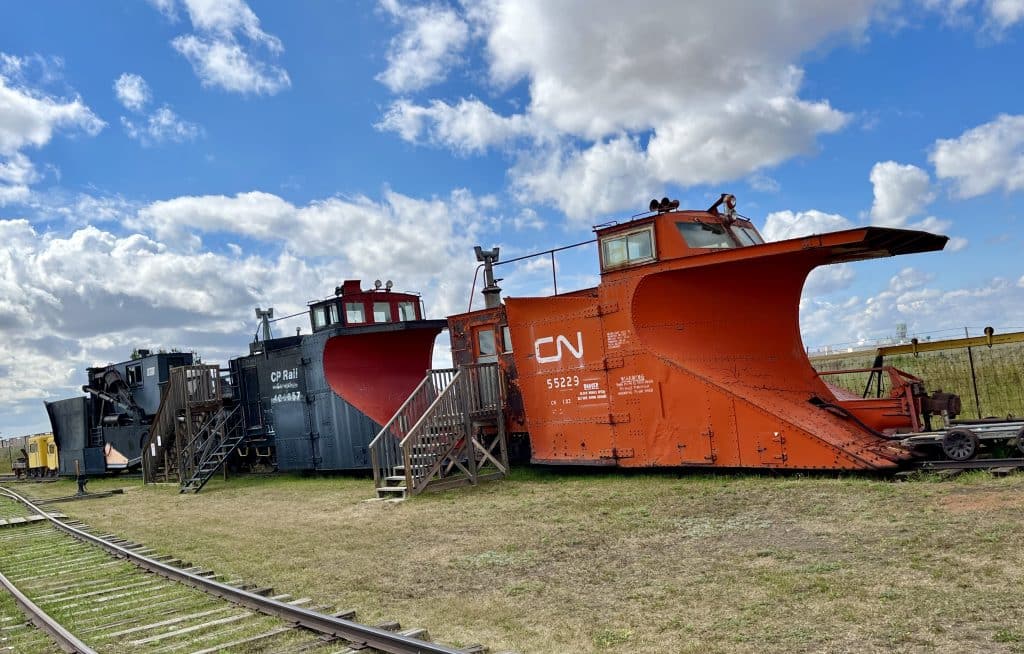
Open Friday to Sunday and long weekend Mondays during the summer months, the museum also has a couple of snow ploughs on display, some cool cabooses, and a power car that was used during the 1950 flood in Winnipeg to provide power to the St. Boniface Hospital.
Additionally, the museum site has its own history. The grounds were once the location for Camp Eaton, one of 24 internment camps established in Canada during the First World War.

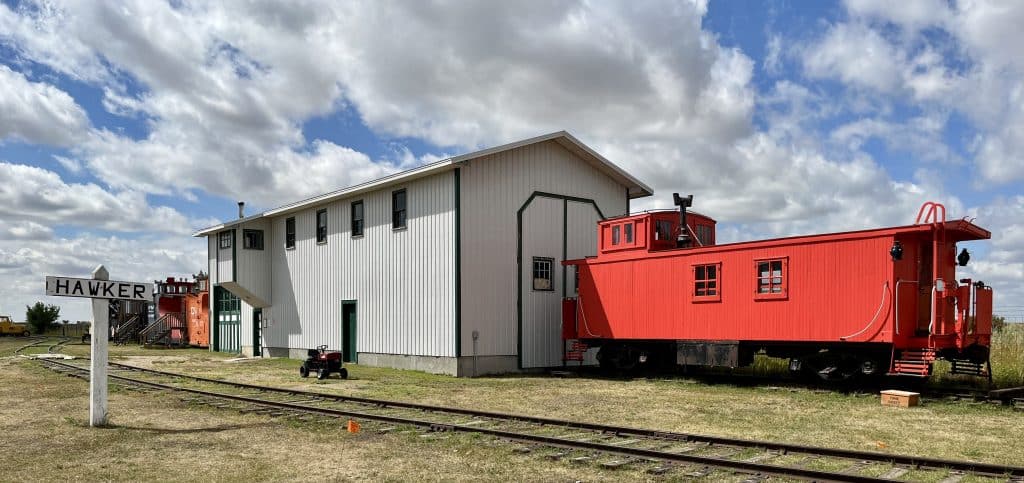
In 2004, the Ukrainian Canadian Congress of Saskatchewan, in conjunction with the Prairie Centre for the Study of Ukrainian Heritage, built and erected a monument to commemorate the site, and in 2022, a new permanent interactive exhibit commemorating the camp was opened.
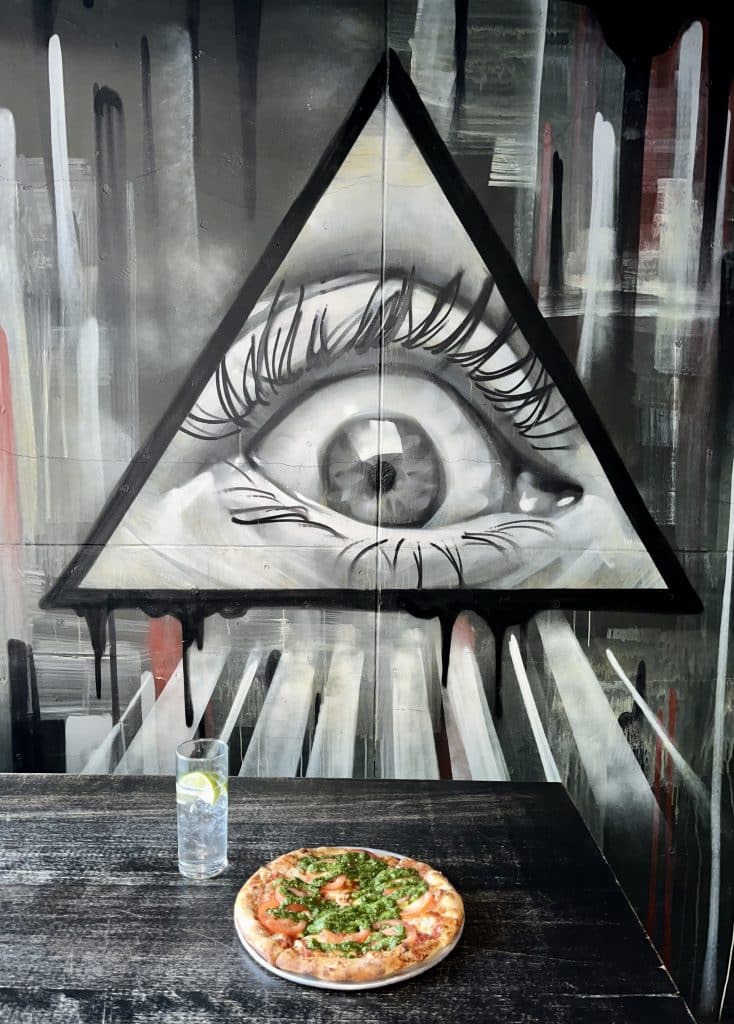
Dinner time: Saskatoon has an abundance of local eateries, and a fun one we found was Thirteen Pies, which serves up delicious Brooklyn-style pizza (think big and foldable slices), many with a scary movie theme like “The Hitchcock,” the “I Know What You Ate Last Summer” or the “Killer Cheese from Outer Space.” I had the “Psycho,” which was topped with fresh tomato, basil pesto, provolone, mozzarella, and tomato sauce, while Andrew devoured a classic pepperoni and mushroom called the “Lost Boys.”
We’d also recommend visiting Mano’s, a favourite with local families that dishes out hearty plates of Greek food. A house-made burger made from fresh ground chuck served on a brioche bun with cheddar, lettuce, tomato, bacon jam, and crispy fried onions got two thumbs-up from the teenager.
Lessons learned: Andrew was initially somewhat hesitant to visit Remai Modern, saying: “I don’t know anything about art.” I told him I didn’t know much about art either, and that’s why I liked to go to galleries and museums – to discover new things.
And while he seemed far more excited to have learned Saskatoon has great fries, perhaps a dazzling display of spinners will wind up planting a seed to explore things — particularly when you know nothing about them.
That would be a big win.
Our Prairie stories matter too.
The Flatlander takes a closer look at the stories that unite us, and make us unique, in Saskatchewan and Manitoba.
Will you help us tell our stories?
Author

Related Articles
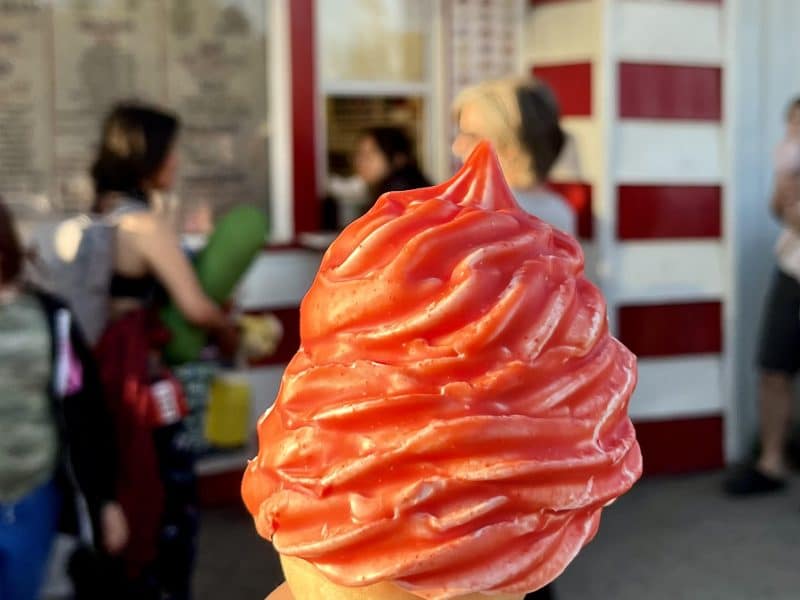
The scoop: your favourite Prairie ice cream places
Looking for a great place to stop for ice cream on the Prairies? Flatlander readers have recommendations.
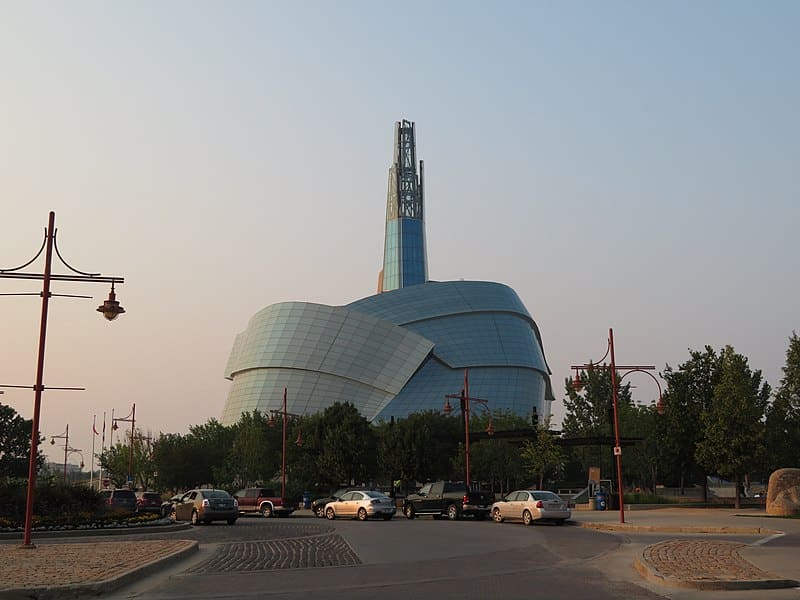
Looking back on the first 10 years of the Canadian Museum for Human Rights
As the museum embarks on its second decade — having marked its 10th anniversary in September — it remains committed to expanding its reach and fostering meaningful conversations.