Evidence of zebra mussels found in the Assiniboine River
The province announced that Manitoba Environment and Climate Change is activating its Aquatic Invasive Species (AIS) Early Detection Rapid Response Plan.
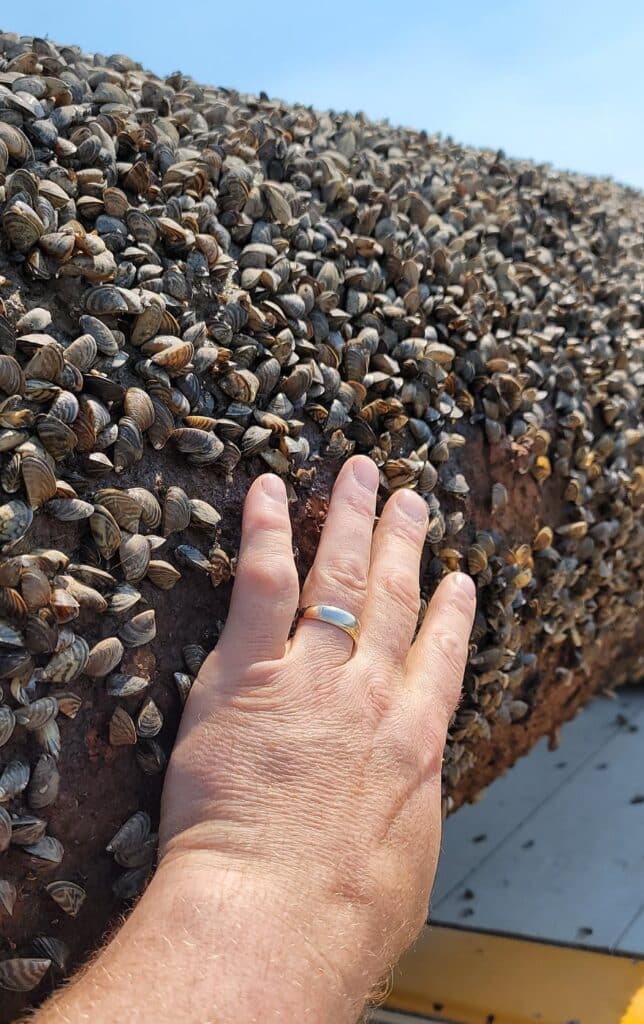
Evidence of zebra mussels has been discovered in the Assiniboine River, creating fear that another local waterway could be at risk from the invasive species that continues to spread within Manitoba.
The province announced that Manitoba Environment and Climate Change is activating its Aquatic Invasive Species (AIS) Early Detection Rapid Response Plan.
This action stems from positive zebra mussel larvae samples were found in the Assiniboine River at the Brandon Generating Station, as part of what the province says is Manitoba Hydro’s routine zebra mussel monitoring program.
The positive samples were confirmed in follow-up sampling, the province added.
Local, independent, in-depth.
Our Prairie stories.
The response plan, according to the province, will include specific monitoring to better understand the detections and to “inform the establishment of a containment plan.”
Invasive zebra mussels were first discovered in Lake Winnipeg in the fall of 2013, and have since spread to other bodies of water in the province including Lake Manitoba, the Nelson River, and Clear Lake.
Adult female zebra mussels are known to reproduce at a rapid rate. They can typically produce 30,000 to 40,000 eggs in each reproductive cycle, and over 1 million eggs in a single year.
The mussels are harmful to Manitoba waterways. They are known to deplete native fish populations, and cause damage to boats and other aquatic vehicles as they clump and can clog engine parts and machinery.
The mussels have also been a costly concern for Manitoba Hydro since their arrival. Last year, the Crown corporation announced that it spent $2 million trying to prevent damage to six of their generating stations along the Nelson River, where they say the infestation of the mussels had been growing and spreading, clogging intake pipes, slowing down operations, and creating safety hazards.
The province is now asking Manitobans to remain “vigilant” against the spread of zebra mussels and other invasive species.
“Continued diligence is required including during the winter season,” the province said. “All water users play a critical role throughout the year in protecting Manitoba’s water bodies from the introduction and spread of AIS.
“Manitobans are reminded AIS regulations and associated set fines are in effect year-round.”
This story was originally published in The Winnipeg Sun. It is republished under a Creative Commons license as part of the Local Journalism Initiative.
Our Prairie stories matter too.
The Flatlander takes a closer look at the stories that unite us, and make us unique, in Saskatchewan and Manitoba.
Will you help us tell our stories?