Genetically modified food: you’ve probably eaten it
We’ve all likely eaten genetically modified foods without knowing it, because in Canada, there is no requirement for GM foods to be labelled.
Over the last few weeks, I’ve asked friends and family if they would eat genetically modified (GM) food. Most of them said no or only if they had to, but the fact is we’ve all likely eaten it and have been doing so for years.
In Canada, there is no requirement for GM foods to be labelled because Health Canada has found them to be as safe and nutritious as non-GM foods.
So what GM foods are we consuming?
The big four are:
- Herbicide-tolerant canola (as an oil in processed food)
- Herbicide-tolerant and insect-resistant corn (in processed food, although some small amounts of sweet corn may also be genetically modified)
- Herbicide-tolerant soy (in processed food, but not in tofu or soy milk)
- Herbicide-tolerant white sugar beet (processed into sugar)
Local, independent, in-depth.
Our Prairie stories.
Canola
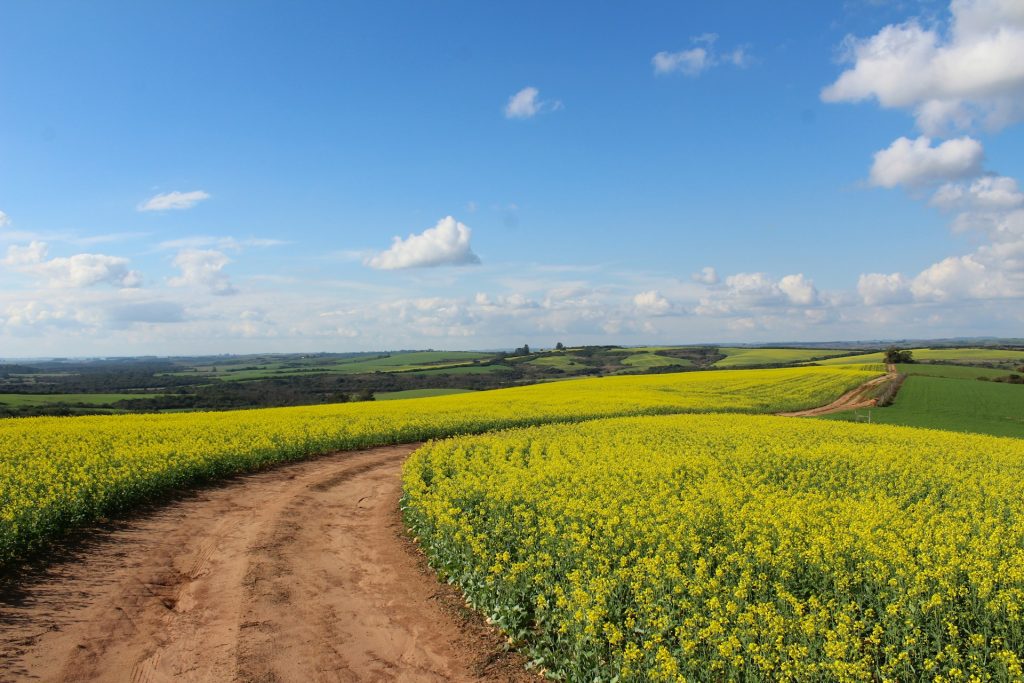
Here on the Prairies, canola is our golden crop, second only to wheat. About 95 per cent of Canada’s canola is genetically modified, meaning scientists did some tinkering with its genes to make it tolerant of herbicides.
GM canola seeds debuted on the market in 1995 and many farmers were quick to buy them.
And by 2002, this new canola became dominant, having spread everywhere. Seed growers in Saskatchewan couldn’t guarantee their canola seeds were GM-free.
By 2007, even wild canola growing along roadsides contained GM traits.
This widespread contamination made it impossible for farmers to grow organic canola.
Organic farmers from Saskatchewan tried to sue Monsanto and Bayer Crop Science, the producers of these GM seeds, but the courts didn’t rule in the farmers’ favour.
Fast forward to 2020, Health Canada and the Canadian Food Inspection Agency approved a new genetically engineered canola by Nuseed.
This unique variation is engineered not only for herbicide tolerance but also to have a modified fatty acid profile, aiming to produce omega-3 fatty acids not naturally present in canola seeds.
It’s an attempt to introduce a “healthier oil” into the market, although it’s not on our plates yet.
Corn
Over 80 per cent of the grain corn in Canada is genetically modified, and it’s hiding in plain sight all over your local grocery store.
On food labels, corn goes by many names. There are dextrins, maltodextrins, dextrose, fructose, corn flour, cornmeal, corn gluten, and cornflakes. Corn starch can go by the name starch or vegetable starch. Corn oil and fructose corn syrup are everywhere.
GM corn is a living pesticide because it contains Bacillus thuringiensis, or Bt for short. Any insects attempting to feast on GM corn meet a horrible demise, as Bt, a toxin, ruptures their guts upon contact.
Sugar beets
Almost 100 per cent of all the white sugar beets cultivated in Canada, primarily designated for sugar processing, have undergone a genetic makeover.
White sugar beets have been engineered to withstand the herbicide, Roundup.
The introduction of GM sugar beets traces back to 2009 when farmers, under contract with Lantic, now under the umbrella of Rogers Sugar, first planted them in the province of Alberta.
Sugar beets are wind-pollinated plants so there exists the potential for GM sugar beets to contaminate fields with non-GM sugar beets, chard, and even red and yellow beets.

Approximately 10 per cent of the sugar processed by Lantic in Canada stems from sugar beets, with the remaining 90 per cent sourced from imported cane sugar.
The countries supplying this imported cane sugar, notably Brazil, where GM plants contribute to the sugar production find its way into Lantic’s processing stream.
If you don’t want to eat GM sugar, you can buy organic or use other sweeteners like honey or maple syrup.
Soy
More than 60 per cent of soybeans grown in Canada are genetically modified and used as ingredients in processed foods.
GM soybeans can survive being sprayed with glyphosate, the main ingredient in Roundup. But the weeds that grow in soybean fields have evolved to tolerate glyphosate too.
As a solution, farmers are adopting new GM soybeans that can withstand older herbicides, specifically 2,4-D and dicamba, which can also be found in the infamous Agent Orange used during the Vietnam War.

In a pioneering move, back in 2012, Canada became the first country in the world to approve 2,4-D-tolerant and dicamba-tolerant GM crops.
Later, in 2017, Monsanto, now under Bayer, launched Roundup Ready Xtend, a dicamba-tolerant GM soy, tolerant not only to dicamba but also to glyphosate.
Although Health Canada and the Canadian Food Inspection Agency approved the 2,4-D-tolerant GM crops, some organizations, like Nature Québec and the Canadian Association of Physicians for the Environment, protested this development due to health and environmental concerns because the International Agency for Research on Cancer considers 2,4-D to be possibly carcinogenic to humans. However, the U.S. Environmental Protection Agency (EPA) disagrees because there isn’t enough evidence.
Other genetically modified foods in Canada
Some farm-produced salmon may also be genetically modified, as well as a few imported foods from other countries including pineapple, squash, and papaya.
Sliced apples that you see at some fast-food restaurants and grocery stores are also genetically modified so they don’t brown.
A small amount of GM alfalfa seed can be found in Ontario. However, it isn’t destined for your garden sprouting trays; instead, it’s used in the production of pasture and hay for farm animals.
Not a food, but worth mentioning
GM cotton has also made its way into Canada.
Our Prairie stories matter too.
The Flatlander takes a closer look at the stories that unite us, and make us unique, in Saskatchewan and Manitoba.
Will you help us tell our stories?
Author