How a free app turned my neighbourhood walks into a citizen science project
Using iNaturalist to snap photos of plants, insects, and animals, I’ve not only learned to identify local species but also contributed valuable data to scientific research.
Over the last two years, I’ve deepened my knowledge of local animal and plant species in my own backyard all thanks to a free app, called iNaturalist, that turns nature lovers into citizen scientists by encouraging users to observe and document the wildlife around them. (This is not a paid ad for iNaturalist. This is just me saying the app is genuinely awesome).
Snap a photo of a bird, bug, or backyard fungus, and the app suggests what it could be. Other users weigh in, who can verify the identity of the species. And you don’t just learn stuff, your sightings provide data that real scientists and conservationists can use.
For instance, while walking in Assiniboine Park last summer, I took a picture of an insect that the app identified as a Blue-fronted Dancer damselfly. This cyan blue damselfly is common in parts of the United States and Ontario, but it’s rare in Manitoba.
Turns out, my observation is, as of writing, one of only four documented sightings of the Blue-fronted Dancer in Manitoba on iNaturalist. By contrast, there are hundreds of observations of this species in Ontario and even more south of the border.
My finding was exciting not just on a personal level, but also for the scientific community as it contributed to understanding the distribution of this species.
Local, independent, in-depth.
Our Prairie stories.

The Manitoba Conservation Data Centre uses iNaturalist records of the Prairie Skink to make environmental assessments of the province’s only lizard, noting that staff “can’t be everywhere.” But you and your phone? You can be eyes in the field, helping scientists track skink sightings.

Thanks to the iNaturalist app, I don’t just walk past plants anymore, oblivious. I’ve used the app to learn the names of pineapple weed, broad-leaved plantain, Hookedspur Violet and goldenrods.
I also started noticing mushrooms. Some examples of the fungi I’ve documented include:
- Pleated Ink Cap – a delicate little mushroom with a paper-thin, pleated cap that often pops up after rain.
- Mustard Yellow Polypore – a bracket fungus with a bright yellow hue, found on decaying wood.
- Mosaic Puffball – a round puffball mushroom with a crackled, mosaic-like surface.
- Aspen Bracket – a shelf fungus on aspens


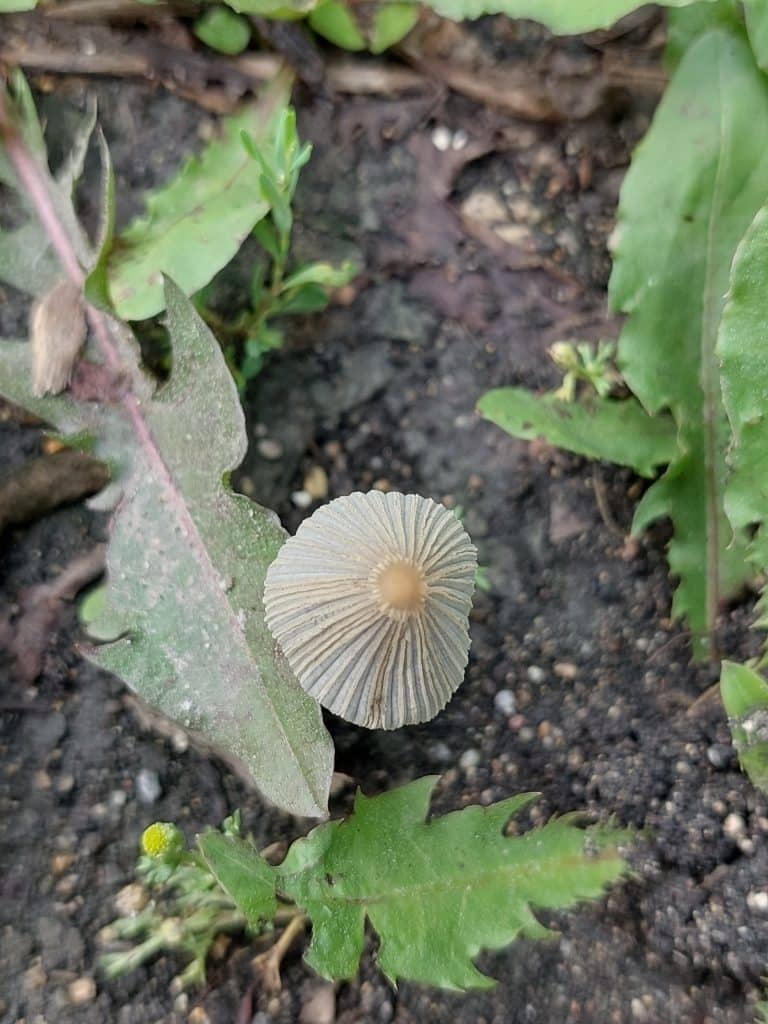
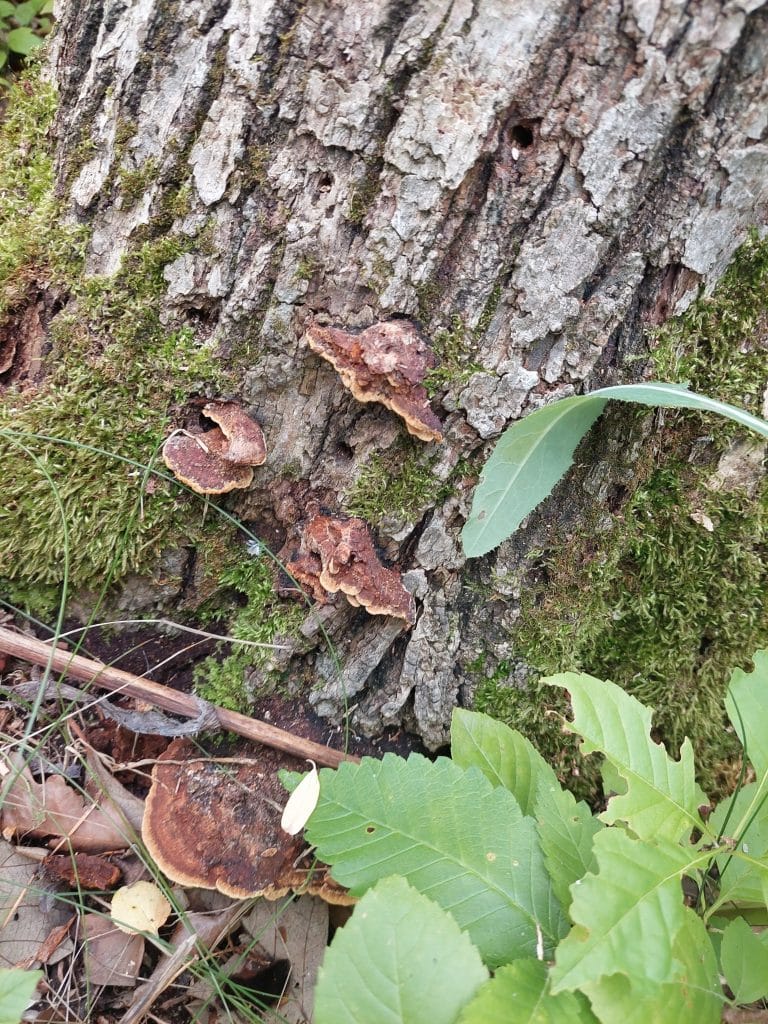
Not everything I spotted on iNaturalist is as beautiful as a wildflower or as whimsical as a mushroom. I’ve spotted poison ivy around more than I would like.

And I’ve started paying attention to more of nature’s ugly side, like the oak blister gall mite, which leaves oak leaves with, as the name suggests, blisters.
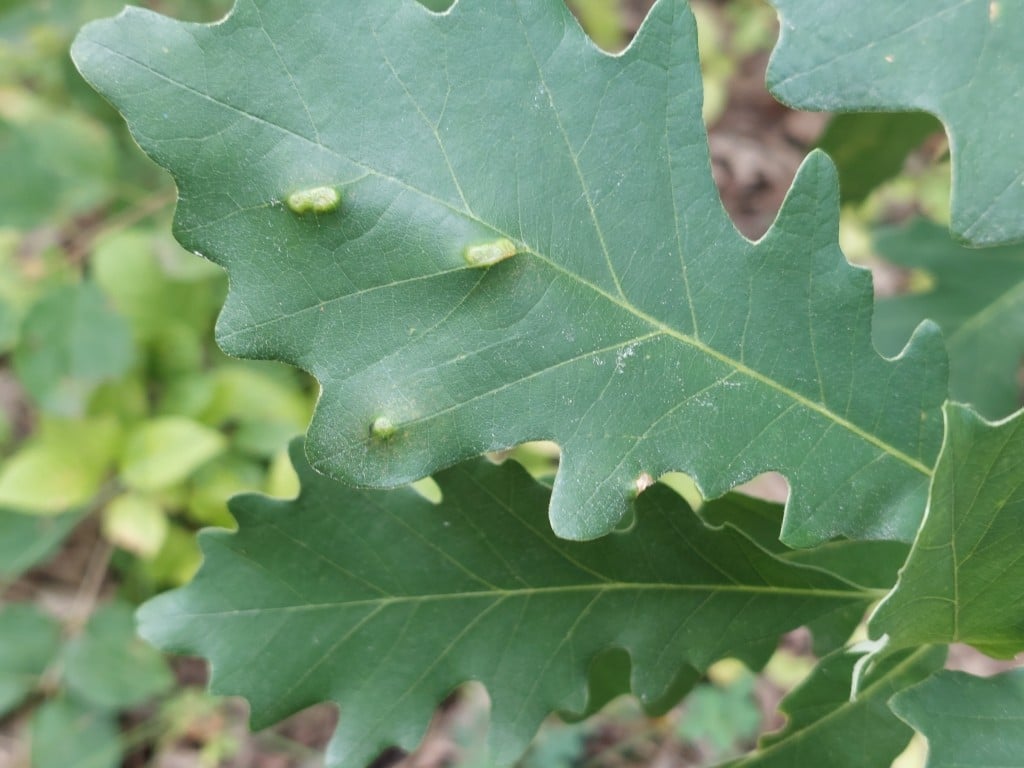
I’ve learned to spot plant fungal diseases, like sap yeast, corky bark and crown rust.


One of my all-time favorite “what the heck is that?” moments came after photographing what I learned was the star jelly.
Sounds magical, right? Like something you’d spread on toast at Hogwarts.
In reality, it’s a gelatinous blob of bacteria that can be found on grass and tree branches.

I’ve observed butterflies like the Great Spangled Fritillary and moths like the Acemon Sphinx moth.


Once you start paying attention, there are all kinds of interesting observations to make, and iNaturalist makes my walks feel like a treasure hunt.
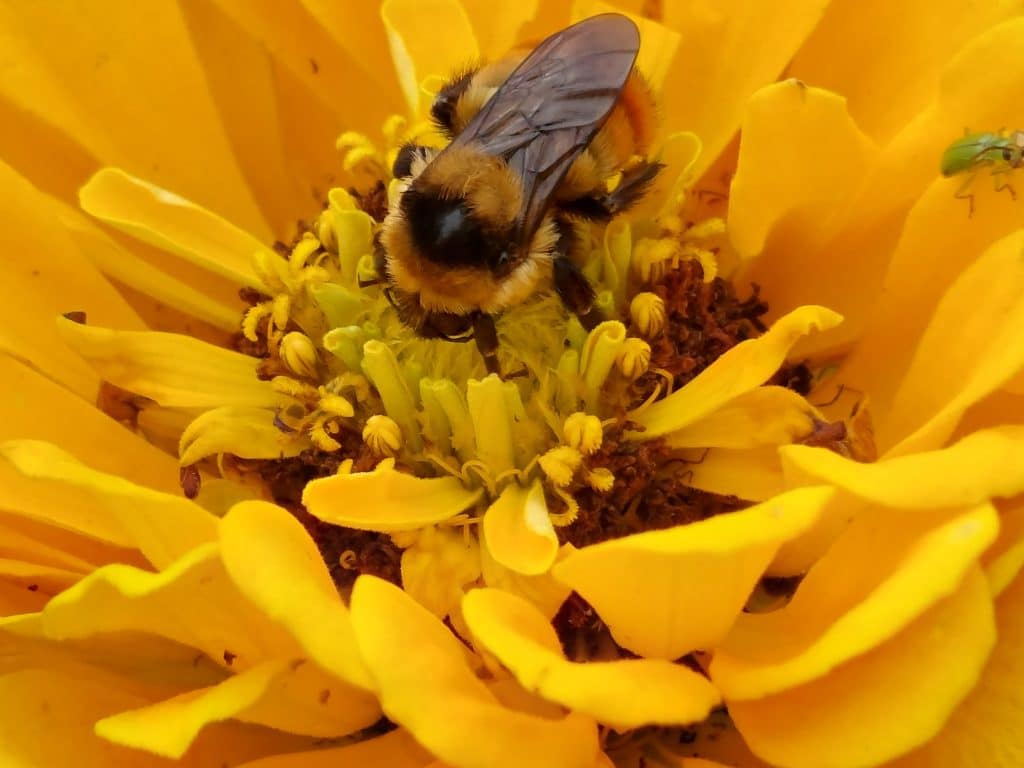
If it wasn’t for iNaturalist, I wouldn’t have begun to notice the many different kinds of bees buzzing around our prairies.
Up until this summer, I thought there were, like… two types of bees: the honey bee and the bumblebee. Turns out, I was wrong by a few hundred.
iNaturalist users have logged 154 bee species in Manitoba and 144 in Saskatchewan, and that’s only about half. The others must be harder to spot, because scientists estimate there are actually 392 species in Manitoba and over 300 in Saskatchewan.
I’ve only managed to identify five species:
- Brown-belted Bumble Bee – a common bumblebee with a brown band across its abdomen.
- Two-spotted Bumble Bee – aptly named for the two yellow spots on the abdomen.
- Tricolored Bumble Bee – sporting bands of yellow, orange, and black.
- Perplexing Bumble Bee – a species whose similar appearance to others makes identification “perplexing.”
- Red-belted Bumble Bee – It usually has at least a bit of red on the abdomen, though about 25% of individuals don’t.


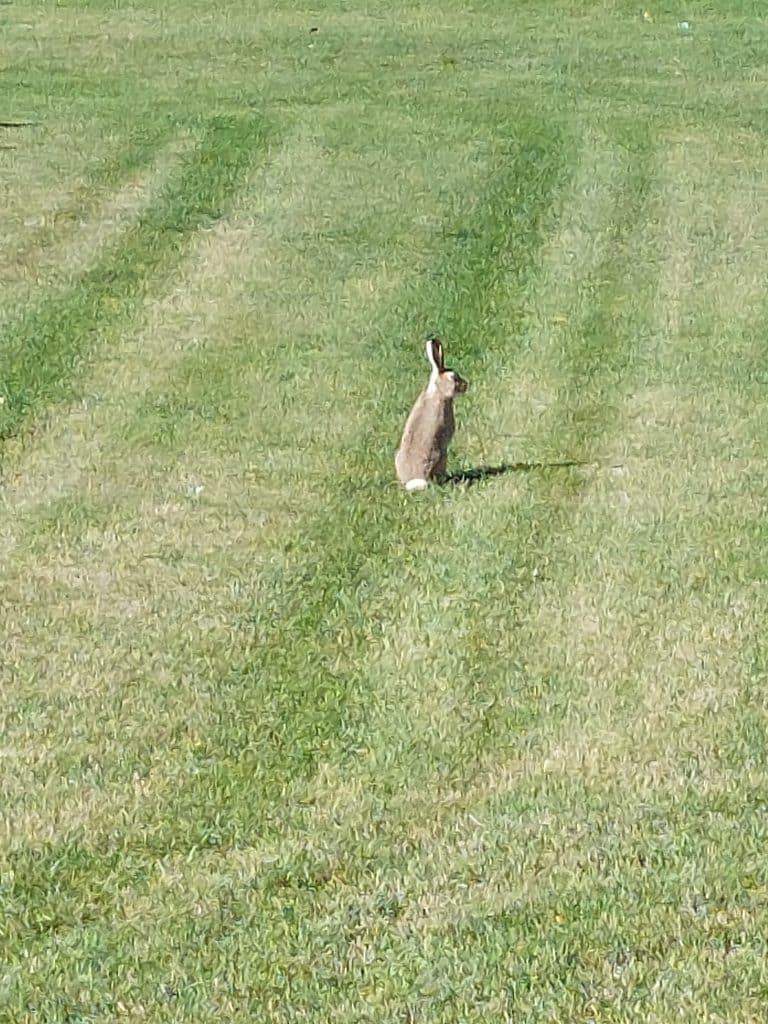
Forget the game Pokemon Go, there are actual mammals to catch with your phone camera, like rabbits.
Turns out we don’t just have one rabbit on the Prairies.
Manitoba and Saskatchewan both have two hare species: the White-tailed Jackrabbit and the Snowshoe Hare. And Manitoba has a third, the Arctic Hare.
There are also three species of rabbits. Saskatchewan and Manitoba share the Eastern Cottontail Rabbit. On top of that, Saskatchewan is home to the Mountain Cottontail Rabbit, while Manitoba has the endangered European rabbit species.

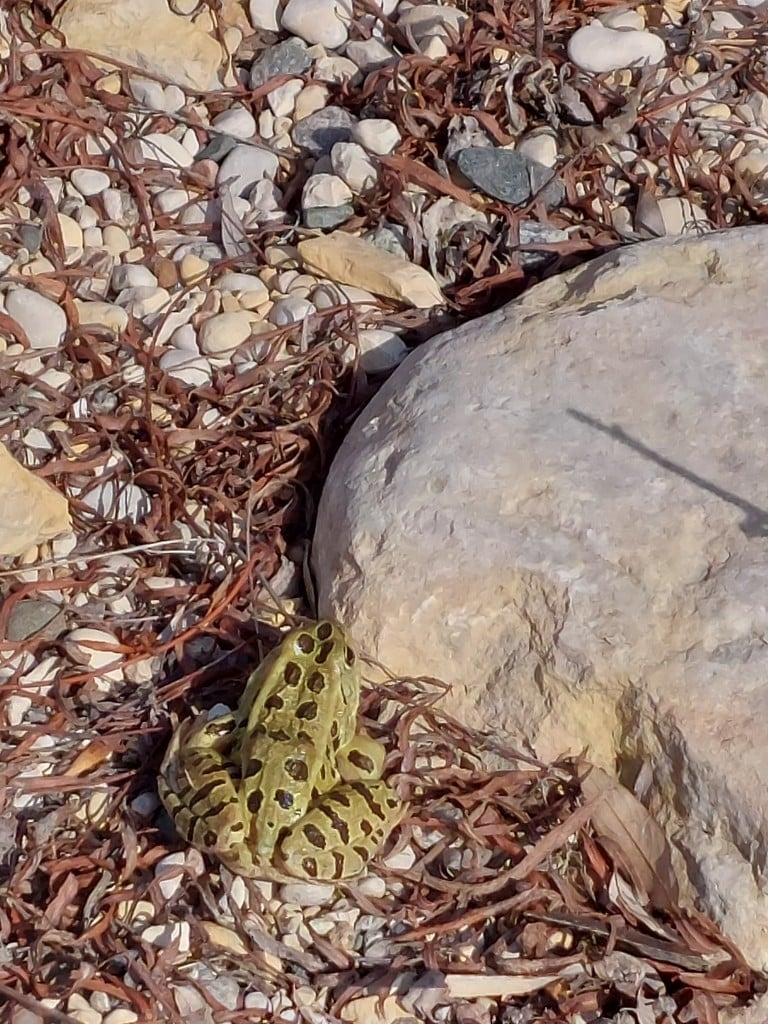
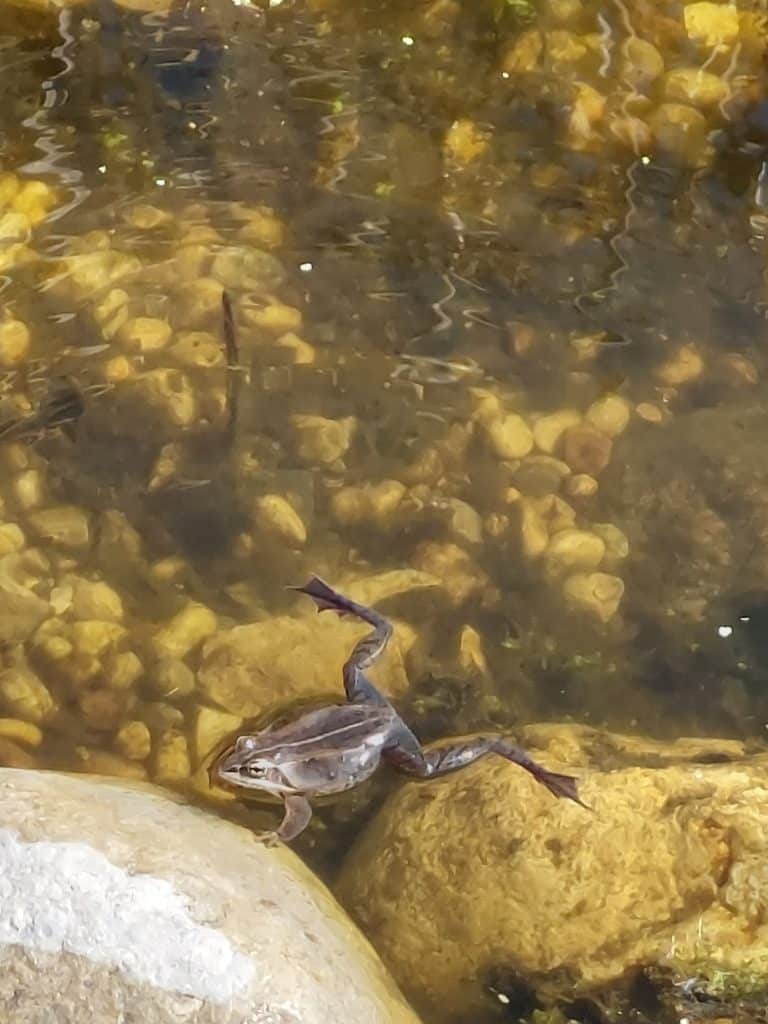
Another one of my favourite animals to look for are frogs.
I’ve only been able to spot Wood Frogs and the Northern Leopard Frogs, but Saskatchewan has six native frog and toad species, plus the occasional Gray Tree Frog sighting on iNaturalist: Canadian Toad, Great Plains Toad, Plains Spadefoot, Boreal Chorus Frog, Northern Leopard Frog, and the Wood Frog.
Manitoba has 12 species, including those six plus: American Toad, Cope’s Gray Tree Frog, Gray Tree Frog, Spring Peeper, Green Frog, and the Mink Frog.
My two-year adventure with iNaturalist trained me to become more observant and to appreciate the rich variety of life, big and small, right here in the prairies.
I’m now always on the lookout for new-to-me species. And I would highly recommend giving iNaturalist a try if you enjoy nature.
It’s easy to use, you will learn a lot while contributing to a collective scientific effort. You might even be surprised by what’s living in your own backyard.
Our Prairie stories matter too.
The Flatlander takes a closer look at the stories that unite us, and make us unique, in Saskatchewan and Manitoba.
Will you help us tell our stories?
Author