Saskatchewan’s Key to Cultural Heritage Initiative opens
Members of the public are invited to share stories about Saskatchewan places digitally through a QR-linked platform.
A new initiative from Heritage Saskatchewan and the Museums Association of Saskatchewan is inviting residents to rediscover the province’s rich cultural landscape — one story and sticker at a time.
This summer, the organizations are rolling out the Key to Cultural Heritage, an interactive campaign designed to highlight the people, places, and traditions that define Saskatchewan. The project invites the public to place scannable QR code stickers throughout the province, each linking to stories and images of local cultural experiences — from museums and heritage buildings to sports events, concerts, restaurants, and natural landscapes.
“The goal is to encourage people to explore Saskatchewan and share their experiences through photos,” said Katherine Gilks, Heritage Fairs Coordinator and Operations Assistant at Heritage Saskatchewan.
Participants can order a “key package” online by donation. The kit includes vinyl stickers and instructions for sharing stories digitally through a QR-linked platform. Each submission qualifies for a chance to win prizes throughout the summer.
Packages can be ordered at: https://www.zeffy.com/en-CA/donation-form/key-to-cultural-heritage
Local, independent, in-depth.
Our Prairie stories.
“We are really excited about this initiative,” said Emma Morris, Executive Director of the Museums Association of Saskatchewan.
To support this storytelling effort, Heritage Saskatchewan and MAS have partnered with memoryKPR, a Saskatchewan-based digital platform that allows users to capture and organize stories into engaging digital archives.
There is no shortage of local history to explore.
Across the province, small museums offer windows into the lives of early settlers, Indigenous communities, and the cultural shifts that have shaped the region over generations. Among them:
- The Cudworth Museum is housed in the town’s former CN Station, a designated Municipal Heritage Property. The museum displays showcase the town’s large German and Ukrainian heritage, old hospital artifacts, in addition to an outdoor vintage machinery display.
- The Duck Lake Regional Interpretive Centre offers insights into the everyday struggles of the pioneers, the devastating impact that the near extinction of the buffalo had on the First Nations, and the harsh aftermath of the Northwest Resistance for the Metis. Exhibits in the centre include the Northwest Uprising of 1885 with several artifacts, including Gabriel Dumont’s watch, and a boardwalk featuring early 1900s storefronts. The building also features a 24-metre tower with artwork and artifacts featuring the people of the area, and climbing to the top affords sweeping views of the countryside.
- The Evolution of Education Museum is one of the four museums operated by the Prince Albert Historical Society. The building was known and operated as the Claytonville School from 1920 to 1963. The building exemplifies the one-room schools that dotted the landscape across rural Canada. The museum showcases artifacts that were used in educational facilities before 1963.
- The John and Olive Diefenbaker Museum is another of the four museums operated by the Prince Albert Historical Society. The house was originally built for Henry Jaffray, a bank manager, in 1912. John and Edna Diefenbaker occupied the house from 1947 to 1951, John and Olive Diefenbaker lived in the house from 1953 to 1957, immediately before he became Prime Minister of Canada. It was opened as a museum in 1983 and designated a National Historic Site in 2019, on the 40th Anniversary of his death.
- The Prince Albert Historical Museum is located in the former ‘Central Firehall’, which opened in 1912 and was utilized as such until 1975. The museum opened in 1977. It showcases artifacts relating to early settlers, Indigenous history, as well as business and industry in Prince Albert. The Bill Smiley Archives is also located in the Historical Museum.
- The Prud’homme Multicultural Providence Museum celebrates the multi-cultural origins of the community. Of particular interest to many visitors is the role that Prud’homme played in establishing Saskatchewan’s Fransaskois presence. Visitors are consistently impressed by the breadth and depth of the collection, all of which relates directly to the town’s local history. It is open during community events and by appointment.
- The Rosthern Museum and Mennonite Interpretive Centre recounts the history of the early Mennonite settlers of the Rosthern area. The museum provides a narrative of the history of Rosthern and its surrounding area. Museum exhibits include a bust of Bishop David Toews, the Mennonite leader and founder of the German-English Academy, later known as the Rosthern Junior College, as well as steamer trunks, samovars, harness bells and more brought by settlers from Russia and Prussia in the late 19th century.
- The River Valley Museum contains artifacts relating to the settlement history of the Hague area. The museum boasts a collection of local farming equipment, blacksmithing and carpentry tools, household furniture and appliances, and a collection of First Nations artifacts. The museum also has information on the history of the early Mennonite settlement in the area from the late 1800s to the mid-20th century.
- Seager Wheeler Farm, just off Highway 312 east of Rosthern, was recognized as a National Historic Site and opened to visitors in 1996. The farm buildings and homes have been restored over the years, as have the yard, gardens and orchard. Open Monday through Friday in the summer months, the Farm also features Thursday evening Dessert Night with a selection of made-from-scratch desserts.
- Originally designed in 1980, just off Highway 2 south of Prince Albert, to collect and display farming and logging artifacts from the Prince Albert district, the Vintage Power Museum eventually expanded to feature six historic wood-frame buildings which have been relocated to the site. The buildings all house a large collection of farming and lumbering implements, telling the story of early farming and logging as well as the regional history. Heritage buildings at the open-air museum include a church, schoolhouse, general store, farmhouse, railway station and service station.
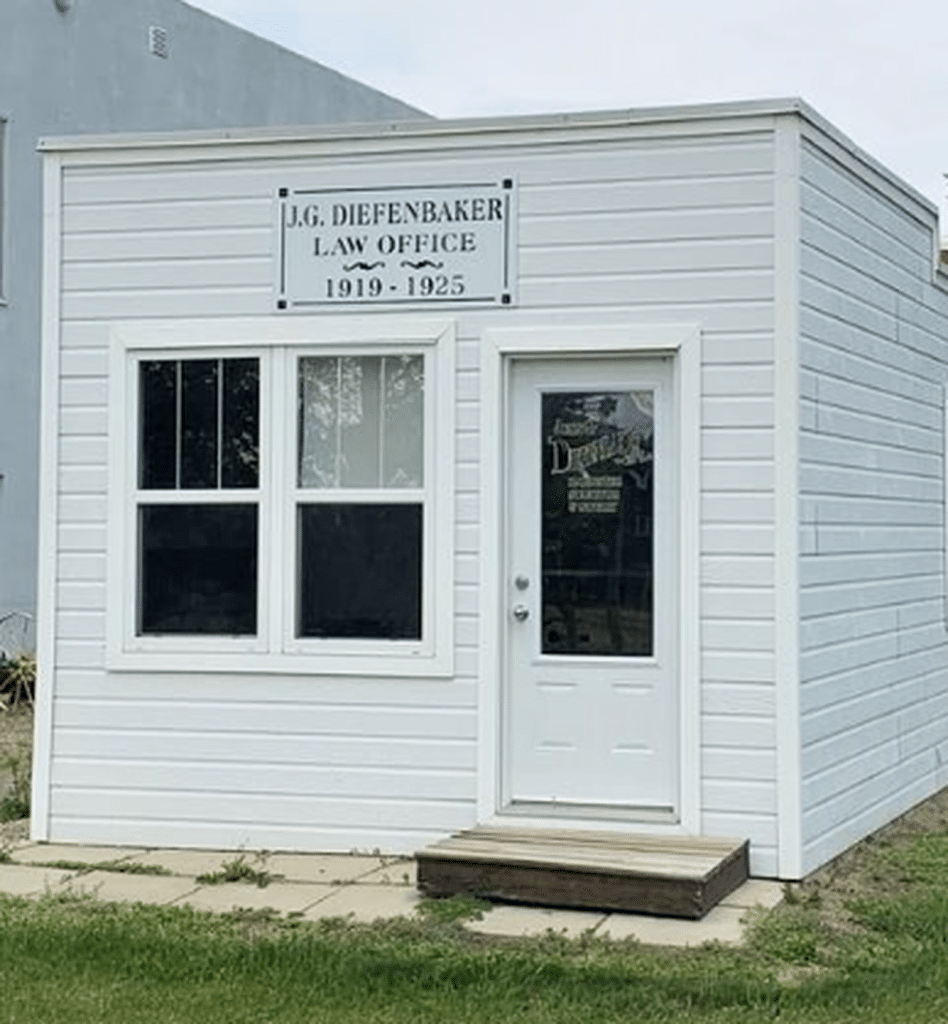
- Housed in the old two-storey elementary school, the Wakaw Heritage Museum features artifacts showcasing the history of the Wakaw area. The museum also features Prime Minister John Diefenbaker’s law office, as Wakaw was the first town where Diefenbaker practised law. A selection of museum artifacts is on display at the Wheatland Express building at the east end of 1st Street South, Wakaw.
These and other local museums are supported by the Museums Association of Saskatchewan, which has served the province’s museum community since 1968. With over 400 members, MAS provides educational programming, resources, and advocacy, helping to ensure that the stories of Saskatchewan’s people remain accessible for future generations.
This story was originally published in The Wakaw Reporter. It is republished under a Creative Commons license as part of the Local Journalism Initiative.
Our Prairie stories matter too.
The Flatlander takes a closer look at the stories that unite us, and make us unique, in Saskatchewan and Manitoba.
Will you help us tell our stories?