The space industry on the Canadian prairies
Space research and design is going strong on the Canadian prairies.
All four of Manitoba’s and Saskatchewan’s primary universities have teams working on satellites, rovers, rockets, planetary research and astronomical studies that will help the human race understand our planet and solar system better.
Space research and design is going strong on the Canadian prairies.
All four of Manitoba’s and Saskatchewan’s primary universities have teams working on satellites, rovers, rockets, planetary research and astronomical studies that will help the human race understand our planet and solar system better.
University of Winnipeg helps explore Mars
In a small room located at the downtown campus of the University of Winnipeg (UWinnipeg), a canister about the size of half a soup can contains hundreds of tiny pebbles. And while these pebbles come from Earth, the canister’s interior replicates the conditions those pebbles would experience if they were on Mars.
This and several other small lab rooms make up the Centre for Terrestrial and Planetary Exploration (C-TAPE), where director Dr. Ed Cloutis, a geology professor at the school, oversees research work done by UWinnipeg students.
Local, independent, in-depth.
Our Prairie stories.

The device with the pebbles is known as a vacuum chamber.
“We can simulate the conditions on the moon or on Mars. Mostly what we do is we expose geological samples to Mars conditions,” Cloutis explained during a recent tour of the facility.
Researchers want to see how various minerals and rocks might react in a Mars environment to make them easier to identify if found on Mars.
“The surface conditions on Mars are much different than they are on the earth,” Cloutis said. “We know that a lot of rocks that might be present on Mars would change when they are exposed to these low-pressure conditions. So, we put different samples that we think might be present on Mars – Earth samples – and see how they react when they are exposed to the surface of Mars.”
The researchers put the samples in a vacuum chamber for a set amount of time – usually a few months – and then look at them with unique cameras to see how they change and whether they are stable or unstable.
Rather than just looking at them with the naked eye, they use spectroscopy to see how the samples have changed. Spectroscopy studies how objects react with light and other forms of radiation.
For instance, minerals in a rock can be identified by how a mineral reflects light, making a rock look metallic, glassy, pearly, or dull. This property is known as lustre.
Minerals also have a refractive index, measuring how much light is bent as it passes through the mineral. This property helps identify a mineral by measuring the angle at which light refracts.
But on Mars, identification methods, like lustre and refractive index, may present differently for some minerals than on Earth.

While all the samples Cloutis currently works with originated on Earth, UWinnipeg will receive samples of the asteroid Bennu from NASA’s OSIRIS-REx mission that landed back on Earth on Sept. 24.
Cloutis and his team will put the samples they’ve received into these spectrometers and measure their spectral properties in a nitrogen environment, protecting them from exposure to Earth’s atmosphere.
“We want to work with pristine samples,” explained Cloutis.
Knowing how minerals might look different in Martian environments is key to many projects Cloutis is involved in, including the two currently operational NASA rovers on Mars: Curiosity and Perseverance.
“I’m involved with analyzing the data that comes back from them, and one of the big focuses of that mission is to collect samples for eventual return to Earth,” Cloutis said. “So, we spend a lot of time discussing where the rover should go and where it should drill for samples. We want to collect the best samples to address many different science questions like looking for signs of life, collecting rocks that would allow us to date how old, say, Jezero Crater is, and how geologically diverse a certain region is. So, there are a lot of science questions we want to address.”
Jezero Crater on Mars was the chosen landing spot for Perseverance, which is roughly the size of a car.
Cloutis isn’t the only person related to UWinnipeg that helps with the Mars Perseverance mission.
Former student Uriah Wolf started a job at Los Alamos National Lab in New Mexico this past summer where she is helping control Perseverance’s supercam, the “face” of the rover.
Wolf is uniquely skilled at controlling the rover’s supercam because she did that while at UWinnipeg as a Science Payload Uplink Lead.
Because Cloutis is a collaborating scientist on the Perseverance mission, he got his students to work with the rover. Cloutis offered Wolf a chance to do the uplink work, and she was adept at it. She eventually got the job at Los Alamos Lab because of her work at UWinnipeg.
“My job is, if we’re driving around on Mars if we see something that looks interesting and they decide we want to shoot it with the laser, I have to basically line up the sights, make sure we are shooting the laser exactly where they want to shoot the laser,” Wolf said from her office in Los Alamos.
The rover’s SuperCam can fire a laser to study rock targets smaller than a pencil point from more than seven metres away.
“So, I’m responsible for making sure we’re lining up the face of the rover exactly where we want to be and then shooting that laser at an interesting rock.”
She does the uplink work about 50 per cent of the time and spends the other 50 per cent of her time on other projects, like calibrating the rover instruments.
“I’ll be making sure that we can accurately interpret our spectra and make accurate detections,” she added.
While Wolf didn’t start school with the dream of working in the aerospace industry (her initial field of study was medicinal chemistry), the COVID-19 pandemic threw a proverbial wrench into her initial plans and created a situation where she had to make a quick decision about her future studies. C-TAPE’s extensive work with spectroscopy drew her to planetary research.
CubeSats and Canadian rovers
Because of his expertise in planetary research, Cloutis is a scientific partner on various space missions.
For example, he was a science consultant on the ill-fated MoonNet mission, a rover built by the United Arab Emirates’ Mohammed Bin Rashid Space Centre. The rover launched into space on a SpaceX rocket earlier this year and was going to be delivered to the lunar surface by Japanese company iSpace in May. Unfortunately, the rover was lost during a failed landing attempt.
Canadian lunar rover
While that mission led to disappointment, Cloutis is also involved with the upcoming Canadian Space Agency (CSA) lunar rover project tentatively set to launch in 2026. The Canadian rover, which will be about the size of a microwave, will land near the moon’s south pole to look for water ice in craters, like what India’s recently landed Pragyaan moon rover did as part of the Indian Space Research Organisation’s Chandrayan-3 lunar mission this past summer.
Cloutis’ role with the Canadian lunar rover mission is deputy principal investigator.
“We will be looking at the images and giving suggestions on where the rover should go and what it should do,” he explained. “One of the big things we want to do is see if there is ice in some of these shadowed regions in the south and around the moon’s south pole. A lot of upcoming missions are focussed on that.”
Iris CubeSat
Another project that celebrated a significant milestone that Cloutis and several of his students are involved in is the Canadian CubeSat Project, in which UWinnipeg partnered with the University of Manitoba (UM).
An initiative of the CSA, the CubeSat Project, allowed universities nationwide to apply for funding to build a miniature satellite known as a CubeSat, which would eject into orbit from the International Space Station (ISS).
The UWinnipeg and UM CubeSat launched into space on June 5, and ejected from the ISS on July 6.
Onboard the CubeSat, named “Iris,” are samples of rocks and minerals. Much like the samples in the vacuum chambers in the C-TAPE lab, Cloutis wants to know how the samples aboard Iris change when they are exposed to radiation while in orbit.
While UWinnipeg provided the payload for Iris (the payload being what a satellite carries on it, often scientific experiments, or communication equipment) and will help analyze the data about the payload, much of the engineering of the CubeSat was done on the south side of Winnipeg by the UM.
UM partners with Magellan Aerospace to give students real-world space engineering experience
UM professor Dr. Philip Ferguson wanted to disrupt an aerospace industry unwilling to try new things.
He said theoretical research gets “stuck” in scientific journals, never to be used. He wanted to change this by using the results of these studies for practical purposes in space.
“I kind of wanted to kick the space industry in the pants a little bit,” said Ferguson, which is why, in 2017, he founded STARLab inside the Engineering and Information Technology Complex on the UM campus.
STAR stands for Space Technology and Advanced Research.
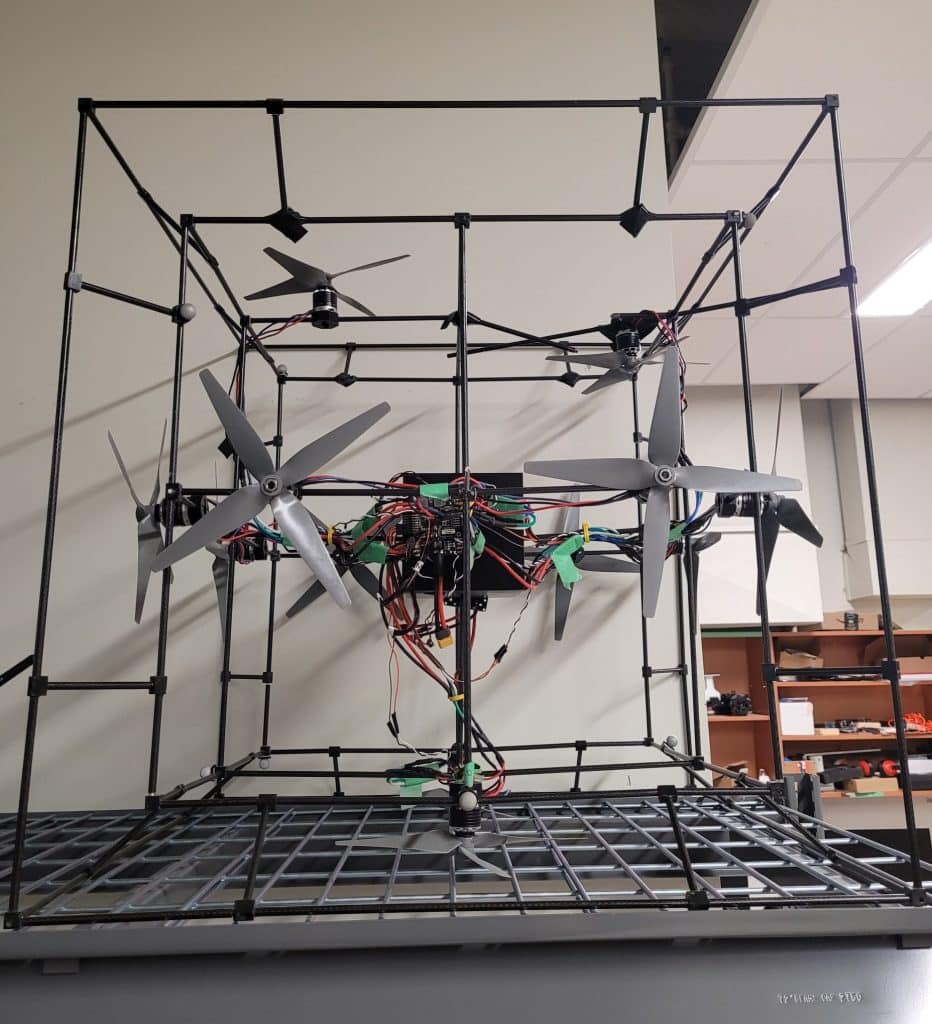
STARLab’s main room contains a long, shallow trough filled with gravel for testing various types of rover wheels. There is also a space in the middle surrounded by netting to conduct tests with drones. Students sit at computers analyzing test results.
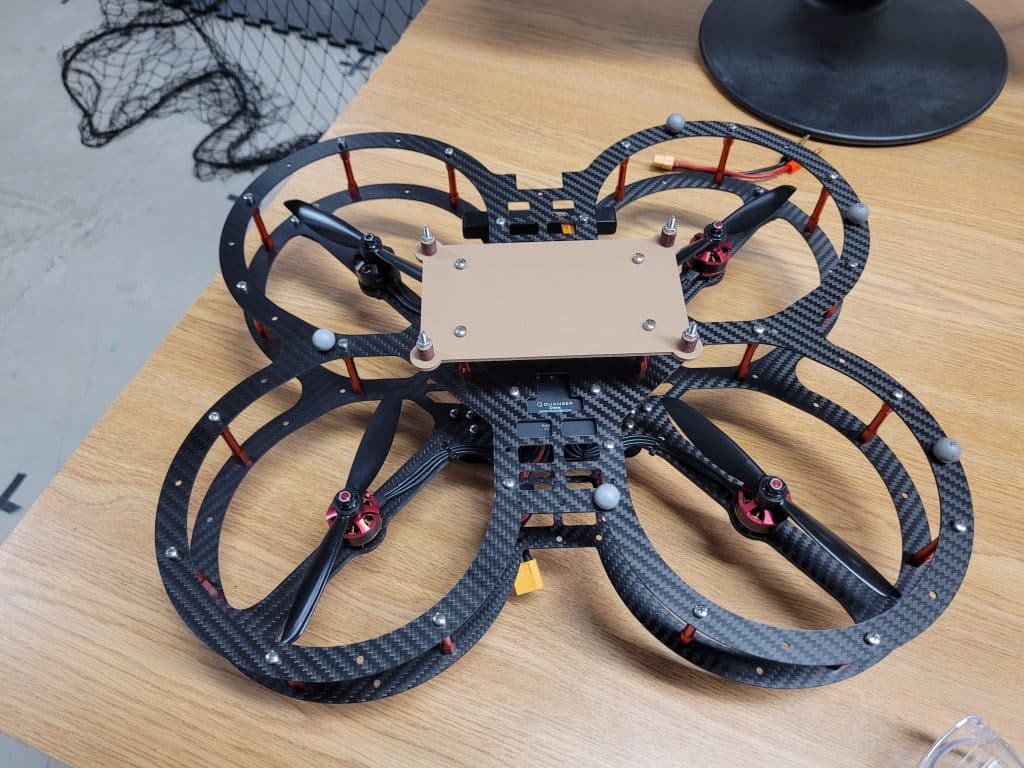
A focus of STARLab is to find ways to make space more accessible and less costly.
For example, UM engineered the Iris CubeSat, a satellite smaller than a two-litre milk carton. It uses off-the-shelf components that one could find in a cellphone. Its antenna is made from a part that came from a household tape measure.
While satellites meant to be in orbit for a long time must use materials to withstand the radiation in space, Iris, which will only be in rotation for about a year, doesn’t need to be fortified.
Radiation-hardened materials are expensive. Using unprotected supplies cuts the cost. However, Ferguson said, the trade-off is the satellite is more susceptible to space weather like solar wind, bursts of charged particles coming from the sun that can wreak havoc on electrical equipment.
The sun has periods of low and high solar activity, like solar wind, that last for a decade, and the sun just entered a high cycle of solar activity.
The team monitoring Iris thought they may have had a system reset due to active solar weather the day the satellite ejected into orbit from the ISS on Jul. 6. But it is currently operational and sending data back to Earth.

“Our latest tracking information is showing that we’re roughly a thousand kilometres away from the space station right now, and that distance is increasing,” said Ferguson, who is also the Magellan Industrial Research Chair at UM.
Rover motion
STARLab also aims to improve how rovers move on other terrestrial bodies.
Pilots controlling rovers give them what Ferguson described as “very conservative commands” to move in small increments because they don’t want the vehicles getting stuck in sand or have their movement hampered in some other way.
Each command to move the rover a short distance can take around 45 minutes to reach Mars, so movement is slow.
“One of the things that we’re trying to do is to empower the rovers with tools that will allow it to decide if it’s slipping or not,” Ferguson said, likening such a system to the traction control systems you would find in a car, but more refined.
STARLab’s rover has numerous sensors and gauges, which the researchers use as they drive it in the gravel-filled trough to test the rover in different scenarios. This helps identify when it might encounter problems.

Using the data they’ve collected, they can send the rover a command that will help it get itself unstuck, like making its wheel larger or smaller or changing its tread configuration.
“Part of the other research I’ve had students working on is how do we create a wheel that we can change and morph into different shapes as we’re using it,” Ferguson said.
This research will help the upcoming Canadian lunar rover mission.

Next satellites
Now that the Iris CubeSat is orbiting Earth, the STARLab team, which includes an ever-rotating cast of UM students, has turned its collective attention to two other projects: ArcticSat and Redwing.
ArcticSat
ArcticSat is another cube satellite project made possible through the Canadian Space Agency’s CubeSats Initiative in Canada for STEM (CUBICS) program.
ArcticSat is being co-developed with the hamlet of Chesterfield Inlet, Nunavut and will carry a microwave radiometer to image arctic sea ice and assess its thickness.
Student Martin Tkach, who just started his Master’s degree in mechanical engineering at UM, is studying the feasibility of fitting these tiny cube satellites with a small thruster system so they can manoeuvre better while carrying out missions and deorbit themselves once they become inoperable.
Tkach said the university provides a safe learning environment for working on space equipment.
“Unlike at a company, it’s okay to make mistakes,” he said. “We are students, so it’s definitely going to happen.”
ArcticSat will be launched in about two years and should operate for at least one.
Redwing
The other satellite project UM supports with research is the Redwing space domain awareness microsatellite project, directed by Defence Research and Development Canada.
This small satellite will monitor objects in congested orbits. According to a news release from the Canadian Department of Defence, it will be able to record and transmit tracking data from anywhere in its orbit. Redwing will also be able to take images of nearby space objects and monitor those performing unexpected manoeuvres.
The contract to build the Redwing satellite went to Magellan Aerospace.
Magellan Aerospace aims to build Prairie space industry
Magellan Aerospace sponsored Ferguson’s Industrial Research Chair in Satellite Engineering position at UM through a partnership with the Natural Sciences and Engineering Research Council of Canada in 2018.
Over five years, the research chair received $1.25 million in funding through the partnership.
“What we’re doing with Phil and the University of Manitoba is we’re researching various technologies that help our business, but also gives students experience in areas they’re interested in,” said Corey Mack, Magellan’s space unit business lead.
Along with having UM students conduct research at STARLab that Magellan could use, the aerospace company also shares its Advanced Satellite Integration Facility with the university.
The facility is a giant 6,000 sq. ft. “clean room” housed in Magellan’s headquarters near the Winnipeg James Armstrong Richardson International Airport. It’s called a clean room because it must be always kept meticulously clean.
“We have the students come in here when they’re doing work building up their nanosats or their microsats like they’ve been doing recently,” Mack said during a recent interview and tour of the facility.
To enter the clean room, one must first take an “air shower,” where airstreams blasted over a person dislodge debris. Researchers must also wear hair nets, lab coats, and shoe coverings with a grounding tether. As a last step before entry, a visitor stands on a device that indicates whether the person is grounded correctly, as any electrostatic discharges (the little jolts of electricity that can occur when you touch an object) could damage sensitive electronic equipment.
While the clean room was mostly empty on the tour day, two UM students sat among piles of cables conducting software tests.
Magellan has eight employees who have come to the company via the university, so partnering with UM has been good for both students and Magellan.
Mack said the economic benefits the aerospace industry provides Manitoba are both direct, by having Manitobans employed at a company like Magellan, and indirect. For example, Mack said Magellan subcontracts work, like parts machining, to other local businesses, and building Manitoba’s aerospace capabilities with its university partnership attracts more aerospace business to Winnipeg.
“I think what we’re really looking at is trying to build and establish more of an economic base here for space work,” he said.
Attracting talent to Winnipeg can be challenging, Mack noted, making their partnership with the university important, as it provides opportunities within the space industry in Manitoba.
Along with the Redwing project, Magellan is providing avionics for the CHORUS Earth-observation satellite, a project of Canadian space technology company MDA, and fulfilling various other contracts for clients.
University of Saskatchewan blasts off with rockets and satellites
In Saskatoon, the University of Saskatchewan Space Team (USST) is a student group dedicated to working on space projects.
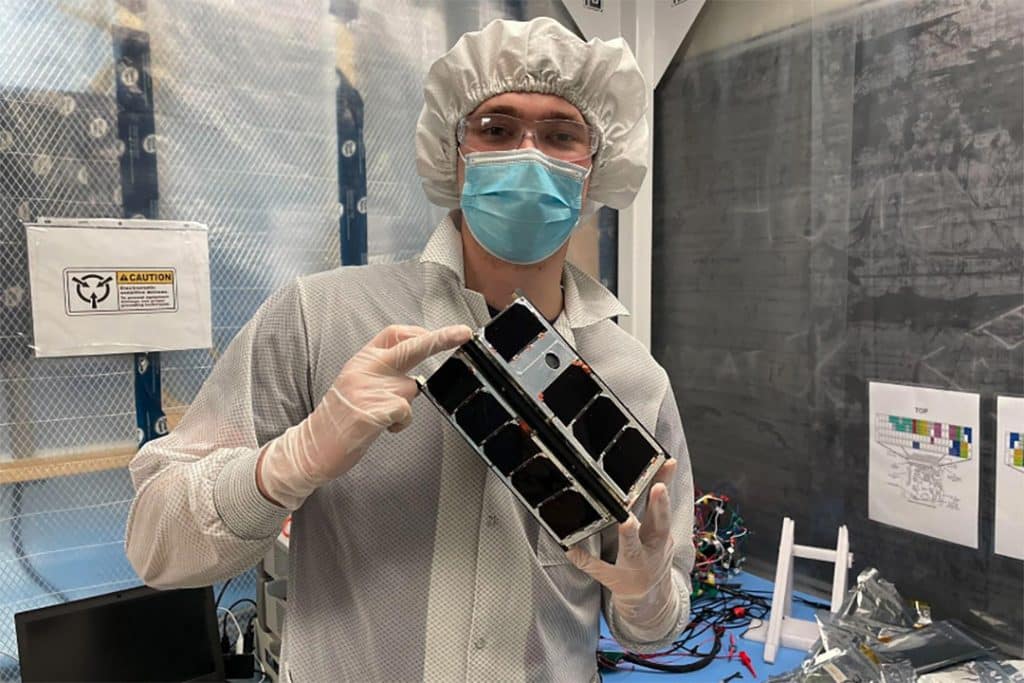
Hundreds of students who have passed through the school in the last few years helped build the University of Saskatchewan’s (USask) first CubeSat, dubbed “RADSAT-SK.”
Like UM’s cubesat Iris, RADSAT was funded through the CSA’s Canadian CubeSat Project. Also similar to UM, USask has received funding for a second cubesat from the CSA’s CUBICS program.
“The main motivation for our mission is radiation-based experiments,” said Layne Ransom, a mechanical engineering student at USask.
On board RADSAT is an experimental dosimeter board, which is a device that measures radiation. This experimental one is less costly than current commercially available dosimeter boards. Researchers want to see if this new one can hold up in orbit.
Parts of RADSAT are also coated in a fungal melanin to see if it can act as a radiation shield.
Melanin, a substance that produces pigments, helps fungi inhabit the most extreme habitats on earth.
RADSAT was launched into space in June and ejected into space from ISS on July 6 at the same time as the UM’s Iris CubeSat. The two universities worked closely together after both received money from the CSA CubeSat Project.
Ransom said it’s exciting to know the students’ hard work led to RADSAT being in orbit.
“Honestly, it doesn’t even feel real,” she said. “This project has been one of the most incredible opportunities that I’ve ever had. To think that something that myself and my fellow team members have worked on is now actually in space, that is a pretty incredible feeling.”
Both UM and USask also received additional funding from the CSA’s CUBICS program to build a second CubeSat to be launched into orbit in the future.
For their second CubeSat, which is currently in development, USask has partnered with the University of Regina (U of R), which is developing a payload for the CUBICS-funded CubeSat.
Blasting off
Another group of students within the USST focuses on the rockets that get satellites into space.
The USST rocketry division is designing and building a rocket for the 2024 Launch Canada Challenge.
Launch Canada is an organization that aims to advance the aerospace field and each year invites universities to participate in a competition to build rockets.
The USST rocketry team is building a rocket to compete in the Basic category, said USask student Rosy Hettiarachchi, who is a project manager, systems co-lead and a member of the propulsion subteam.
So far, the group has built and launched a 26-inch-tall prototype rocket from a nearby farm to test out materials and systems design, Hettiarachchi said.
“It has been a huge learning process,” she said. “We are still looking into what types of models we can use and what type of materials would be more feasible for dealing with the vibrations. The mini rocket was a success, but we found out there were some calculations that we missed, and we saw how the material could fail.”
The competition rocket will be around 10 feet tall and must reach a minimum launch height of 10,000 feet.
Since she wants to work in aerospace, Hettiarachchi said, it’s beneficial to have projects like the Launch Canada Challenge to work on where she can use her skills as a mechanical engineer.
Hettiarachchi, an international student from Sri Lanka, said the USST was one of the reasons she decided to attend USask, along with good online ratings for its mechanical engineering program and its affordability.
She wants to specialize in rockets in the future and would love to work for SpaceX.
Other space-based research at USask
CubeSats aren’t the only type of satellite work at USask.
The school is also involved with satellites that conduct atmospheric research.
Dr. Adam Bourassa, a professor and faculty member in Physics and Engineering Physics, is part of the Institute of Space and Atmospheric Studies (ISAS), founded by seven professors in the department.
“We use radars and satellites to study the atmosphere and the near-earth space environment, so basically where the edge of the earth’s atmosphere is influenced by physics of space,” Bourassa said during a recent interview.
ISAS has 15 to 20 graduate students and research associates working within the institute at any given time, building and testing prototypes for radars and sensors and analyzing the data from them once they are operational.
HAWC
USask is a primary participant in the upcoming High-altitude Aerosols, Water vapour and Clouds (HAWC) mission, part of NASA’s Atmosphere Observing System.
According to the CSA, HAWC will “provide critical data to support extreme weather prediction, climate modelling, and monitoring of disasters, such as volcanic eruptions, wildfires and extreme precipitation. HAWC consists of three innovative Canadian instruments and a Canadian satellite.”
The mission will launch in 2031 and be in orbit for at least five years.
“Two of those three Canadian sensors were developed in our lab here at the University of Saskatchewan,” Bourassa said.
The sensors have been in development for a decade. USask students involved in the development process build prototypes and test them on airplanes and stratospheric balloons, which are massive balloons carrying payloads into the stratosphere.
OSIRIS
Although developed in the 1990s and launched in 2001, Bourassa said USask’s Optical Spectrograph and Infrared Imaging System (OSIRIS) continues to be a big project for the school.
OSIRIS is currently taking measurements of the ozone layer aboard the Swedish Odin satellite.
“OSIRIS was made to look sideways through the atmosphere, so it scans up and down and looks at the different layers of the atmosphere as it flies around its orbit, and that was something that was very new at the time,” Bourassa said.
OSIRIS launched on Odin around the time when the world was concerned about the depletion of the ozone layer due primarily to chlorofluorocarbons (CFCs).
In its 22 years orbiting Earth, it has provided and continues to provide researchers with valuable information about the continuing recovery of the ozone.
The data OSIRIS has collected is in major international climate reports submitted to the United Nations.
SuperDARN
The Super Dual Auroral Radar Network (SuperDARN) project uses radars on Earth that look up at the edge of space.
SuperDARN is a network of over 30 high-frequency radars in the Northern and Southern Hemispheres.
SuperDARN Canada is headquartered at USask and headed by Dr. Kathryn McWilliams.
Bourassa said SuperDARN studies space weather.
While humans can see visible sunlight and feel its heat, high-energy particles come with the sunlight, Bourassa explained. Humans can sometimes see these high-energy particles interact with our atmosphere in the form of auroras (the northern lights in Canada). Still, aside from that, we generally can’t observe them without instrumentation.
These high-energy particles are incredibly variable, and solar flares and sunspots influence them. They can cause electrical problems with power lines or pipelines on Earth.
The SuperDARN radars monitor and understand the solar wind’s interaction with the atmosphere’s edge.
While McWilliams was unavailable for an interview, she said in an email that SuperDARN will have funding announcements in November.
Bourassa said USask is allowing students to find new paths into an aerospace industry that has grown since rocket company SpaceX made going into space less expensive.
“There is a lot more interest across a lot more industries with things that can be done from orbit, and I think we’re seeing a lot more startup companies, spinoff companies that are doing things from space that have never been done before,” Bourassa said. “We’re training students in these areas at the university, and we’re providing these students with skills in aerospace, remote sensing, and space physics that could be really important for industry in the future. And there is also potential for spinoff companies to come out of this university research. It’s happened before, and it could happen again.”
One such company was SED Systems, which USask scientists and researchers formed in 1965. Calian Advanced Technologies in Ottawa later acquired it. The company provides infrastructure for satellite ground systems.
While there is excitement about satellites on the prairies, the near-constant launch of satellites over the last few years has also caused some issues for astronomical researchers.
University of Regina astronomer researches solar system, contends with satellite pollution
While there is interest in creating an official space group for students at the U of R, the school still has space research happening with Dr. Samantha Lawler, an assistant professor of astronomy at Campion College in the Department of Physics.
She conducts research and oversees U of R and international students.
“I look for Kuiper Belt objects,” Lawler explained during a recent interview from her farm outside Regina. “These are small, icy bodies out beyond the orbit of Neptune. So, Pluto is a Kuiper Belt object.”
The Kuiper Belt is similar to an asteroid belt; both contain remnants of when the solar system formed. In addition to rocks, the Kuiper Belt has chunks of ice, frozen methane and ammonia. The Kuiper Belt is home to several dwarf planets in addition to Pluto, including Orcus, Haumea, Quaoar, and Makemake.
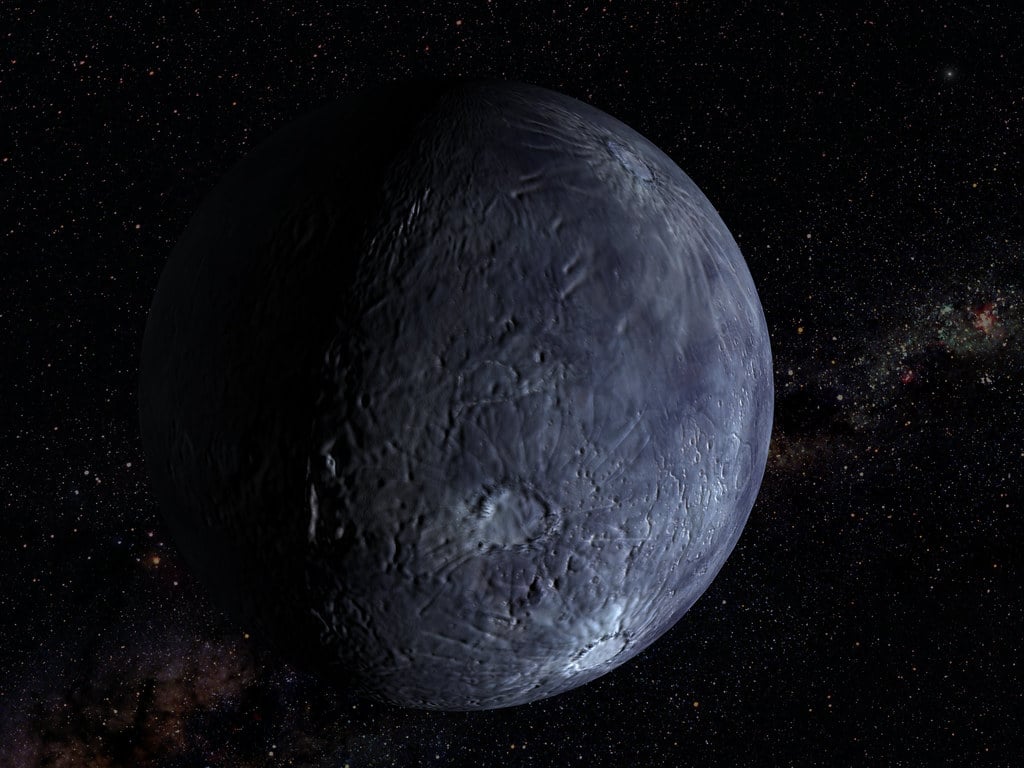
Lawler studies their orbits to learn more about the solar system’s creation.
While planets get closer and farther away from the sun as they orbit, they stay at the same distance from the sun with only slight fluctuations.
But Kuiper Belt objects don’t all orbit on the same plane as the planets.
“Kuiper Belt objects are in all kinds of crazy orbits,” Lawler said. “Pluto gets really close to the sun and really far away from the sun, and it’s tilted.”
Lawler’s research seeks to explain these different orbital patterns.
Using computer simulations, Lawler and her students move Neptune around and see how that planet may affect the orbit of the Kuiper Belt objects, which gives them a clearer picture of how and where Neptune formed.
“We know now that Neptune formed closer to the sun and moved outward and that explains what we see,” she said.
Lawler said there are other solar systems where planets that orbit a star don’t do so on the same plane as ours. The fact that our solar system is relatively “calm” when compared to others is likely why life was able to form in this particular system.
Her research provides clues to what other solar systems may support life.
“It’s part of answering these large questions of how did we get here today,” she noted.
She and her students perform their research by booking time on large telescopes – usually the Canada-France-Hawaii Telescope, which sits atop Mauna Kea mountain on Hawaii’s Big Island at an altitude of 4,204 metres. It is part of the Mauna Kea Observatory.
Lawler and her students tell the technicians onsite where they want the telescope pointed, under what conditions the sky should be, and for how long they want it on a given spot.
The telescope then “stares” at a patch of sky and captures images over a specific time to see if there is any movement from tiny dots of light. Typically, the size of the objects Lawler and her team look for are at least 100 kilometres across. Unlike stars, these objects don’t create their own light. Instead, the researchers are looking for sunlight reflected off the object.
“We take a picture of one spot and come back an hour later and take another picture and come back an hour later and take another picture and see what moves between those three images,” the astronomer said. “The Kuiper Belt objects that we are looking for are way way way fainter than you could ever see with your eyes.”
The faintness of the objects she’s looking for, coupled with the brightness of the thousands of satellites being launched into orbit each year, has caused an issue for Lawler and turned her into a reluctant expert on satellite pollution.
Satellite pollution
While the tiny CubeSats that the UM and USask are building pose no problems, the large commercial satellites like SpaceX’s Starlink constellation, which put satellites in a constellation pattern at a low-earth orbit, appear much brighter in the sky, and those satellites can play havoc with Lawler’s research.
“In that period of [observation] time, satellites fly through the view, and they can be very bright depending on how big they are, where the sun is, and how reflective they are.”
If a Starlink satellite, which is about the size of a Ford F-150, passes through the field of view of Lawler’s images, it leaves a big, bright line through the image and usually renders it useless for her research.
“It’s basically making it so I need more time to do the same science, and it’s taxpayer-funded time,” Lawler said. “All these telescopes are funded by taxpayers, and it’s because of the actions of for-profit companies that my science is not as effective with this taxpayer-funded facility, and that’s very frustrating.”
Her concern about satellite pollution, which is especially noticeable around Regina due to it being in line with popular orbits, prompted her to research the subject.

With Starlink planning to put as many as 42,000 satellites into orbit, the Chinese government launching its high-speed internet constellation of thousands of satellites, and other commercial satellites shot into the sky, the situation could soon turn dire.
“I calculated that if we actually get this many satellites, during the summertime, from Regina, you can expect to see 200 satellites with your eyes all night long in the summer,” she warned. “You can only see about 4,000 stars with your eyes, so it’s something like one in 15 dots you see in the sky would be moving. That’s freaky. That’s not what I want the sky to look like.”
However, that’s not even the worst-case scenario.
“All the satellites in orbit are moving at several kilometres per second, so if there’s a mistake and they crash into each other, there’s going to be a huge debris field, which could take out other satellites and cause more debris,” Lawler stated. “We could very easily lose access to orbit because of these companies,” she said.
There could be a point where existing space junk and active satellites will be so densely crowded in orbit around Earth the risk of collision could prevent future space travel.
While Starlink is doing some mitigation, like trying to make its satellites less reflective, and governments are slowly starting to take the issue of light pollution and space regulation seriously, it could ultimately prove to be too little too late, as Lawler said commercial companies are racing to get their satellites into orbit before any regulations come into place.
Lawler has become such an expert on the subject that she was invited to talk about her findings at the Artificial Light At Night conference in Calgary this year.
But light pollution and potential collisions aren’t even the only concerns. Starlink is planning to deorbit old satellites by having them burn up in Earth’s atmosphere to be replaced by new ones every five years, Lawler said, but no one knows what the effect of dumping tons of aluminum into the atmosphere will do to the planet. By her calculations, around 20 tons of aluminum could be put into Earth’s upper atmosphere each day once the deorbiting starts.
“Because there is no environmental oversight, they’re just going to do it,” she said. “This is a horrible experiment they’re running. And there is just no oversight. None.”
Lawler said anyone interested in doing something about satellite pollution – visible from even the remotest of locations on Earth – could tell their government to do better with rural high-speed internet access, as most satellites launched are for that purpose.
Anyone using Starlink for the internet can contact SpaceX and voice their concerns to company representatives.
“That’s absolutely an engineering problem,” Lawler said. “SpaceX has fantastic engineers working for them. They can figure out how to make the satellites darker and how to use fewer of them for service. That’s an engineering problem that’s surmountable.”
Student research
As for the students she oversees, Lawler works with two or three undergraduate students at a time. She also co-supervises two PhD students at other universities in New Zealand and Victoria, B.C.
One current student is figuring out the precise orbits of Kuiper Belt objects they have identified.
Another student is trying to determine the maximum limit of distant objects that could be orbiting the sun, like a potential belt of objects so far away we can’t see them from Earth.
And another student is researching satellite streaks, reviewing images and seeing how much they’ve increased over time.
For homegrown prairie students, international students, and businesses that want to be involved with space, Manitoba and Saskatchewan present plenty of opportunities to get involved in the aerospace sector.
Prairie Cubesats
These are the four cubesats that the University of Manitoba, University of Winnipeg, University of Saskatchewan and University of Regina are involved in developing.
- Iris (University of Manitoba and University of Winnipeg)
- Launched into space on June 5. Ejected from the International Space Station on July 6. Funded by the Canadian Space Agency’s Canadian CubeSats Project. Will test space radiation on rock samples from Earth.
- RADSAT-1 (University of Saskatchewan)
- Launched into space on June 5. Ejected from the International Space Station on July 6. Funded by the Canadian Space Agency’s Canadian CubeSats Project. Testing an experimental dosimeter and melanin coating.
- ArcticSat (University of Manitoba and the Hamlet of Chesterfield Inlet)
- Still in development. Funded by the Canadian Space Agency’s CubeSats Initiative in Canada for STEM program. This cubesat will monitor sea ice in Nunavut.
- RADSAT-2 (University of Saskatchewan and University of Regina)
- Still in development. Funded by the Canadian Space Agency’s CubeSats Initiative in Canada for STEM program. The University of Regina is developing a payload for this cubesat.
Our Prairie stories matter too.
The Flatlander takes a closer look at the stories that unite us, and make us unique, in Saskatchewan and Manitoba.
Will you help us tell our stories?
Author