University of Regina astronomer researches solar system, contends with satellite pollution
There could be a point where existing space junk and active satellites will be so densely crowded in orbit around Earth the risk of collision could prevent future space travel.
While there is interest in creating an official space group for students at the University of Regina (U of R), the school still has space research happening with Dr. Samantha Lawler, an assistant professor of astronomy at Campion College in the U of R Department of Physics.
She conducts research and oversees U of R and international students.
“I look for Kuiper Belt objects,” Lawler explained during a recent interview from her farm outside Regina. “These are small, icy bodies out beyond the orbit of Neptune. So, Pluto is a Kuiper Belt object.”
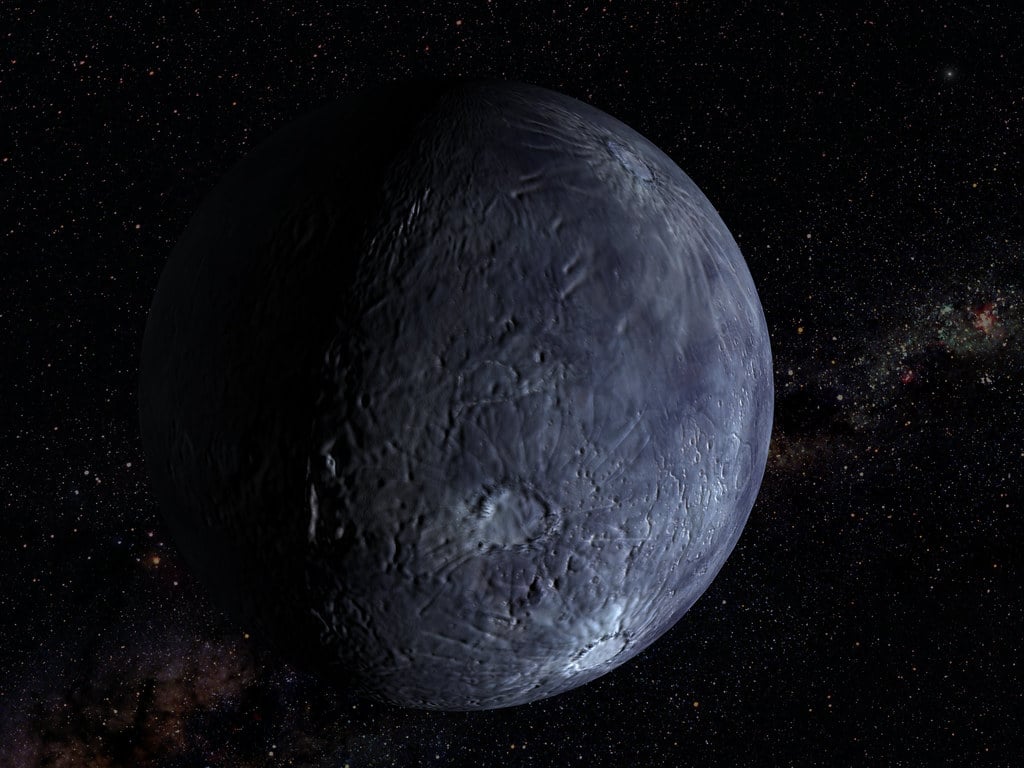
The Kuiper Belt is similar to an asteroid belt; both contain remnants of when the solar system formed. In addition to rocks, the Kuiper Belt has chunks of ice, frozen methane and ammonia. The Kuiper Belt is home to several dwarf planets in addition to Pluto, including Orcus, Haumea, Quaoar, and Makemake.
Local, independent, in-depth.
Our Prairie stories.
Lawler studies their orbits to learn more about the solar system’s creation.
While planets get closer and farther away from the sun as they orbit, they stay at the same distance from the sun with only slight fluctuations.
But Kuiper Belt objects don’t all orbit on the same plane as the planets.
“Kuiper Belt objects are in all kinds of crazy orbits,” Lawler said. “Pluto gets really close to the sun and really far away from the sun, and it’s tilted.”
Lawler’s research seeks to explain these different orbital patterns.
Using computer simulations, Lawler and her students move Neptune around and see how that planet may affect the orbit of the Kuiper Belt objects, which gives them a clearer picture of how and where Neptune formed.
“We know now that Neptune formed closer to the sun and moved outward and that explains what we see,” she said.
Lawler said there are other solar systems where planets that orbit a star don’t do so on the same plane as ours. The fact that our solar system is relatively “calm” when compared to others is likely why life was able to form in this particular system.
Her research provides clues to what other solar systems may support life.
“It’s part of answering these large questions of how did we get here today,” she noted.
She and her students perform their research by booking time on large telescopes – usually the Canada-France-Hawaii Telescope, which sits atop Mauna Kea mountain on Hawaii’s Big Island at an altitude of 4,204 metres. It is part of the Mauna Kea Observatory.
Lawler and her students tell the technicians onsite where they want the telescope pointed, under what conditions the sky should be, and for how long they want it pointed at a given spot.
The telescope then “stares” at a patch of sky and captures images over a specific time to see if there is any movement from tiny dots of light. Typically, the size of the objects Lawler and her team look for are at least 100 kilometres across. Unlike stars, these objects don’t create their light. Instead, the researchers are looking for sunlight reflected off the object.
“We take a picture of one spot and come back an hour later and take another picture and come back an hour later and take another picture and see what moves between those three images,” the astronomer said. “The Kuiper Belt objects that we are looking for are way way way fainter than you could ever see with your eyes.”
The faintness of the objects she’s looking for, coupled with the brightness of the thousands of satellites being launched into orbit each year, has caused an issue for Lawler and turned her into a reluctant expert on satellite pollution.
Satellite pollution
While the tiny CubeSats that the University of Manitoba and the University of Saskatchewan are building pose no problems, the large commercial satellites like SpaceX’s Starlink constellation, which put satellites in a constellation pattern at a low-earth orbit, appear much brighter in the sky, and those satellites can play havoc with Lawler’s research.
“In that period of [observation] time, satellites fly through the view, and they can be very bright depending on how big they are, where the sun is, and how reflective they are.”
If a Starlink satellite, which is about the size of a Ford F-150, passes through the field of view of Lawler’s images, it leaves a big, bright line through it and usually renders the image useless for her research.
“It’s basically making it so I need more time to do the same science, and it’s taxpayer-funded time,” Lawler said. “All these telescopes are funded by taxpayers, and it’s because of the actions of for-profit companies that my science is not as effective with this taxpayer-funded facility, and that’s very frustrating.”
Her concern about satellite pollution, which is especially noticeable around Regina due to it being in line with popular orbits, prompted her to research the subject.

With Starlink planning to put as many as 42,000 satellites into orbit, the Chinese government launching its high-speed internet constellation of thousands of satellites, and other commercial satellites shot into the sky, the situation could soon turn dire.
“I calculated that if we actually get this many satellites, during the summertime, from Regina, you can expect to see 200 satellites with your eyes all night long in the summer,” she warned. “You can only see about 4,000 stars with your eyes, so it’s something like one in 15 dots you see in the sky would be moving. That’s freaky. That’s not what I want the sky to look like.”
However, that’s not even the worst-case scenario.
“All the satellites in orbit are moving at several kilometres per second, so if there’s a mistake and they crash into each other, there’s going to be a huge debris field, which could take out other satellites and cause more debris,” Lawler stated. “We could very easily lose access to orbit because of these companies,” she said.
There could be a point where existing space junk and active satellites will be so densely crowded in orbit around Earth the risk of collision could prevent future space travel.
While Starlink is doing some mitigation, like trying to make its satellites less reflective, and governments are slowly starting to take the issue of light pollution and space regulation seriously, it could ultimately prove to be too little too late, as Lawler said commercial companies are racing to get their satellites into orbit before any regulations come into place.
Lawler has become such an expert on the subject that she was invited to talk about her findings at the Artificial Light At Night conference in Calgary.
But light pollution and potential collisions aren’t even the only concerns. Starlink is planning to deorbit old satellites by having them burn up in Earth’s atmosphere to be replaced by new ones every five years, Lawler said, but no one knows what the effect of dumping tons of aluminum into the atmosphere will do to the planet. By her calculations, around 20 tons of aluminum could be put into Earth’s upper atmosphere each day once the deorbiting starts.
“Because there is no environmental oversight, they’re just going to do it,” she said. “This is a horrible experiment they’re running. And there is just no oversight. None.”
Lawler said anyone interested in doing something about satellite pollution – visible from even the remotest of locations on Earth – could tell their government to do better with rural high-speed internet access, as the vast majority of satellites launched are for that purpose.
Anyone using Starlink for the internet can contact the company and voice their concerns to company representatives.
“That’s absolutely an engineering problem,” Lawler said. “SpaceX has fantastic engineers working for them. They can figure out how to make the satellites darker and how to use fewer of them for service. That’s an engineering problem that’s surmountable.”
Student research
As for the students she oversees, Lawler works with two or three undergraduate students at a time. She also co-supervises two PhD students at other universities in New Zealand and Victoria, B.C.
One current student is figuring out the precise orbits of Kuiper Belt objects they have identified.
Another student is trying to determine the maximum limit of distant objects that could be orbiting the sun, like a potential belt of objects so far away we can’t see them from Earth.
And another student is researching satellite streaks, reviewing images and seeing how much they’ve increased over time.
For homegrown prairie students, international students, and businesses that want to be involved with space, Manitoba and Saskatchewan present plenty of opportunities to get involved in the aerospace sector.
This concludes our four-part series on the space research and development happening in Manitoba and Saskatchewan.
Our Prairie stories matter too.
The Flatlander takes a closer look at the stories that unite us, and make us unique, in Saskatchewan and Manitoba.
Will you help us tell our stories?
Author