Potash mine to produce ‘hundreds of millions’ a year in Manitoba
The president of Manitoba’s only potash mine says it could be a financial juggernaut for centuries to come, with the potential to bring in hundreds of millions of dollars each year for many hundreds of years.
The president of Manitoba’s only potash mine says it could be a financial juggernaut for centuries to come, with the potential to bring in hundreds of millions of dollars each year for many hundreds of years.
A recent agreement will give some of the mining operation’s profits to the Manitoba Métis Federation (MMF).
“We’re going to produce lots of money for Manitoba, for the citizens,” Potash and Agriculture Development Corporation of Manitoba (PADCOM) president Daymon Guillas said at a media conference held Friday in Winnipeg.
PADCOM and MMF officials announced Friday what they are calling an “unprecedented” royalty agreement that will see PADCOM grant a royalty to MMF related to their potash mine project, which is located about 16 kilometers west of Russell, in the hamlet of Harrowby and is the first and only of its kind operation in Manitoba.
Local, independent, in-depth.
Our Prairie stories.
MMF AND PADCOM did not disclose details of the profit-sharing agreement, but Guillas made it clear how profitable the mine, which first started operating in June of 2023, could be and for how long.
“The deposits are so big we could be mining for 200 years, 300 years, at a million tons per years, at 400 dollars a ton at today’s price,” Guillas said. “That’s 400 million dollars a year in revenue.”
According to Guillas, the potash they are currently mining is of the same high quality as potash currently being mined in Saskatchewan, something he said could make Manitoba and PADCOM “major players” in the potash industry.
“Manitoba potash is the same high grade as Saskatchewan, and we have millions of tons,” he said. “Together, we’re going to develop this, make it a significant player in Manitoba.”
The mine uses a selective mining process, injecting heated brine into the ground to dissolve potash and then extracting the solution.
Potash is used mainly in fertilizer, as it is a key nutrient that helps plants grow, increases crop yields, and improves plants’ disease resistance, while it also helps to restore soil fertility.
It’s also used in potassium-based chemicals like detergents, ceramics, pharmaceuticals, and water conditioners, as well as for animal feed and food production.
According to PADCOM, royalty payments will be made directly to the MMF, with the MMF having “full discretion” over what the money is used for.
MMF said the money will support initiatives and services for Red River Métis Citizens and advance economic development in the region.
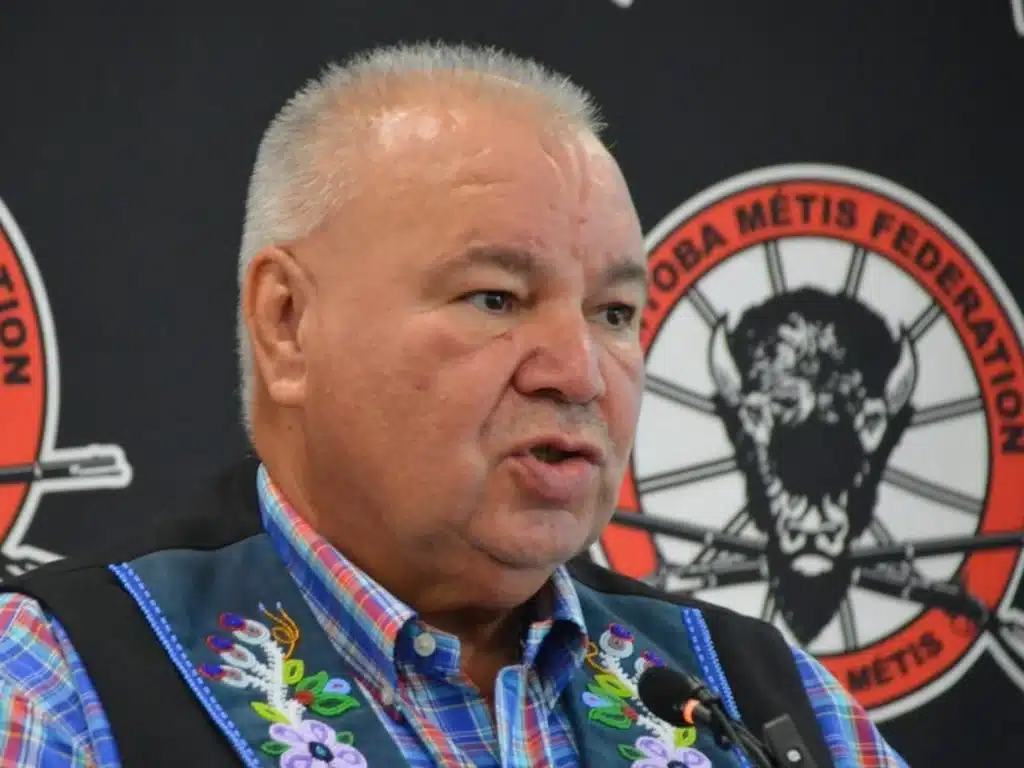
“All the money will go back in some form or fashion, helping our families, our citizens, our youth,” MMF President David Chartrand said on Friday.
“I talk about culture, and it’s essential for us to protect our identity, to protect pride in our young children today, so this is going to be part of the effects of PADCOM’S partnership with us.”
The financial agreement comes as the MMF said recently they are actively looking for ways to do less business with the U.S., and to be less reliant on American products and services.
This story was originally published in The Winnipeg Sun. It is republished under a Creative Commons license as part of the Local Journalism Initiative.
Our Prairie stories matter too.
The Flatlander takes a closer look at the stories that unite us, and make us unique, in Saskatchewan and Manitoba.
Will you help us tell our stories?