Soldiers get ‘danger close’ at CFB Shilo
Two soldiers stood behind the cannon. They had just finished a day of packing the weapon with 100-pound shells, having their bodies shaken by the firing blast and being covered in egg-smelling clouds that smoked out of the chamber.
There came a time on Nov. 6 that the land darkened around a CFB Shilo artillery weapon. The cannon leaned toward the horizon like a fallen tree, lit by a full moon that glowed in the sky.
Two soldiers stood behind the cannon. They had just finished a day of packing the weapon with 100-pound shells, having their bodies shaken by the firing blast and being covered in egg-smelling clouds that smoked out of the chamber.
The mood had changed for the two soldiers as the training day turned to night and the blasts turned to silence. One suddenly revealed that he views the gun as sacred.
“This is our flag,” he said, pointing out to the M777 Howitzer. “It’s our colours. It is sacred.”
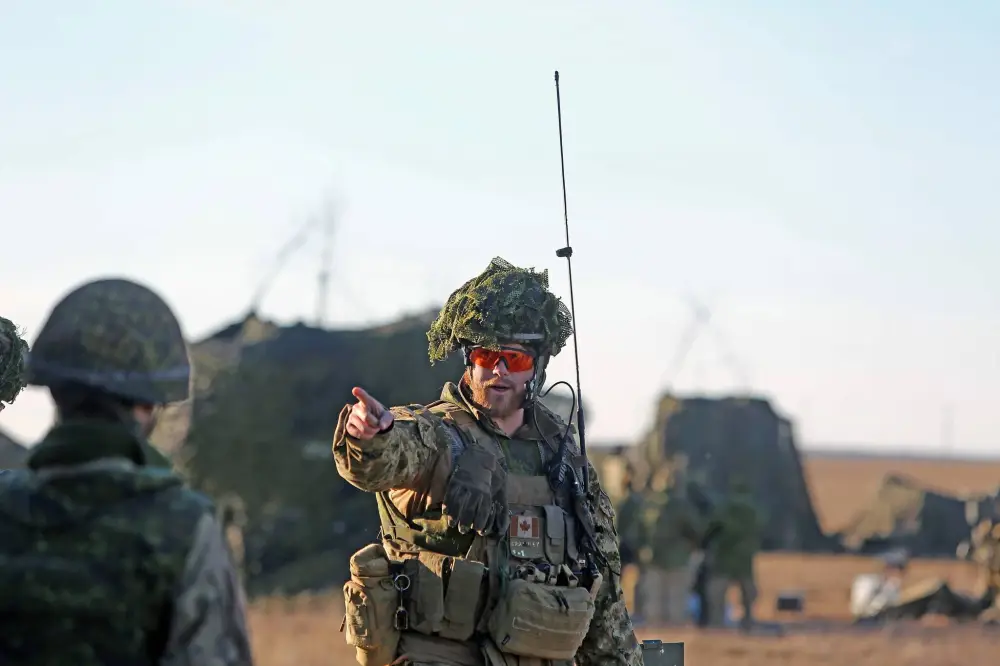
The moment put into perspective a massive, collaborated effort on Nov. 6 from soldiers in the First Regiment, Royal Canadian Horse Artillery. A team of more than 100 soldiers put their life’s work into explosive reality during an exercise at CFB Shilo.
Local, independent, in-depth.
Our Prairie stories.
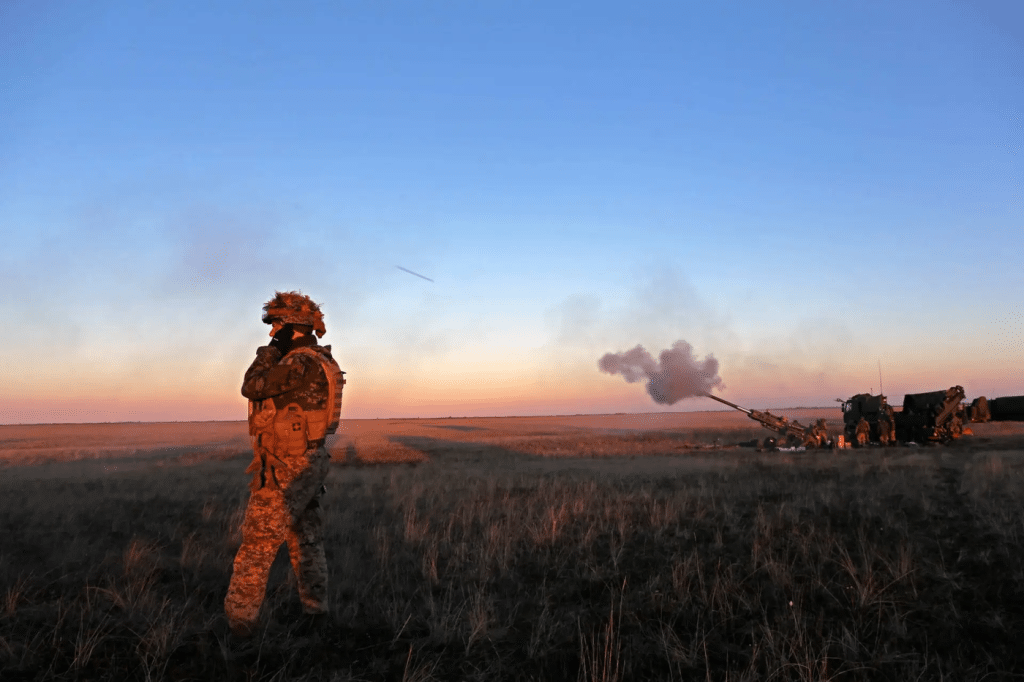
1RCHA planned and executed artillery strikes within roughly 600 metres of friendly soldiers.
Soldiers on the front lines called in targets near to them, command post operators calculated how far to send a shell, and artillery gunners aimed and pulled the trigger.
It was a bid to prove battle readiness, so that 1RCHA is qualified and capable to deploy for Canada.
The 1RCHA exercise took place on the third day of combat training. The sights on the artillery gun line were many, but when it came time to fire, an alarm would sound, a rope would be pulled, a body-shaking blast would vibrate, a cloud of smoke would fill the air and, after 20 long seconds, an explosion would echo back from the horizon.
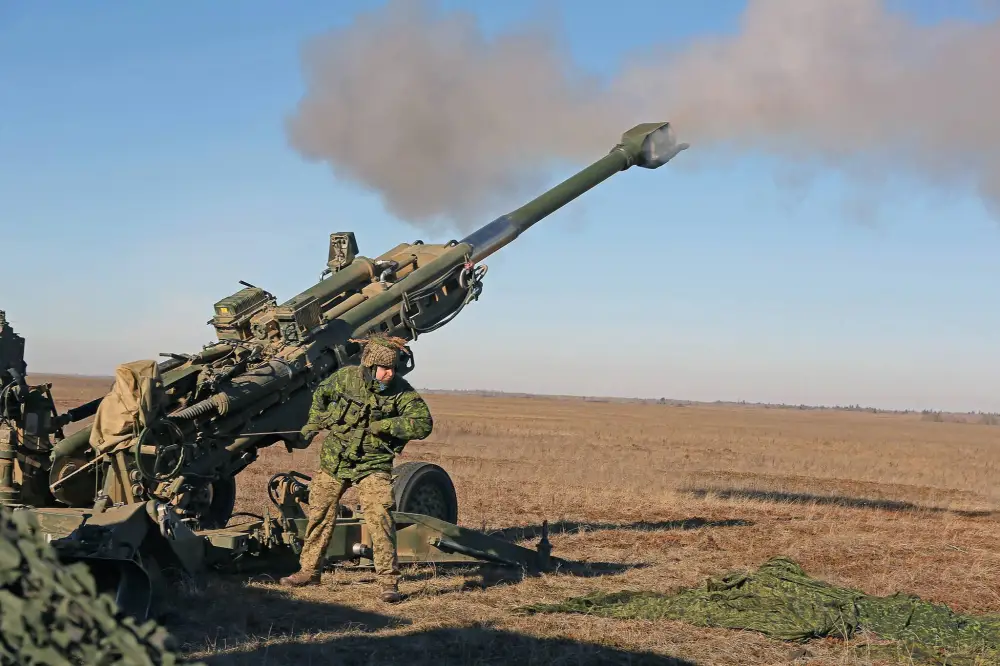
The gunners were an eye-catching part of the exercise, but it was just one of many skills being trained during the exercise, said commanding officer Lt.-Col. Jordan Beatty.
Beatty said it was equally important that the soldiers were getting muscle memory for loading vehicles, travelling, erecting tents in hiding, patrolling campsites, communicating, firing rifles, sleeping overnight, preparing food rations — practising all the real skills that come with deployment.
“You don’t get the full experience without this,” Beatty told the Sun. “The (teams) have been training since September, and this is the culmination of that.”
The complicated exercise put to task all specialties, including those who calculated the flight of the 155-millimetre projectile, making sure it didn’t hit a Canadian, he pointed out.
Bombardier Michael St. Louis McIntosh is one of the crew members who helped calculate artillery shots. He worked out of the command post, a crammed vehicle that resembled a war room, with a map on the table.
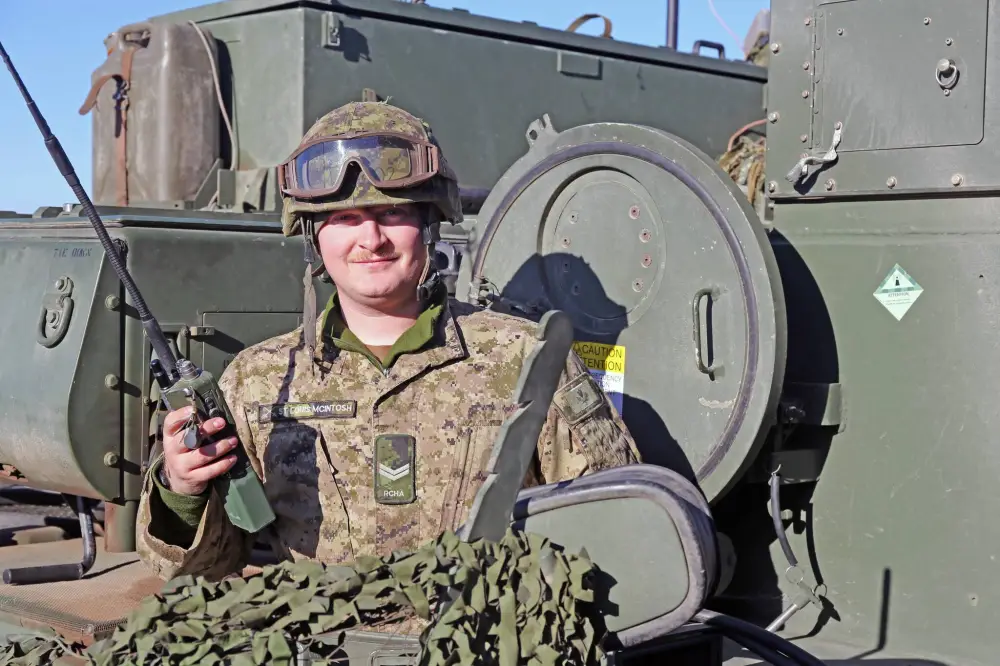
“Today is about as easy as shooting artillery can get,” he said. “If you are shooting in a rainstorm … that’s different.”
It is massively important to factor in weather, St. Louis McIntosh said. The projectile is at risk of drifting off target to a large degree if the team doesn’t input weather information.
“If you didn’t put it in on a windy day, it could be hundreds of metres,” he said.
Meteorological conditions add up to roughly 60 per cent of total effects on the shot, he said, explaining that the shell arcs into the sky, through potentially several layers of different conditions, before it touches down.
The exercise in the afternoon saw the roughly 100-pound shells shot around eight kilometres into the distance.
Being a “danger-close” exercise, the artillery needed to be particularly safe and accurate on Nov. 6. It added the command post soldiers to the list of people gaining invaluable practice.
But even soldiers who did not calculate shots, or aim and pull the trigger, grew in their roles from the exercise.
A battery quartermaster, who is responsible for logistical support, told the Sun how this works.
When an artillery gun broke earlier in the week, the support team had to organize transport for repair. These motions are important to practise, he said, and continue into the repair shop, where weapons techs fix equipment. The repair was completed and the gun returned to commission, he said.
“That’s another thing that’s good about these exercises. It’s not just for the gunners.”
It might not just be for gunners, but the gunners do love it.
Master Bombardier Jarrod Crashley, first in command of an artillery team, could not help but break into a shout after one exercise.
“That’s good shootin’, boys!” he said. “That’s what I want to see!”
Crashley’s team had just fired five shells in about 80 seconds. He praised the men who had loaded the gun — a task which needs the combined effort of roughly five soldiers after each shot.
Gunner Nathaniel Desjarlais was one artillery crew member to become qualified on the gun this week. He also pulled the trigger, a cord, for the first time.
“I didn’t really know what to expect when I was first getting up there,” Desjarlais said.
“It’s a very exhilarating experience being able to be around the gun,” he said. “It’s the whole point of the artillery. I’m pretty proud of myself.”
Beatty said this is an important reason that the regiment gets out and does live exercises. Experience is a vital part of the trade, and some experience can only be gained in the field, he said.
“It cannot be simulated. They joined to do this work, they didn’t join to hang out in the building.”
That sentiment appeared to be true in the presence of the two soldiers who stood under the moonlight and looked out on their gun.
“We are taught to die on it,” the second gunner said.
This story was originally published in the Brandon Sun. It is republished under a Creative Commons license as part of the Local Journalism Initiative.
Our Prairie stories matter too.
The Flatlander takes a closer look at the stories that unite us, and make us unique, in Saskatchewan and Manitoba.
Will you help us tell our stories?