‘Community copy’ of Treaty 3 on display at CMHR
A temporary exhibit at the Canadian Museum for Human Rights (CMHR) will allow guests to view an original copy of Treaty #3, on the 150th anniversary of that treaty being signed.
CMHR said in a media release that a community copy of Treaty #3 from 1873 is on display this week at the downtown Winnipeg museum, and will remain at the museum’s Level 6 Expressions gallery until Sunday.
A temporary exhibit at the Canadian Museum for Human Rights (CMHR) will allow guests to view an original copy of Treaty #3, on the 150th anniversary of that treaty being signed.
CMHR said in a media release that a community copy of Treaty #3 from 1873 is on display this week at the downtown Winnipeg museum, and will remain at the museum’s Level 6 Expressions gallery until Sunday.
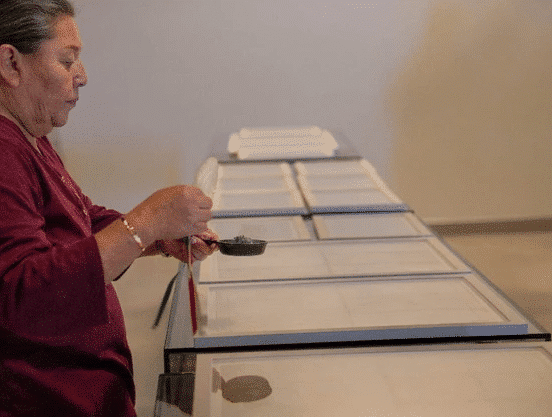
The document is one of 24 community copies that were sent to the Anishinaabe nations who were party to the treaty 150 years ago, and is the only copy believed to remain in existence, CMHR said.
Treaty 3 was an agreement entered into on October 3, 1873 between Ojibwe First Nations and the Crown.
Local, independent, in-depth.
Our Prairie stories.
It included large parts of what is now northwestern Ontario, and a small part of eastern Manitoba.
The document is part of a travelling exhibition called Treaty #3: Manidoo Mazina’igan – The Sacred Document, which includes interpretive panels on Anishinaabe perspectives on the meaning of treaty, the negotiation process for Treaty 3, and the way in which the commitments made by negotiators for the Crown “haven’t been respected.”
“The commitments made in treaty should have set a path for mutual respect and co-existence between settlers, Indigenous peoples and the land and water that give us life,” CMHR VP of Exhibitions Matthew Cutler said. “In listening to elders and Indigenous leadership, it is clear that we all need to recommit to our treaty promises, to be accountable to the relationships that treaties were meant to build and sustain.”
This story was originally published in The Winnipeg Sun. It is republished under a Creative Commons license as part of the Local Journalism Initiative.
Our Prairie stories matter too.
The Flatlander takes a closer look at the stories that unite us, and make us unique, in Saskatchewan and Manitoba.
Will you help us tell our stories?