Chlorination or closure: tensions rise over community well closures in Southeast Manitoba
Officials argue that while the water from the source may be clean, filling a contaminated tank could create a public health risk if the water is later consumed.
A battle over rural water access is intensifying in Manitoba’s southeast, with Progressive Conservative MLA Konrad Narth accusing the NDP government of quietly forcing the closure of long-standing community wells, a move he says jeopardizes farming, firefighting, and rural resilience during a drought.
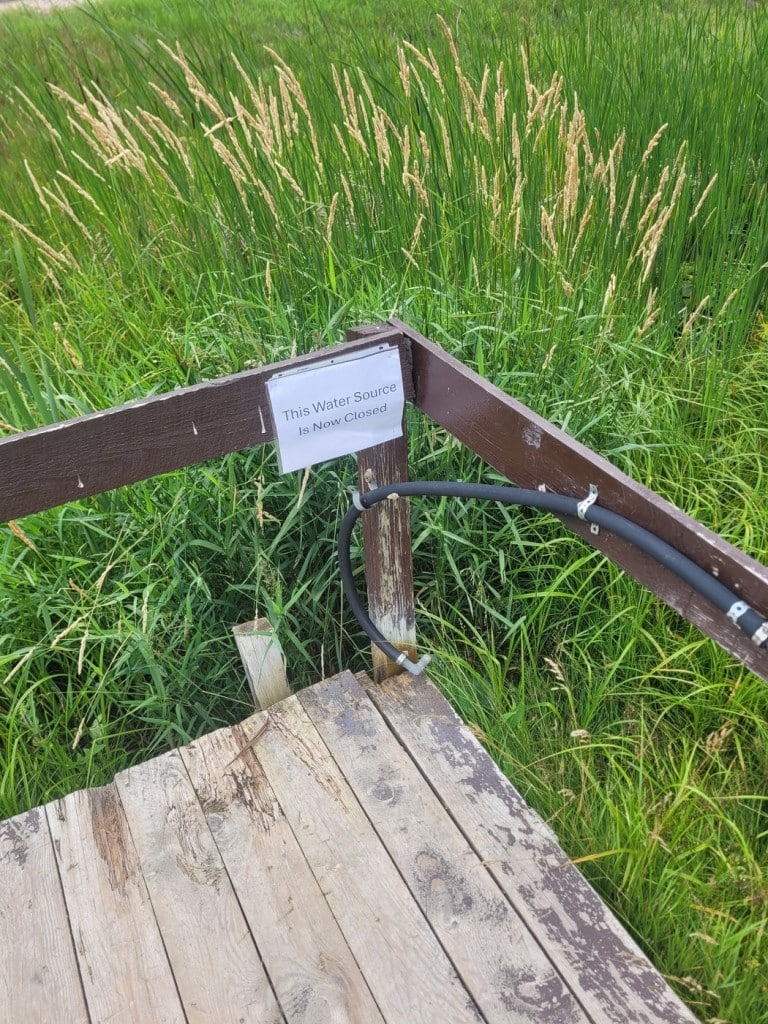
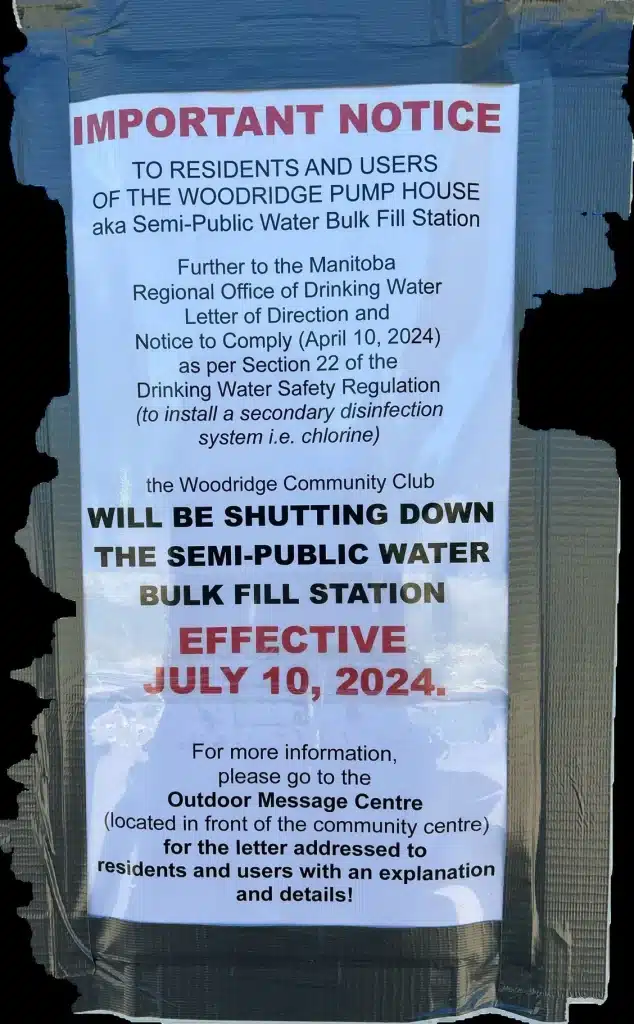
The dispute centers on two non-potable water sources: the Woodridge bulk-fill well, shut down last year, and the Piney artesian well, which closed two weeks ago. Both, according to Narth, have supplied generations of farmers, gardeners, and residents with reliable water for livestock, crops, and emergency use.
“These wells have some of the best water in the world, and decades of clean test results,” Narth says. “They’ve never failed safety tests. Yet the Office of Drinking Water is saying: chlorinate them or close them.”
Province’s Position vs. Narth’s Account
Local, independent, in-depth.
Our Prairie stories.
The province has maintained in earlier statements that the closures were the decisions of the water system owners and not direct provincial orders. In both Woodridge and Piney, officials say, the well operators (a community centre board in Woodridge and Manitoba Conservation staff in Piney) opted to shut them down.
But Narth says that’s a technical dodge. While the province may not have physically “turned off the tap,” he argues, it gave both operators an ultimatum: install a chlorination system or lose public access.
“That’s the way they’re passing the buck,” Narth said. “The Piney well sits on provincial land, run by provincial staff. For them to say ‘it was the landowner’s decision’ doesn’t sit well with residents.”
Chlorination Dispute
At the heart of the conflict is a provincial interpretation of policy under The Drinking Water Safety Act. Bulk-fill sites, where large containers or tanks can be filled for transport, are required to have secondary disinfection to prevent bacteria from developing in storage containers.
Officials argue that while the water from the source may be clean, filling a contaminated tank could create a public health risk if the water is later consumed.
Narth says that’s a flawed approach for non-potable water meant primarily for agricultural and firefighting purposes. “Chlorinating water used on crops can bind with certain chemicals, reducing their effectiveness,” he explained. “It can also kill beneficial microorganisms in some fungicides. And for firefighting, spraying chlorinated water on a fire just doesn’t make sense.”
Impact on Agriculture and Firefighting
The closures, Narth says, are already having real-world consequences. During spring wildfires this year, firefighting crews in Woodridge reportedly had to drive 15 miles to Marchand for refills because the local well was locked.
“That reduced efficiency and put homes at greater risk,” Narth said. “These wells were originally set up in the 1970s during a severe drought to provide reliable water for livestock and rural communities. We’re facing similar drought conditions now, and instead of supporting these wells, the province is shutting them down.”
The Piney artesian well draws from the Sandilands aquifer, which Narth describes as one of the “best freshwater sources in the world” and has flowed for over 60 years without issue. It, too, carried signage indicating “non-potable water – boil before consuming,” which Narth says should have eliminated liability concerns.
Community Frustration and Next Steps
Local frustration boiled over when residents learned of the Piney closure, especially after provincial representatives at a public forum had used Piney as an example of a well that did not need closure due to its smaller, jug-fill design.
“That same department later gave them the chlorinate-or-close ultimatum,” Narth said. “It’s inconsistent, and it’s undermining trust.”
Narth says he will continue pressing Environment and Climate Change and the Office of Drinking Water for a policy rethink. He warns that the current interpretation could eventually affect even piped artesian water systems serving towns potentially forcing costly chlorination of already-safe supplies.
This story was originally published in The Winnipeg Sun. It is republished under a Creative Commons license as part of the Local Journalism Initiative.
Our Prairie stories matter too.
The Flatlander takes a closer look at the stories that unite us, and make us unique, in Saskatchewan and Manitoba.
Will you help us tell our stories?