Farmers reflect on sustainability through Lake Winnipeg Basin Project
Spanning 34,000 acres of potatoes, grains, and oilseeds, the project helped producers create formal water stewardship plans using the Alliance for Water Stewardship (AWS) Standard as a guide.
Three Manitoba farm families are demonstrating that sustainable agriculture is more than a buzzword — it’s a daily commitment rooted in long-term thinking, innovation, and collaboration.
Chad Berry of Under the Hill Farms near Glenboro, Russell Jonk of Swansfleet Alliance near Bruxelles, and John Goff of Corduroy Plains in Carman were among four growers invited to participate in the Lake Winnipeg Basin Project (LWBP), a pilot initiative focused on on-farm water stewardship. McIntosh Ventures near Graysville also took part.
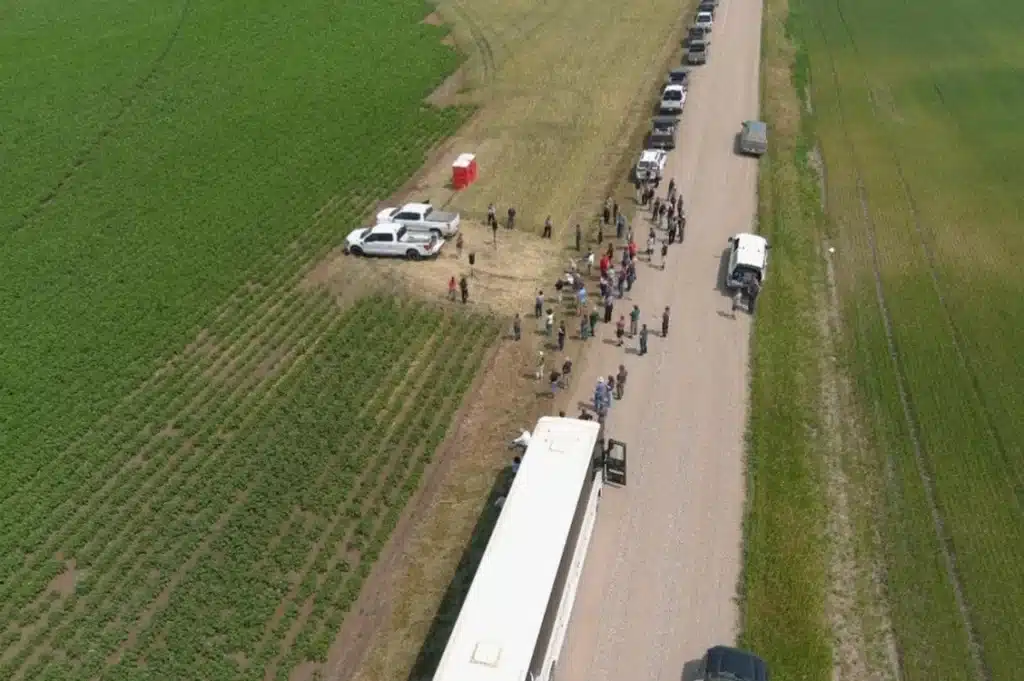
Spanning 34,000 acres of potatoes, grains, and oilseeds, the project helped producers create formal water stewardship plans using the Alliance for Water Stewardship (AWS) Standard as a guide. Eight industry and environmental organizations — including Nutrien, Simplot, Ducks Unlimited, and the Potato Sustainability Alliance — supported the work.
“It was a great experience,” said Berry. “There was a lot of self-reflection. When you’re forced to write down what you’re doing, you realize a lot more. One of the biggest takeaways was seeing how much good we were already doing — and where we had room to do better.”
Local, independent, in-depth.
Our Prairie stories.
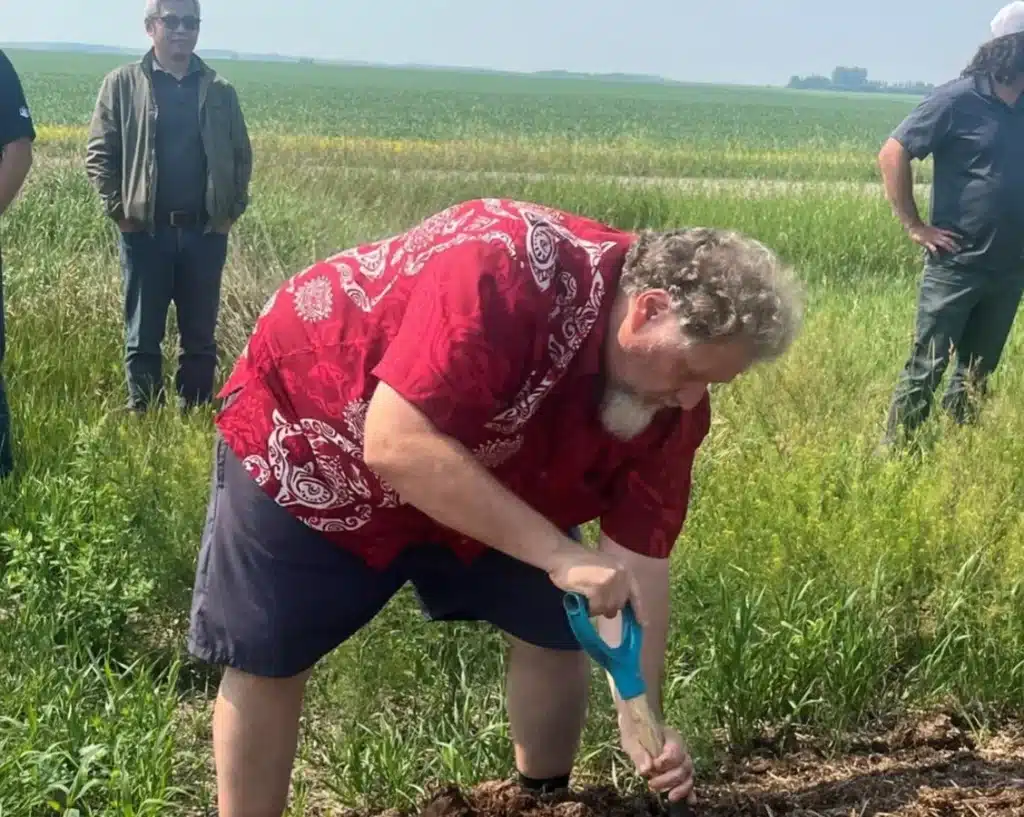
Berry, part of a multi-generational family farm, said the project opened the door to learning about new technologies and practices from other farms. His operation currently uses a Cascade Rain Nozzle irrigation system and Intellirain-equipped pivots that monitor soil moisture and adjust water application in real time.
“These tools help us be more precise,” Berry said. “It’s about making every drop count.”
For Jonk, the process confirmed that small decisions on the farm can have wide-reaching environmental impact.
“We’ve always tried to be sustainable,” said Jonk, who grows potatoes, corn, and edible beans with his family. “But the definition keeps changing. It used to mean maximizing yield. Now it means balancing yield with environmental responsibility and building healthy soil.”
Among Swansfleet’s practices is composting manure from feedlots and applying it to eroded knolls — improving soil structure and organic matter. They’ve also enhanced bird habitat by letting vegetation grow naturally around irrigation reservoirs, creating ideal nesting zones for waterfowl.
Jonk appreciated the structured benchmarking process and said working with EcoMetrics LLC — a firm hired to quantify the environmental, social, and economic impact of farm-level practices — helped show the tangible value of sustainability.
“It was really interesting to see how big of an impact we can have — not just on our farm, but on the local environment and the communities around us.”
John Goff, who manages the potato side of Corduroy Plains alongside his brother-in-law, said his farm had already implemented many practices before joining the project.
“We’ve been a big proponent of sustainability for the last eight or 10 years,” Goff said. “I think that’s why we were invited — they saw we were serious about it.”
At Corduroy Plains, cover cropping is a key tool to prevent costly soil erosion. They also compost manure, apply it to sandy zones to retain moisture, and use variable-rate technology to optimize fertilizer use across a three-year potato rotation.
“There’s a bit of capital upfront, but making your farm sustainable makes it more profitable as well,” Goff said.
He believes the project reinforced the importance of public awareness.
“The public is interested in the sustainable measures we’re taking,” he said. “We need to get them more involved so we can raise the capital to make some of these bigger investments.”
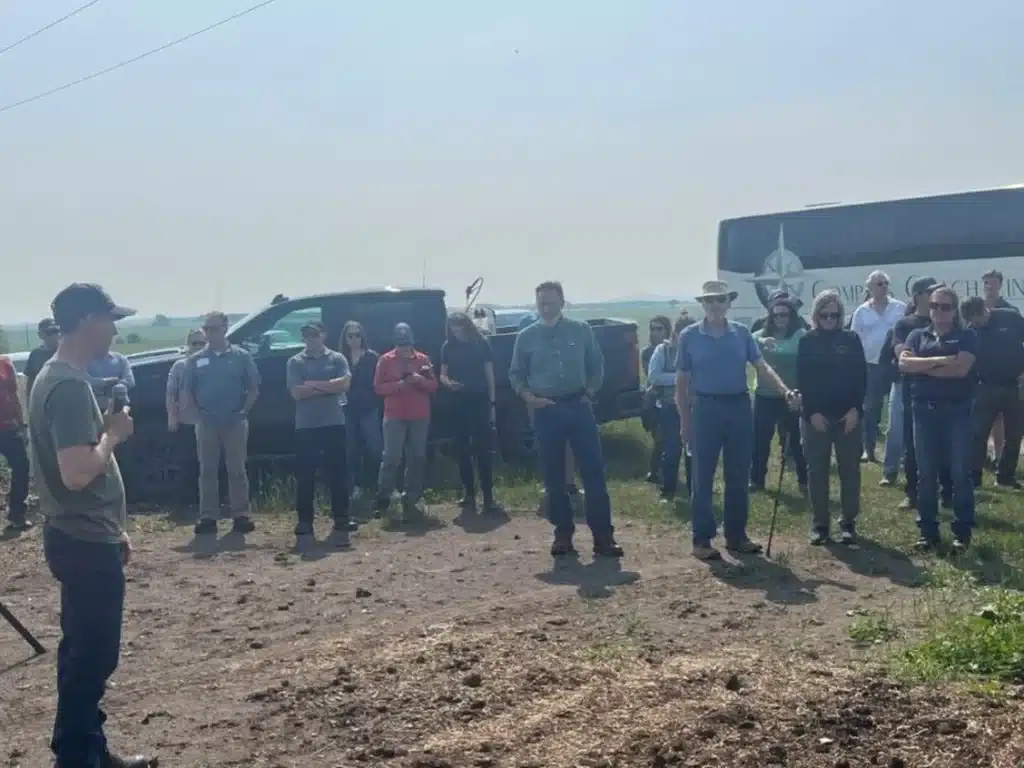
On July 8, the LWBP hosted a tour of three participating farms, inviting stakeholders from government, Indigenous communities, universities, environmental organizations, and commodity groups to see the practices in action.
“There was a real exchange of ideas,” Berry said. “We looked at riparian areas, irrigation efficiency, and new machinery — all ways to reduce water use and improve application.”
Though Jonk, Berry, and Goff were already familiar with each other through Manitoba’s tight-knit potato sector, they all said the collaboration added value.
“The other farmers — we’ve known each other for a long time,” Goff said. “But it’s always great to spend time together and learn what someone else has figured out that you haven’t yet.”
Jonk agreed: “The potato community is small, but being able to talk openly about what’s working — cover cropping, fertilizer timing, integrated pest management — helps all of us move forward.”
While only four farms were part of the pilot, all three say the insights are relevant across the province — and timely.
“There’s definitely a shift,” said Jonk. “Farmers are looking at long-term environmental impact and making changes.”
Berry added that the diversity of participants — from processors to conservation groups — made the project stronger.
“We learned from them, and they learned from us,” he said. “For other growers, I’d say: visit, ask questions, and see what’s possible.”
In the end, it all comes down to stewardship — of land, water, and the next generation of farming.
“Sustainability needs to be part of every decision we make on the farm,” Goff said.
This story was originally published in The Winnipeg Sun. It is republished under a Creative Commons license as part of the Local Journalism Initiative.
Our Prairie stories matter too.
The Flatlander takes a closer look at the stories that unite us, and make us unique, in Saskatchewan and Manitoba.
Will you help us tell our stories?