Museum’s educator focuses on teaching inclusive curriculum
The Canadian Museum for Human Rights’ newest addition is dedicating his tenure to creating LGBTTQ+ lessons for classroom teachers across the country, especially those outside major cities, so queer and transgender youth do not live through the same isolation he felt as a student.
The Canadian Museum for Human Rights’ newest addition is dedicating his tenure to creating LGBTTQ+ lessons for classroom teachers across the country, especially those outside major cities, so queer and transgender youth do not live through the same isolation he felt as a student.
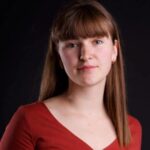
“My experience as a child in education was horrific,” said Walter Cassidy, a Windsor, Ont.-based teacher who assumed the museum’s educator-in-residence post this month.
“I was bullied. I was harassed. I was one of those students who couldn’t pass as straight, and so I constantly had attacks in schools.”
Cassidy, who teaches art and drama in the Greater Essex County District School Board, recalled surprising himself upon deciding to pursue a career in education for that very reason.
Twenty-four years later, the high school educator has made a name for himself as an expert on creating inclusive classrooms, and is often called upon to run workshops for colleagues. Cassidy created the first gender and sexuality alliance in his school district and, more recently, a university course on how to teach LGBTTQ+ students.
Local, independent, in-depth.
Our Prairie stories.
The 53-year-old’s latest project will expand the museum’s catalogue of LGBTTQ+ resources.
The museum launched its educator-in-residence program in 2017 to design free human rights resources — including both digital and in-person lesson plans — for elementary and secondary teachers and their students. Cassidy’s residency will span the 2023-24 and 2024-25 school years.
“Visibility — students seeing themselves in the curriculum, in the classroom and knowing that schools are a safe space where they can be themselves, to me, is paramount,” he said. “My work, I’m hoping, will help to ensure that, and give (teachers) more resources and possibilities to make sure that happens.”
The teacher said he is particularly interested in developing resources on queer history and icons from communities outside “the big three,” his nickname for Canada’s three largest cities: Vancouver, Toronto and Montreal.
A self-described “avid historian,” Cassidy recently did a deep-dive into the life and death of William (Billy) Kovinsky, a 43-year-old gay man from his hometown, and the first Canadian who was reported dead of AIDS.
Signal-boosting stories such as Kovinsky’s are important because queer and transgender people have largely been overlooked in historical records, especially in small and mid-sized communities such as Windsor, he said.
Lise Pinkos, manager of education programs, said the museum has a role to play in supporting conversations about LGBTTQ+ rights in schools, especially at a time when stories about erasure and rights regression are making headlines.
Over the last school year, Manitoba teachers have rallied on multiple occasions to condemn calls to ban books with LGBTTQ+ content and protest against acts of homophobia and transphobia.
“We are not neutral in this conversation. We need to highlight these stories,” Pinkos said.
The education programs manager acknowledged the scandal that broke in June 2020 after former museum employees revealed they had been occasionally asked not to show gay content on tours at the request of religious school groups.
It’s important the museum repeatedly recognize the existence of the practice, which ended in 2017, and to continue to apologize for it, Pinkos said.
Moving forward starts with including LGBTTQ+ content in every school program, as well as ensuring it is embedded deliberately, clearly and obviously throughout the site, she said, adding that tapping a celebrated queer activist to be the museum’s third educator-in-residence is part of that work.
Throughout his tenure, Cassidy said he wants to help teachers learn about the little-known LGBTTQ+ histories in their regions, and he sees opportunities to embed queer history across the curriculum.
“Even in math, you can focus on graphing same-sex marriage statistics,” he noted.
Cassidy will work on the museum’s upcoming exhibition on the “LGBT Purge” — a period between the 1950s and 1990s when the federal government removed civil servants and members of the military based on their suspected sexuality.
This story was originally published in The Free Press. It is republished under a Creative Commons license as part of the Local Journalism Initiative.
Our Prairie stories matter too.
The Flatlander takes a closer look at the stories that unite us, and make us unique, in Saskatchewan and Manitoba.
Will you help us tell our stories?
Author