At Lakeshore Tree Farms, sustainability practices double production
From reusing pots and cardboard to precision applications of herbicides, fertilizers, and pest control treatments, the family-owned tree nursery, 25 km southwest of Saskatoon, embraces farming methods prioritizing efficiency and environmental sustainability.
At Lakeshore Tree Farms, sustainability is more than a catchphrase. It’s a carefully cultivated ethos rooted in thoughtful practices and incremental steps.
From reusing pots and cardboard to precision applications of herbicides, fertilizers, and pest control treatments, the family-owned tree nursery, 25 km southwest of Saskatoon, embraces farming methods prioritizing efficiency and environmental sustainability.
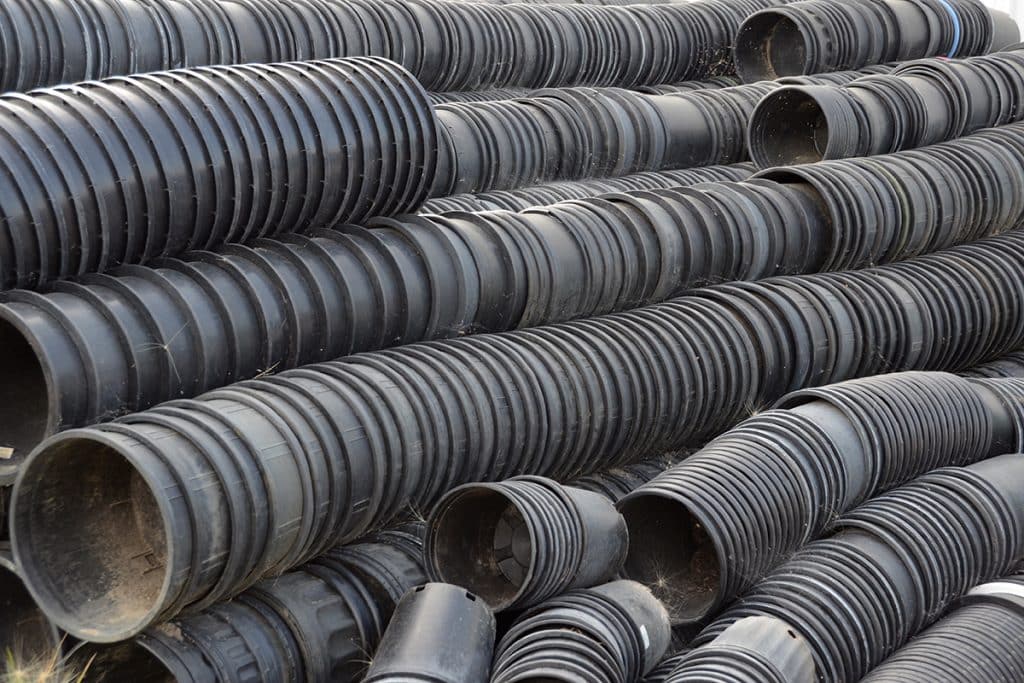
For Vic Krahn, one of three co-owners at Lakeshore, the approach boils down to one guiding principle: “Do a lot with many little practices.”
Fibreglass stakes, which can be reused for up to 20 years, support young trees secured by biodegradable plastic ties.
Local, independent, in-depth.
Our Prairie stories.
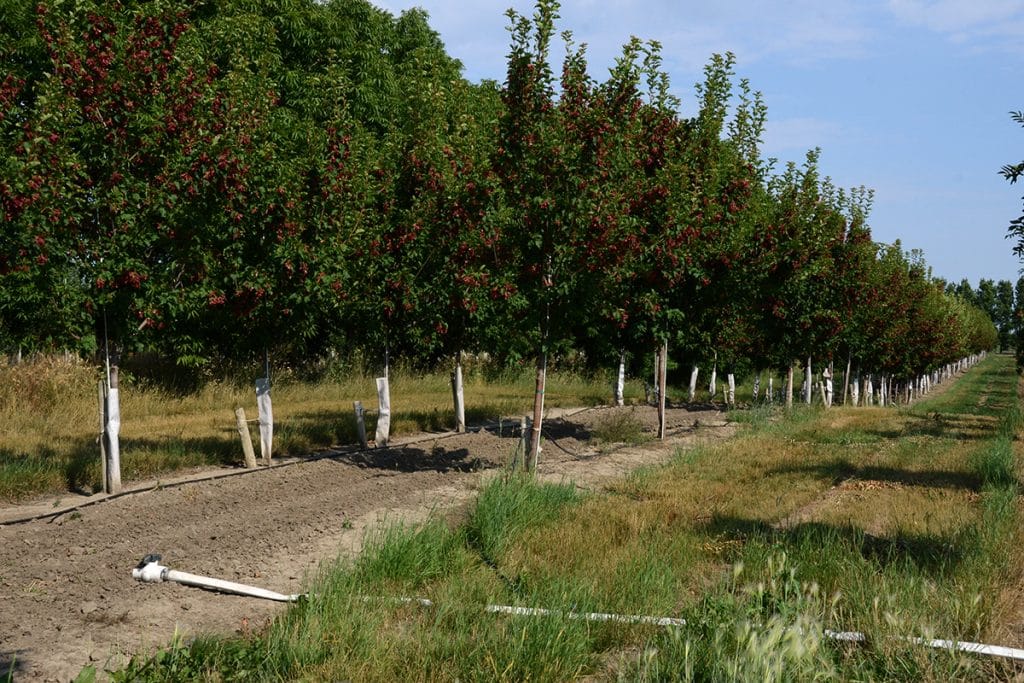
Between the rows of trees, grass can grow naturally, providing a range of ecological benefits.
The grass roots stabilize the soil, reducing erosion and improving water retention, while their dense growth suppresses weeds and supports beneficial organisms, like earthworms, that aerate the soil.
Without grass, the land would need tilling, disturbing the soil structure, releasing stored carbon, and causing erosion.
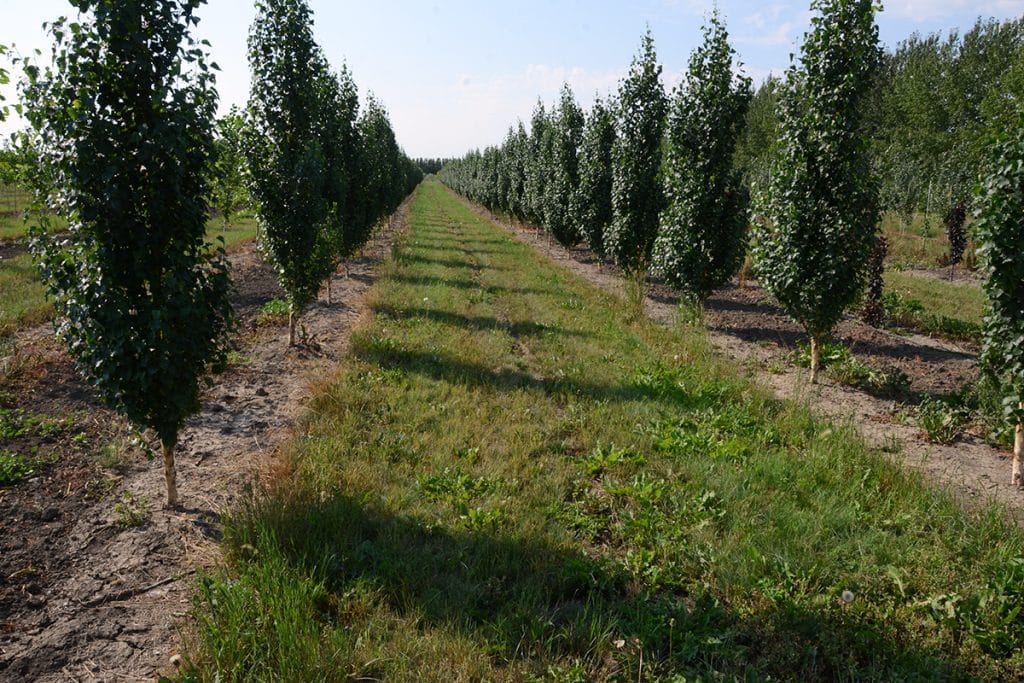
Lakeshore Tree Farms uses root pruning, in which workers trim the roots of trees while they are still in the ground. This is typically done by digging a trench around the tree’s root zone and cutting the larger, longer roots. This encourages the tree to develop smaller, stronger roots closer to the trunk, making them easier to transplant without requiring wire baskets.
The new roots that grow after pruning are better at absorbing water and nutrients, making the trees stronger and more likely to survive when replanted.
Using vehicles efficiently
Lakeshore uses Honda quads instead of larger gas-guzzling trucks on its 250-acre farm to be fuel efficient. Its 23-horsepower subcompact tractors run on diesel, which has more energy per litre than gasoline.
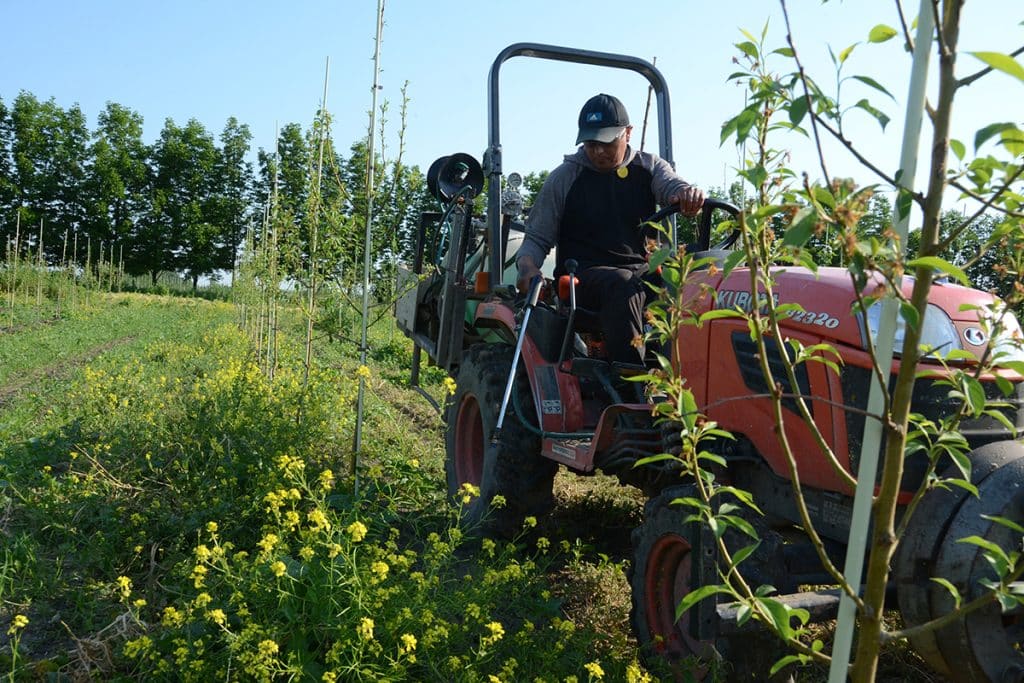
Diesel engines squeeze the fuel and air mixture tight before burning it, which gets more energy out of every drop of fuel. Diesel engines are built to run at lower speeds and use high pressure to ignite the fuel without spark plugs. This makes them stronger and more efficient, especially for heavy work like pulling or carrying loads.
Making greenhouses efficient
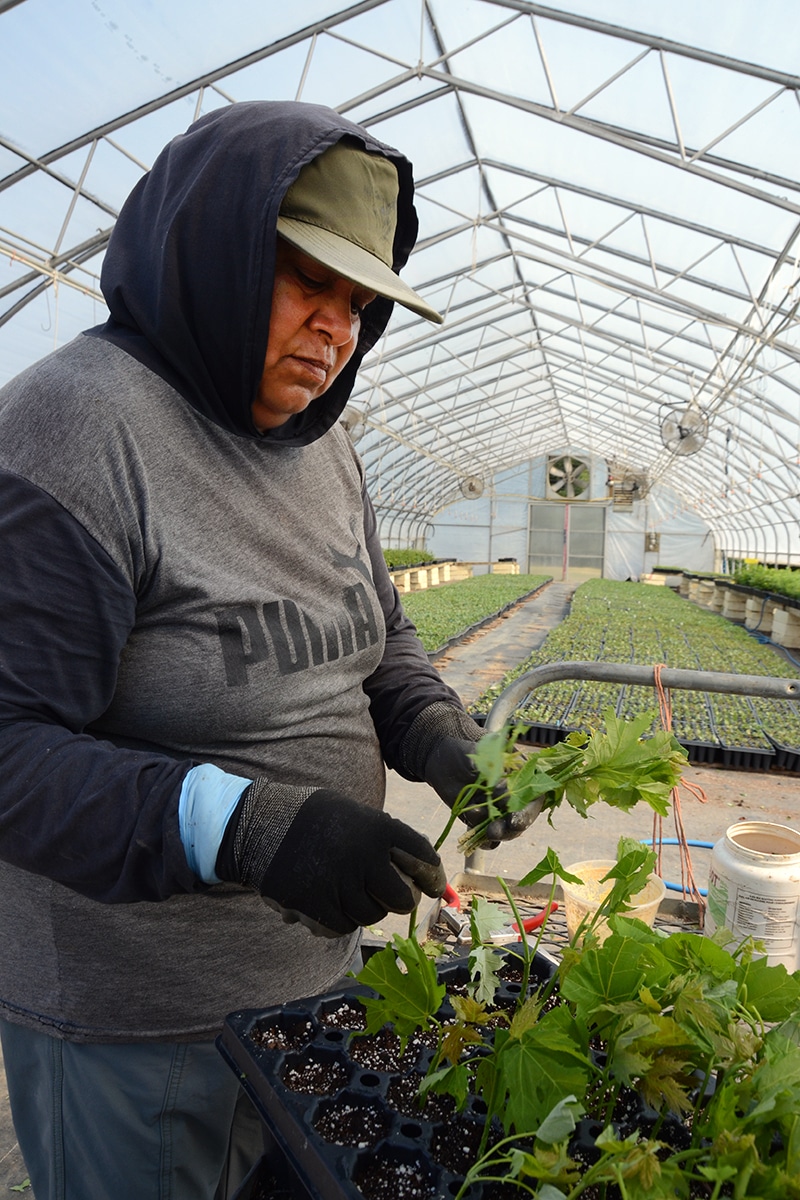
In greenhouses, crops are grown at a time when the buildings don’t need as much heat to stay warm.
To keep the greenhouses from getting too hot, cooling systems use three-phase power, which is more efficient and powerful than regular household electricity.
Instead of just one wave, three-phase power has three waves of electricity flowing simultaneously. Each wave is staggered, which means there’s always power available. Hence, machines run smoothly without wasting energy by starting and stopping.
Since greenhouses often need to run heaters, coolers, and lights all at once, three-phase power can handle the heavy electrical load without problems while using less electricity than single-wave electricity.
During winter, cold air from outside augments mechanical cooling, cutting electricity use further.
Preserving good genes
To grow new trees, Lakeshore harvests seed and takes cuttings in-house to preserve source genetics and quality control. This ensures that the next generation of trees will continue to have desirable traits like disease resistance.
Using water straight from the source
The water used at Lakeshore is taken directly from the Saskatchewan River. The farm saves energy and reduces its environmental impact by using water straight from the river without chemical processing or treatment.
The water is sent directly to the roots of each plant using a drip irrigation system.
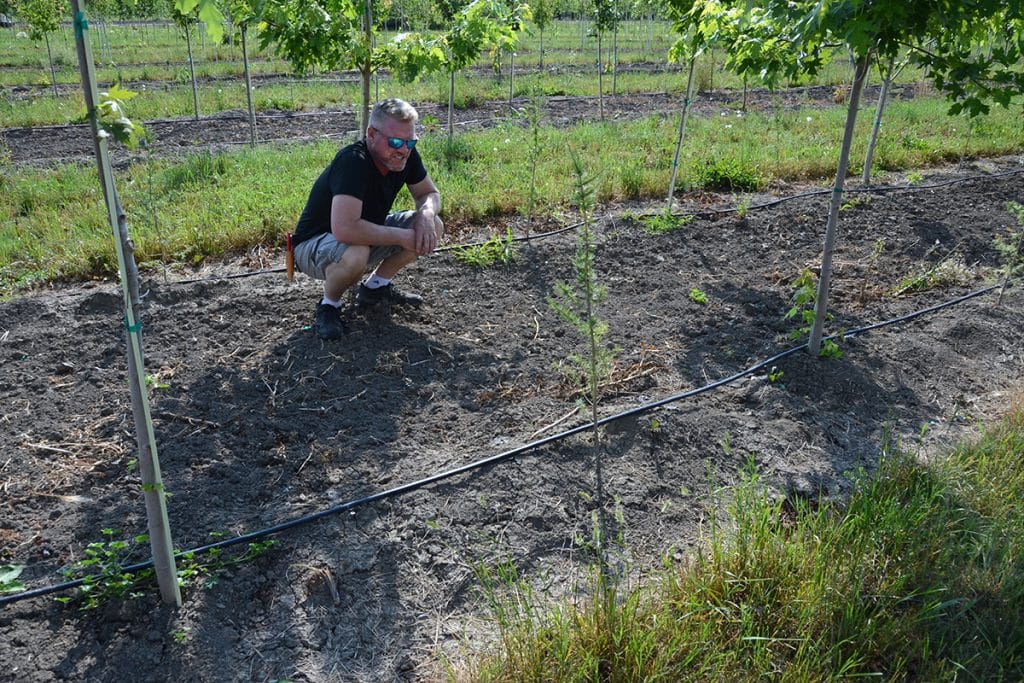
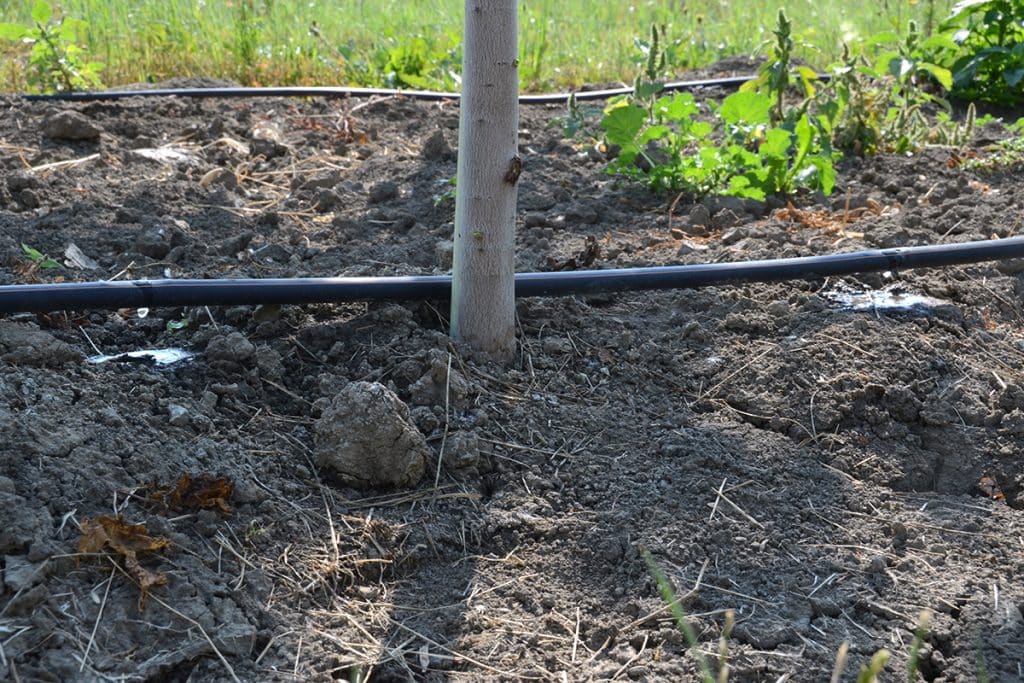
“The problem with overhead irrigation is it throws so much between the crop, and there’s a lot of wasted water,” said Aaron Krahn, co-owner at Lakeshore and son of Vic. “With drip, it deeply penetrates up to 24 inches.”
Drip irrigation also conserves water by preventing evaporation and runoff.
The worker in charge of irrigation must only move one manifold pipe to water 100 rows.
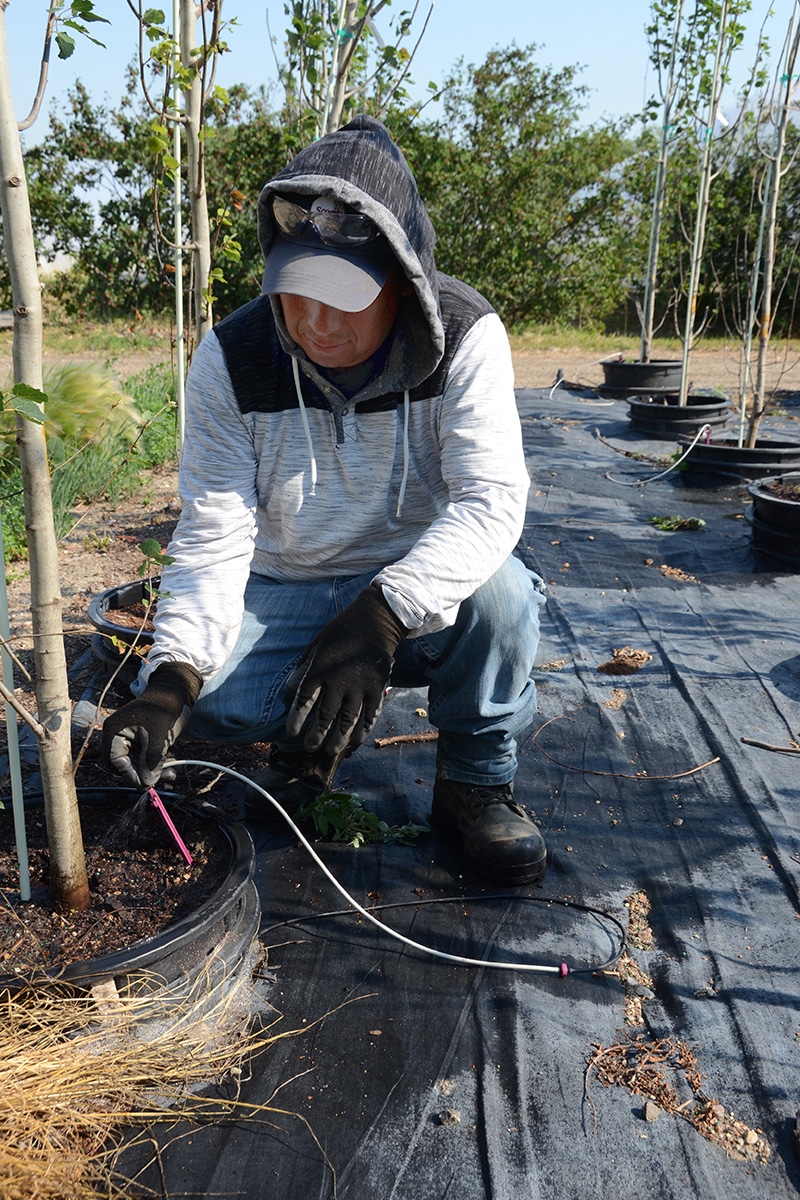
In drip irrigation, a manifold pipe is the central hub for distributing water from the main supply line to multiple drip lines or emitters. It ensures that water is delivered evenly and efficiently to all irrigation system parts.

Drip irrigation allowed for root pruning
Drip irrigation also allows a tree’s roots to be trimmed before it breaks dormancy, which occurs when the tree is “asleep” for the winter and not actively growing.
Pruning during dormancy is important because it’s less stressful for the trees—they don’t need as much energy to heal. Drip irrigation creates a more controlled and supportive environment for the tree as it recovers from the pruning and grows new roots.
Before drip irrigation led to root pruning, growing and transplanting trees was much more labour-intensive.
Related:
Saskatchewan irrigation efficiency program: helping farmers save water
Through the SIEP, farmers can apply for a rebate to help cover the costs of upgrading their irrigation systems. The program focuses on replacing older, less efficient methods with low-pressure, high-efficiency irrigation systems.
Without root pruning, the trees could grow sprawling root systems that were harder to dig up and manage.
Workers had to carefully dig around the roots and place the trees in heavy wire baskets to keep the root ball intact. However, the roots would sometimes tangle inside the baskets or even grow through them, making it difficult to remove them without damaging the roots. This often led to baskets that couldn’t be reused because the roots destroyed them and even damaged trees, which meant they couldn’t be sold.
Trees are only placed in baskets when it is time to sell them.
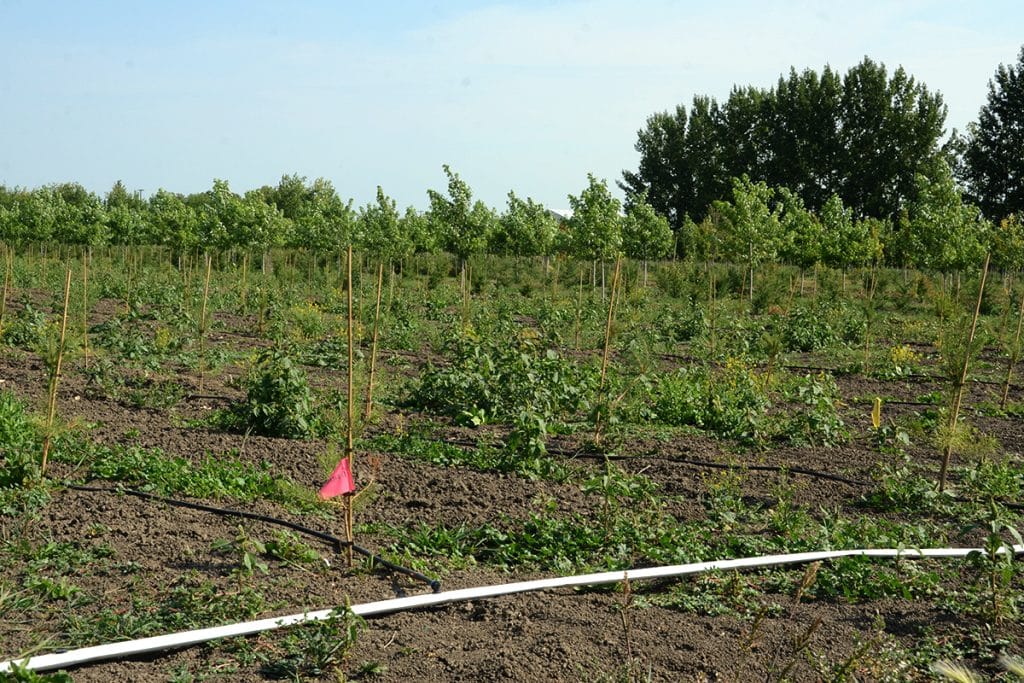
Drip irrigation helps with weed control
Drip irrigation allows root pruning and improves grass growth between trees while keeping weeds under control.
Drip irrigation helps stop weeds from growing in dry areas between the rows by watering only the grass and tree roots.
Weeds, like all plants, need water to sprout and grow. Since the soil outside the reach of the irrigation lines stays dry, weed seeds don’t get the moisture they need to grow.
This means fewer weeds competing with the grass and trees for water and nutrients.
Fewer weeds reduce the need for chemical weed killers, which is better for the environment.
“If grass grows high, no problem,” says Aaron. “But with black soil, if thistles or stinkweed grow, you must cultivate or spray.”
Mowing, instead of cultivating, is less labour-intensive and uses less diesel.
The farm’s efficient water use also saves money and makes their operation more sustainable.
Overcoming expensive obstacles
Moving to drip irrigation came at a challenging time, making the process more expensive than it needed to be.
In May 2015, while transitioning to drip irrigation, Lakeshore’s water pipes from their original source, Moon Lake, collapsed due to corrosion.
The damaged culverts prevented the farm from accessing the water as it had in the past, creating an urgent need for a new solution.
To address the problem, Lakeshore worked with the Moon Lake Water Users Association, a group of 14 members who share access to water from the Saskatchewan River.
Together, they installed a new pumping station to draw water from the river, ensuring a steady supply for the farm.
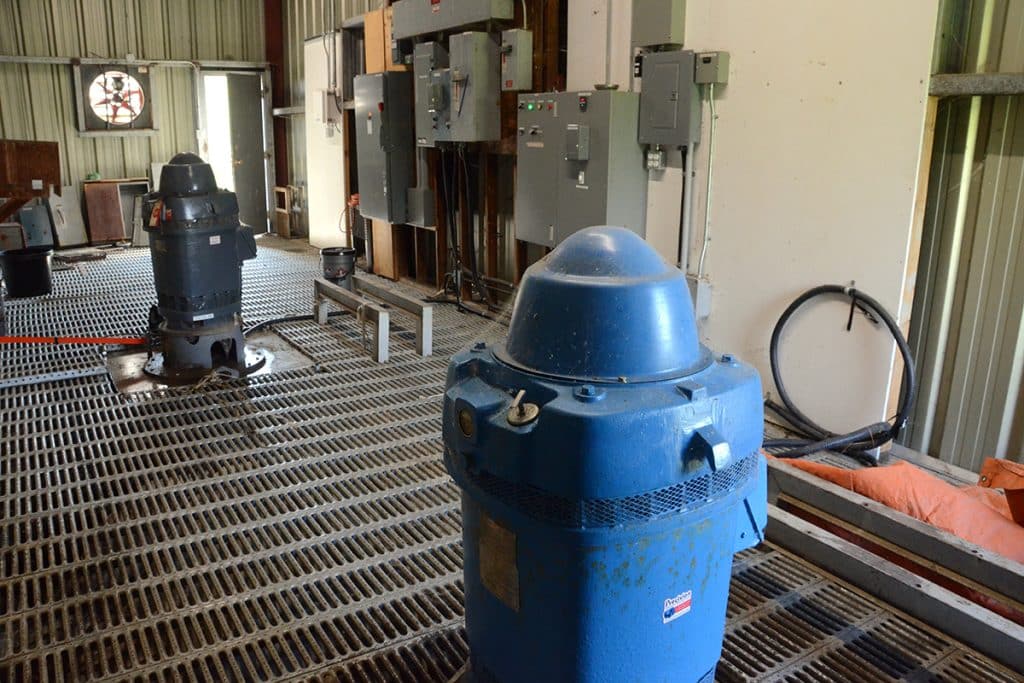
The pumping station was crucial to creating drip irrigation, which relies on a pressurized water system.
Unlike traditional irrigation, which relies on gravity or low-pressure systems, drip irrigation needs a steady, pressurized flow to ensure water reaches every emitter evenly. (Drip irrigation emitters are like tiny water faucets for plants, dripping out one drop at a time).
However, the pumping station wasn’t enough. Lakeshore needed to install a sand filtration system to remove debris and sediment from the river water, which could clog the drip irrigation emitters.
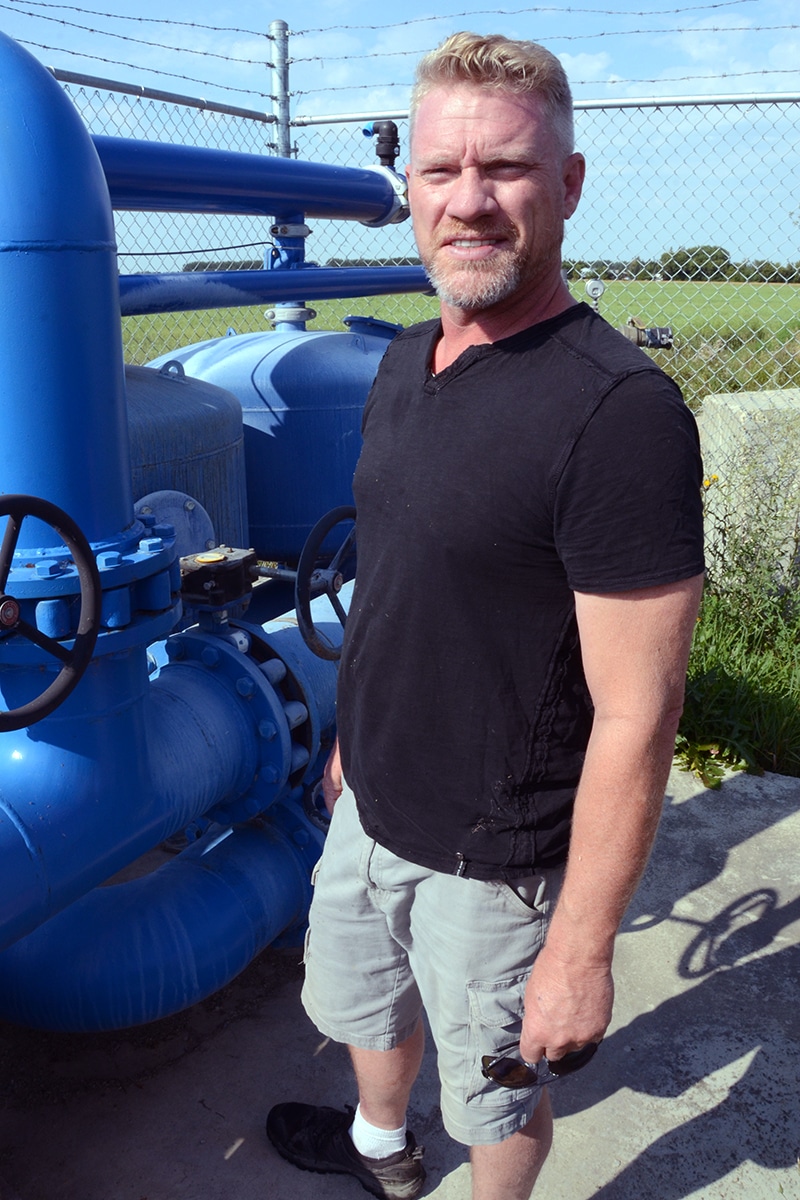
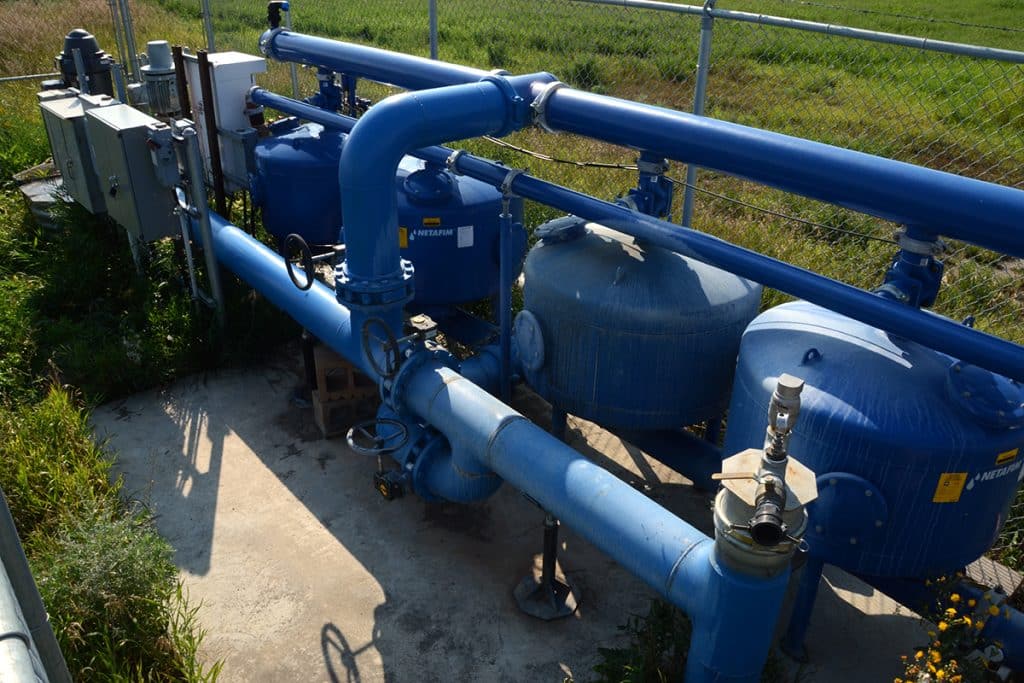
While the association covered the pumping station, Lakeshore paid for installing the sand filtration system, which cost approximately $50,000.
This system ensured that the water delivered through the drip irrigation lines was clean and consistent, protecting the delicate components of the irrigation system and maintaining efficiency.
Doubling production
With the installation of a constant and filtered water supply, Lakeshore has 100 per cent of its tree production under drip irrigation, which has allowed the farm to double its output without hiring additional employees.
Although putting the drip irrigation in place was costly upfront, the investment has proven worth it.
“Lakeshore Tree Farms is the biggest field-grown basketed tree nursery between Edmonton and Barrie, Ontario,” said Aaron.
Related:
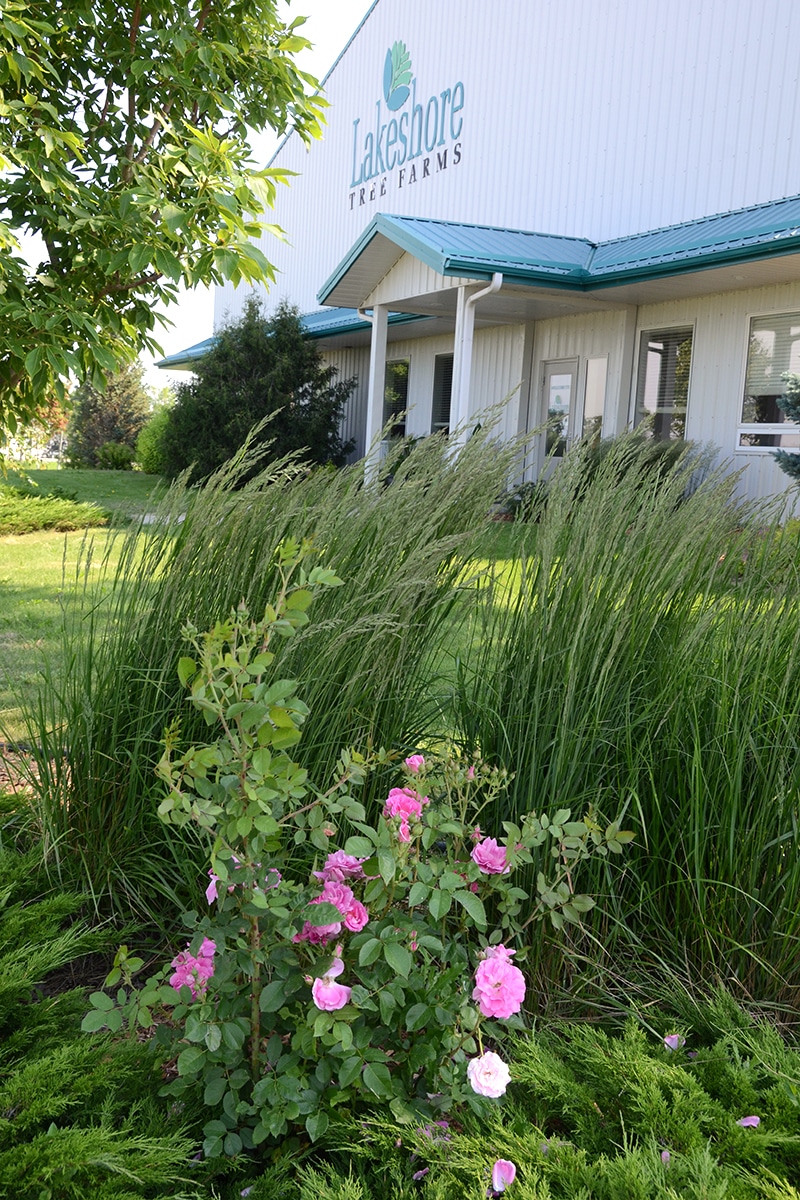
A Saskatchewan tree farm still growing after almost 90 years in business
Lakeshore Tree Farms southwest of Saskatoon, which was started in 1936, during the Great Depression, is still going strong.
No local labourers, commercial agriculture operator relies on foreign temporary workers
“My industry still takes just as much labour as farming in the 1900s did,” said Aaron Krahn, one of three co-owners at Lakeshore. “It’s all done by hand. It’s the nature of the work.”
Our Prairie stories matter too.
The Flatlander takes a closer look at the stories that unite us, and make us unique, in Saskatchewan and Manitoba.
Will you help us tell our stories?
Author